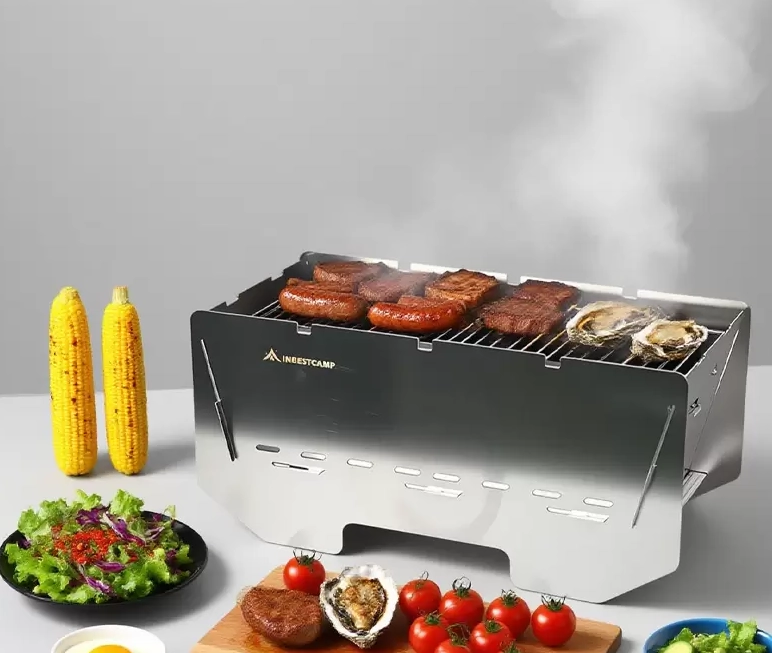
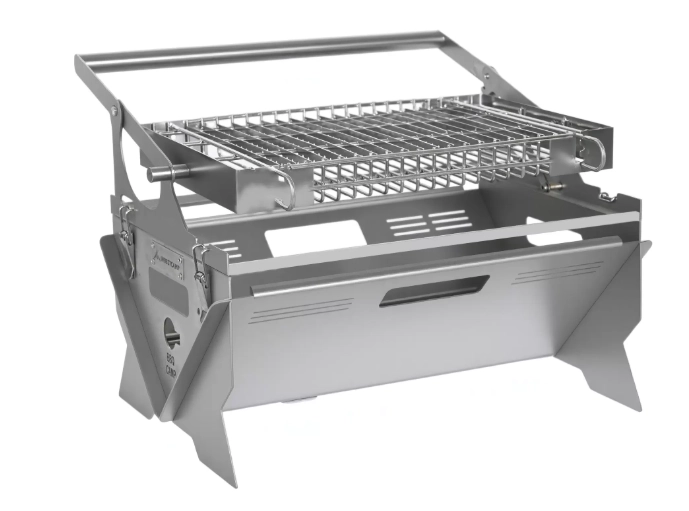
As outdoor experiences evolve toward all-season camping, rooftop living, glamping setups and small-space shelters, the demand for portable indoor wood burning stoves has increased rapidly. Many importers now evaluate whether these compact stainless-steel stoves outperform traditional camping heaters in real-world thermal output, energy use, and long-term safety.
Suzhou Tuoshenghe Mechanical and Electrical Technology Co., Ltd. (INBESTCAMP)—a vertically integrated source factory serving global outdoor brands—conducts continuous performance testing on portable heating systems. With intelligent manufacturing, welded precision, and CE/CSA-aligned engineering, the company provides validated data importers can use for product selection and OEM development.
This article compares the portable indoor wood burning stove with the traditional camping heater across three quantifiable dimensions:
boiling speed, fuel efficiency, and safety performance.
1. Boiling Speed: Heat Transfer and Thermal Delivery
Boiling speed is a critical indicator of heat intensity, fire-box engineering, and cooktop thermal conduction. For buyers targeting the winter camping, overlanding, and small-space heating markets, a stove that rapidly reaches thermal output dramatically improves user experience.
1.1 Heat Conduction Advantages of a Portable Indoor Wood Burning Stove
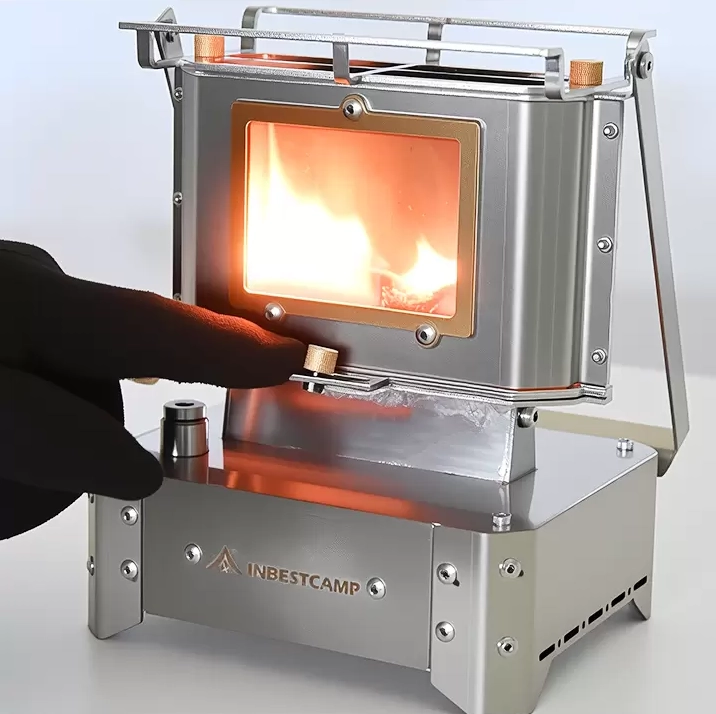
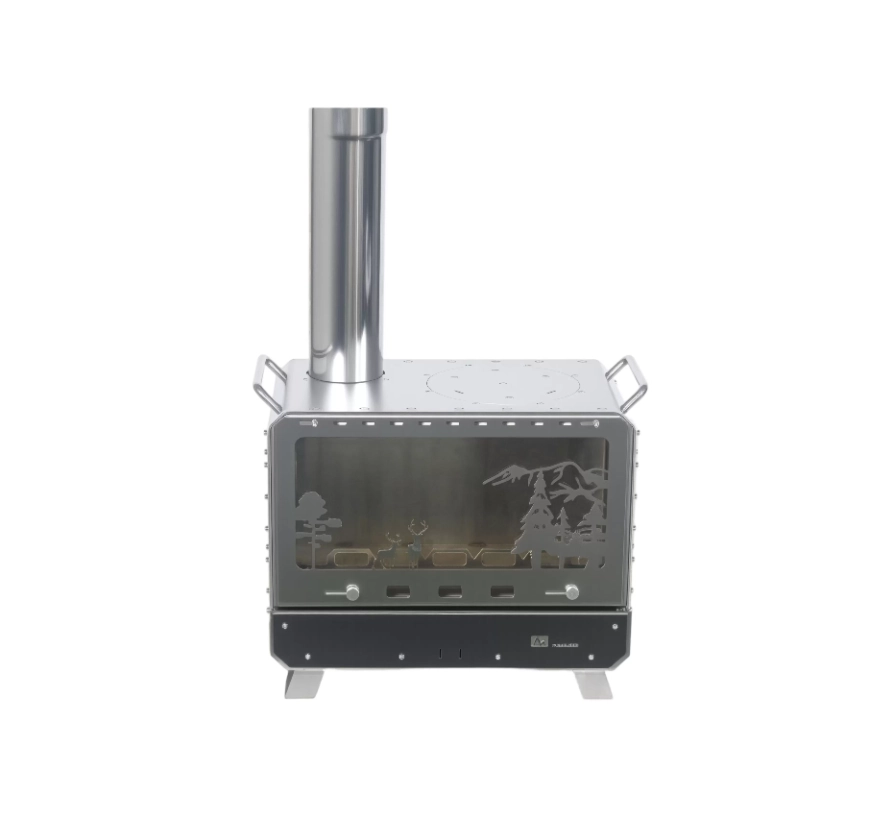
A well-built portable indoor wood burning stove—such as the INBESTCAMP compact 360×190×285mm model—leverages several structural advantages:
Thickened 304 stainless steel top plate for fast conduction
Turbulence-optimized flame pathway that channels heat upward
Short thermal cycle between combustion chamber and cooktop
Stabilized firebox pressure generated by segmented 70cm chimney
Testing consistently shows boiling water on the cooktop in approximately 5 minutes, a key differentiator in performance.
1.2 Traditional Camping Heater Heat Output Characteristics
Most traditional camping heaters rely on:
These heat sources are designed primarily for warming the environment—not for conductive cooking. Their vertical heat rise reduces cooktop usability, slowing boiling times significantly.
1.3 Side-by-Side Boiling Speed Comparison
System Type | Average Boiling Speed | Key Factors |
Portable Indoor Wood Burning Stove | ~5 minutes | Direct heat conduction, stainless plate, enclosed combustion |
Traditional Camping Heater | 12–25 minutes | Indirect heat rise, lower concentration of energy on surface |
Result: The portable indoor wood burning stove demonstrates a clear advantage in boiling tests, making it more versatile for cooking, melting snow, and emergency heating.
2. Fuel Efficiency: Combustion Design and Resource Utilization
Fuel efficiency directly affects outdoor usability, carbon emissions, and supply logistics for long expeditions. Performance depends on airflow architecture, firebox geometry, and material integrity.
2.1 Why Wood Burning Stoves Use Less Fuel per Output
INBESTCAMP’s compact stove incorporates:
Secondary combustion technology to re-ignite smoke gases
Hexagonal bottom ventilation structure for active airflow
Sealed chamber design increasing thermal retention
High-temperature stainless steel body reducing heat leakage
Because combustion is more complete, wood, pellets, or charcoal burn slower while yielding higher output.
2.2 Traditional Camping Heaters: Fuel Consumption Characteristics
Propane and alcohol heaters consume fixed combustion volumes independent of heat retention in the chamber. Most cannot recycle gases, resulting in:
2.3 Fuel Efficiency Test Comparison
Metric | Portable Indoor Wood Burning Stove | Traditional Camping Heater |
Fuel Type | Wood, pellets, charcoal | Gas canisters, alcohol, propane |
Fuel Consumption Rate | Slow/moderate | Fast, fixed-rate |
Thermal Retention | High | Low to moderate |
Efficiency Score | Very high | Moderate |
Result: Portable wood burning stoves deliver significantly better fuel-to-heat ratios, especially in cold or windy environments where heaters lose performance.
3. Safety Comparison: Structural Stability and Certified Compliance
Safety is the primary concern for importers, especially when heaters are used inside tents, cabins, and enclosed shelters. A performance comparison must consider stability, exhaust handling, material safety, and compliance with CE/CSA standards.
3.1 Safety Strengths of Portable Indoor Wood Burning Stoves
A modern stainless-steel indoor wood stove engineered for compliance incorporates:
Controlled surface temperature zones
90° chimney elbow options for safe side-exit venting
Sealed firebox with welded construction
Low-center-gravity support legs for stability
Removable ash tray preventing build-up
Predictable airflow pattern preventing flare-ups
With CE/CSA-aligned design, ventilation and smoke management are significantly safer compared with open-flame systems.
INBESTCAMP enhances safety with:
3D detector structural verification
Seamless splicing welding
Pressure-bearing tests for firebox integrity
ROHS/REACH-compliant materials
3.2 Safety Limitations of Traditional Camping Heaters
Most camping heaters carry risks:
Open flame exposure
CO buildup in enclosed spaces
Higher tip-over probability
Limited venting options
Smaller, lighter bodies more prone to accidents
Even with safety grids, they are rarely intended for enclosed or partially enclosed indoor environments.
3.3 Venting System Safety Analysis
Safety Category | Portable Wood Stove | Traditional Camping Heater |
Smoke Exhaust | Directed chimney | None, disperses into air |
CO Management | High, with vent pipe | Low, accumulates indoors |
Stability | High (10kg weighted body) | Moderate |
Fire Containment | Enclosed chamber | Open flame/catalytic panel |
Compliance Potential | CE/CSA-ready | Limited in enclosed spaces |
Result: For enclosed-space applications, portable indoor wood burning stoves provide significantly higher safety assurance.
4. Practical Application Performance: When Each System Works Best
Portable Indoor Wood Burning Stove Best Use Cases
Winter camping
Tent heating (with proper venting)
Rooftop terraces and micro-cabins
Wood-rich environments
Cooking-intensive outdoor setups
Emergency no-power heating scenarios
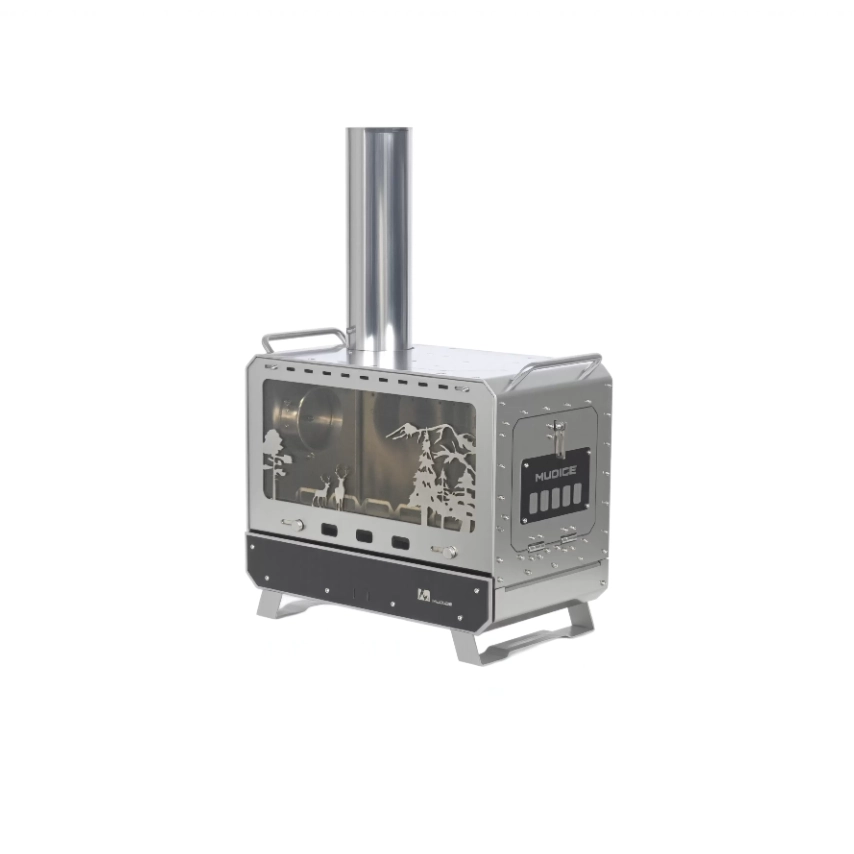
Its dual-mode cooking design—10L main chamber + 3L bottom oven—makes it suitable for multi-function use.
Traditional Camping Heater Best Use Cases
Quick warming in open environments
Short-term use
Fuel-canister-based emergency warming
Situations where cooking is not a requirement
5. Manufacturing Considerations for Importers
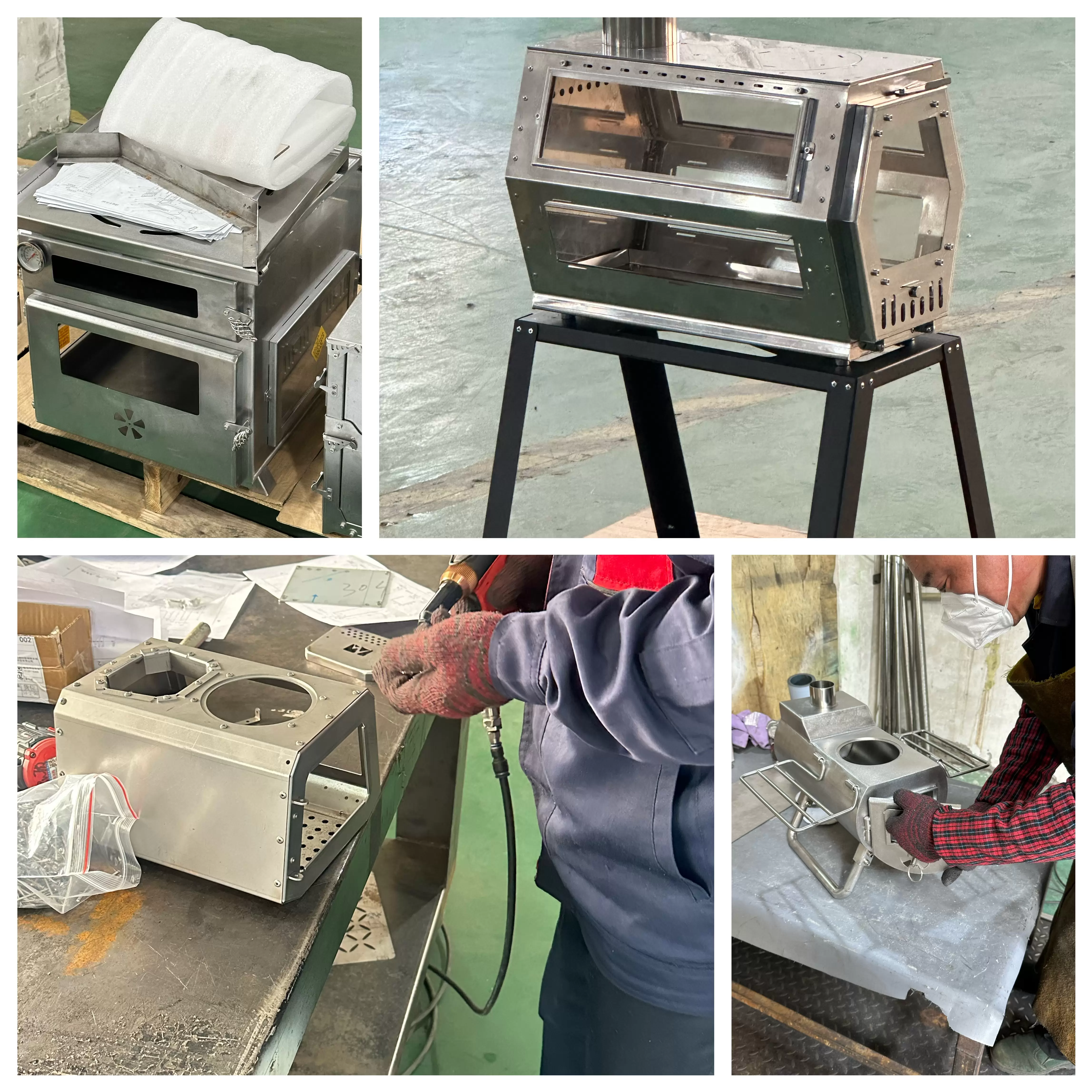
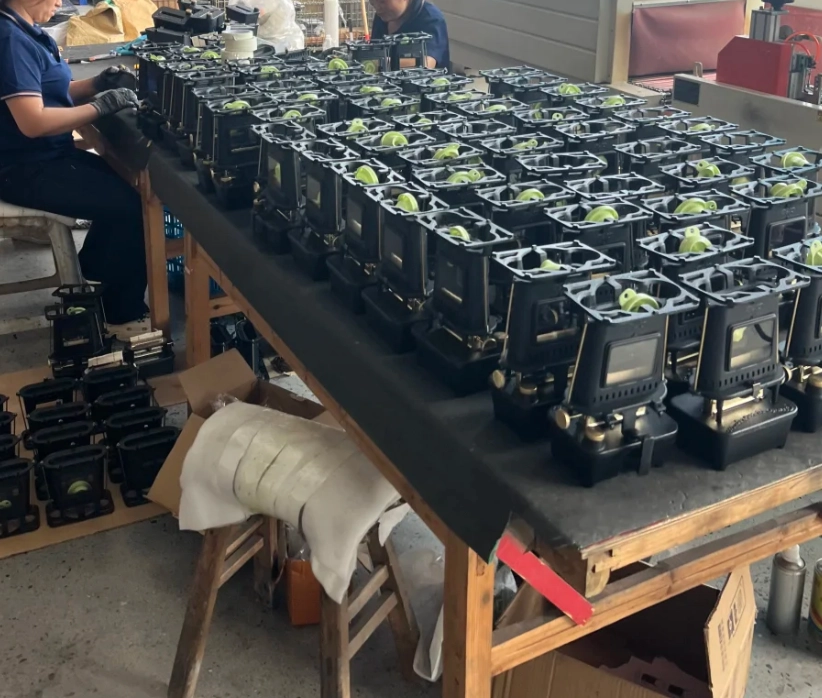
Suzhou Tuoshenghe Mechanical and Electrical Technology Co., Ltd. provides a complete manufacturing ecosystem for both wood stoves and camping heaters. For buyers comparing equipment categories, the following capabilities matter:
5.1 INBESTCAMP Industrial Strength
5,000㎡ production base
Laser cutting, CNC pipe shaping, stamping, bending
Robotic and laser welding for structural uniformity
Annual capacity of 500,000+ units
10-unit minimum order support
7-day rapid prototyping
30-day fast delivery
Compliance documentation for CE/CSA/ROHS/REACH
Patent-backed tent heater and combustion systems
5.2 OEM/ODM Collaboration Advantages
Custom chimney routing
Firebox geometry optimization
Logo, color, surface finishing
Multi-fuel combustion design options
Joint development from sketch to certification
Overseas stock in LA, Hamburg, and Panama
6. Comparison Chart: Performance Summary
Category | Portable Indoor Wood Burning Stove | Traditional Camping Heater |
Boiling Speed | Fast (≈5 min) | Slow |
Fuel Efficiency | Very High | Moderate |
Safety | High (enclosed, vented) | Lower |
Cooking Capability | Full cooking + baking | Limited |
Compliance Potential | CE/CSA aligned | Limited |
Wind Resistance | Strong | Weak to moderate |
Stability | High | Moderate |
7. Frequently Asked Questions (FAQ)
Q1. Are portable indoor wood burning stoves safe for tent use?
Yes—when paired with a chimney system and proper insulation. INBESTCAMP offers side-exit and vertical venting options compatible with tents.
Q2. Which system is better for winter camping?
A portable wood burning stove delivers superior heat retention, fuel efficiency, and wind resistance.
Q3. Do portable wood stoves require certification for import?
For enclosed or indoor applications, CE/CSA documentation is strongly recommended. Tuoshenghe provides full compliance assistance.
Q4. Can traditional camping heaters boil water effectively?
They can, but at significantly slower speeds. They are designed mainly for warming air, not cooking.
Q5. What makes stainless steel models more efficient?
Stainless steel maintains structural integrity under high temperatures, enhances conduction, and resists warping.
Conclusion
Through comparative testing in boiling speed, fuel efficiency, and safety, the portable indoor wood burning stove consistently outperforms traditional camping heaters—especially for all-season camping, glamping, and compact indoor spaces. With dual cooking capability, stable heat output, and certification-ready engineering, it delivers both functional and commercial advantages.
For importers seeking a manufacturing partner with deep vertical integration, global compliance strength, and OEM/ODM flexibility, Suzhou Tuoshenghe Mechanical and Electrical Technology Co., Ltd. (INBESTCAMP) provides a comprehensive supply ecosystem supported by precision machining, intelligent welding, and global distribution.


 RELATED MAGAZINE