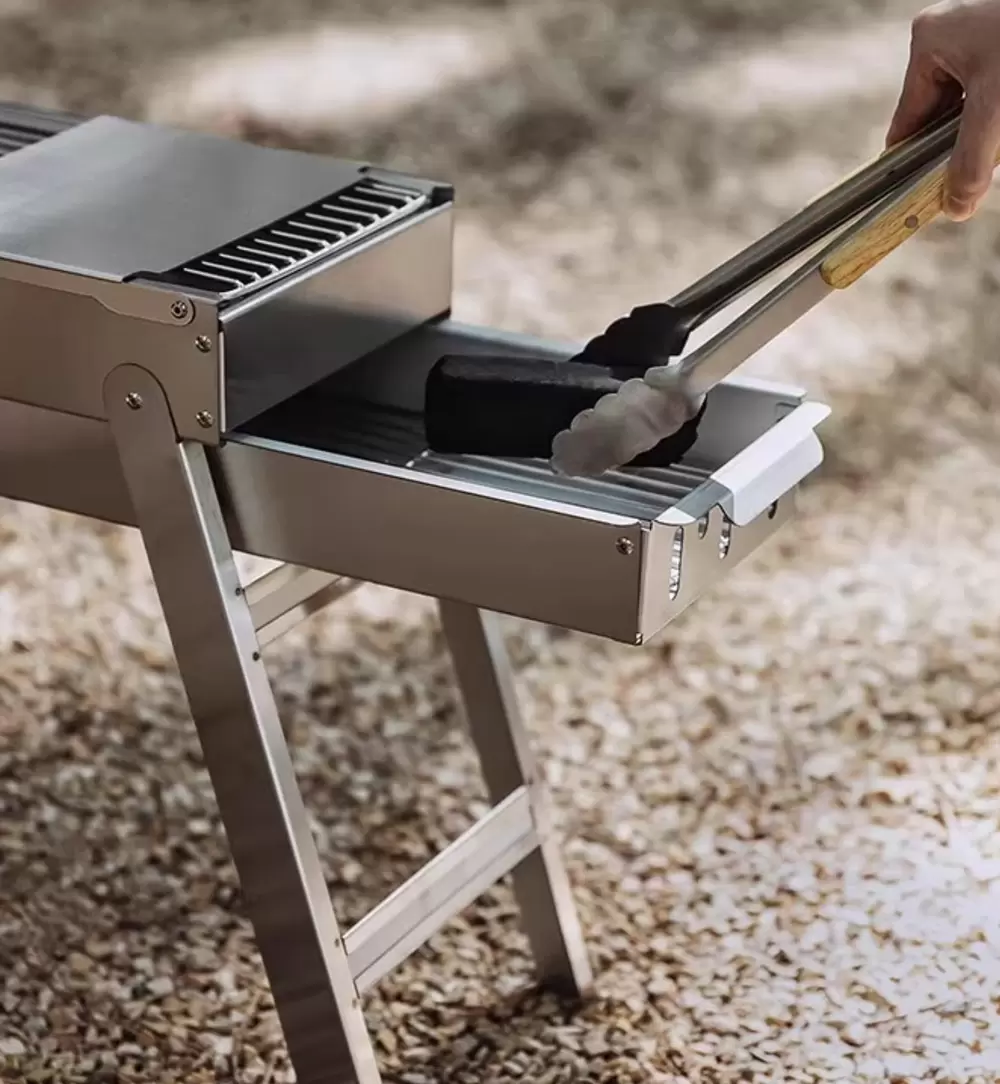
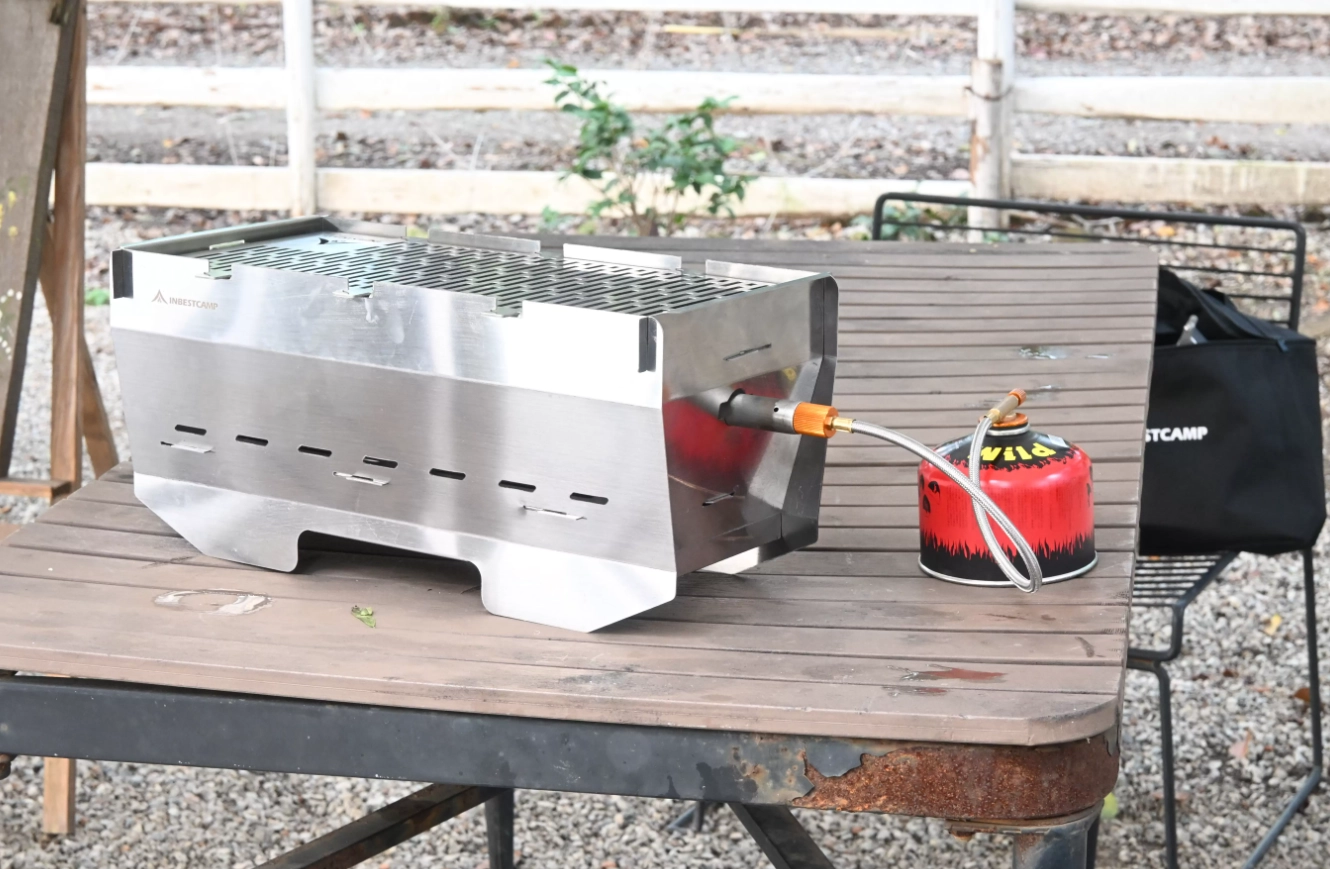
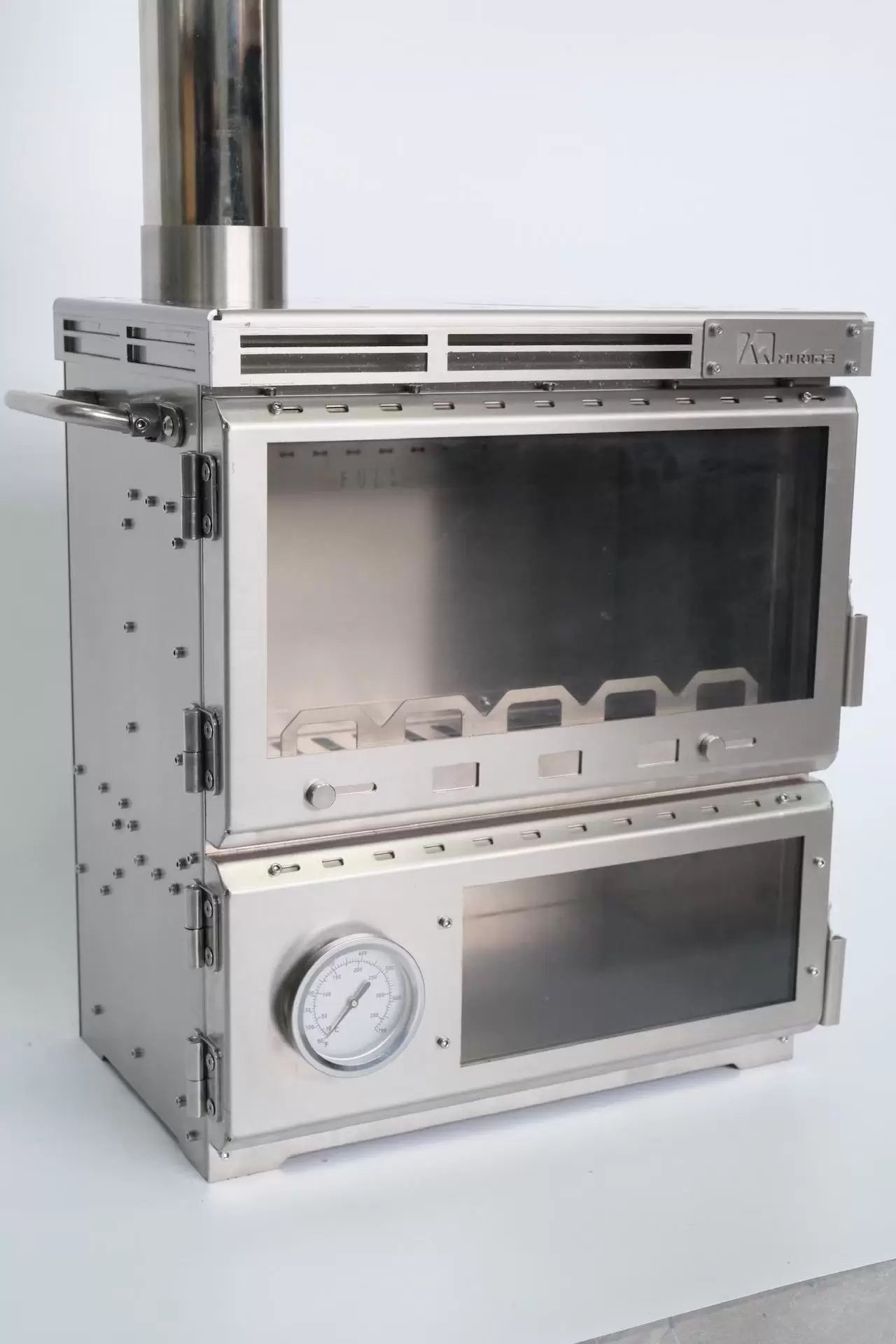
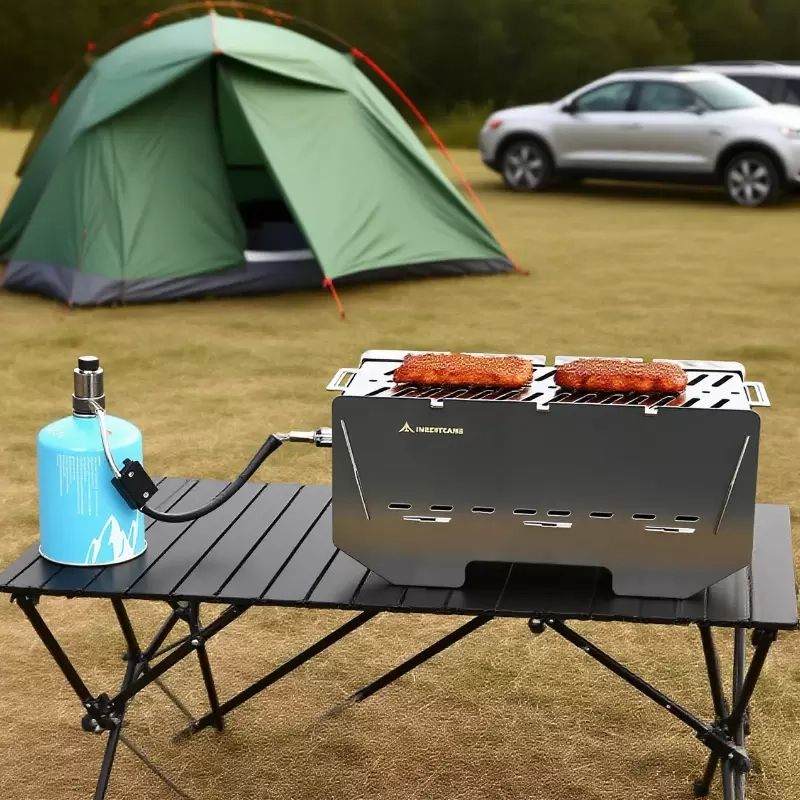
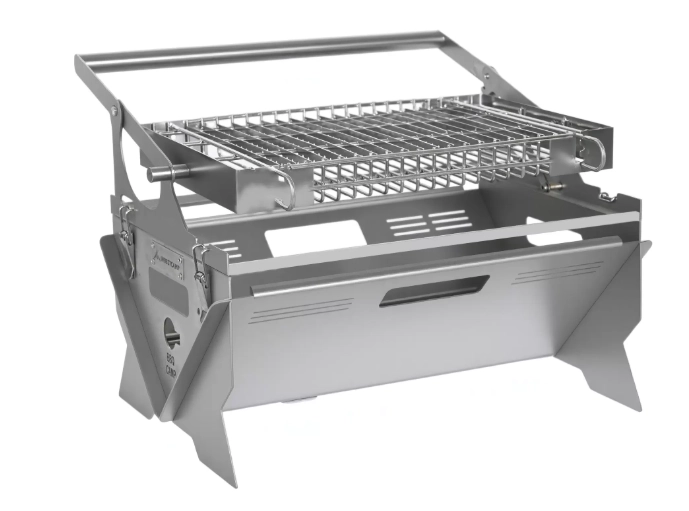
A truly portable grill is not defined by its weight alone—it is defined by how fast it can be deployed. The idea of unfolding a grill in a single second may sound simple, but achieving this speed demands a sophisticated combination of mechanical engineering, structural logic, material optimization, heat-response control, and precision manufacturing.
At Tuoshenghe, where outdoor cooking equipment is designed through an integrated R&D–to–manufacturing chain, the 1-second instant-fold mechanism represents years of accumulated engineering experience, full-process machining capability, and repeated stress testing. This article explores the complete engineering logic behind a true instant-fold system, explaining how geometry, kinematics, tolerances, linkage strategies, force transmission, and real-world outdoor constraints all come together to create a grill that deploys faster than a smartphone unlocks.
1. The Core Mechanical Logic Behind a 1-Second Folding System
A 1-second system depends on one central idea: the user performs a single action, and the rest of the motion cascades automatically. To achieve this, the grill’s structure must behave like a synchronized mechanism rather than a set of independent components.
The heart of the mechanism is a multi-point linkage assembly. When the user pulls on one main handle or simply opens the legs, the motion transfers through a series of geometric relationships. Every panel and every leg moves proportionally based on predefined angular paths. This ensures that the grill never jams during deployment, never opens unevenly, and never requires two-hand adjustments.
The kinematic path must be mathematically precise. If the hinge positions deviate even slightly, the fold may become stiff; if the tolerance is too loose, the grill may rattle or collapse under weight. Creating this perfect fit requires CNC pipe cutting, laser-guided stamping, and robotic welding—capabilities Tuoshenghe’s 5,000㎡ production base integrates into one continuous manufacturing chain.
A 1-second folding system is not fast because of a spring or button. It is fast because the entire geometry of the grill is pre-organized to move as a single organism.
2. Structural Geometry That Enables Instant Deployment
Achieving speed requires the correct geometric logic. A well-engineered instant-fold grill is built around three rules:
1. The motion path must be friction-balanced.
Too much friction slows the opening; too little creates instability. Heat-resistant, low-expansion bushings ensure the folding angle remains smooth even after thousands of heating cycles.
2. The center of gravity must stabilize automatically during opening.
As the legs swing out, their movement shifts the grill’s weight downward and outward at the same moment. This auto-stabilization prevents wobbling even before the grill is fully opened.
3. The structure must “lock” through geometry, not force.
Instead of relying on rigid latches or manual locking components, the shape of the metal frame itself becomes the locking mechanism. Once the legs reach a specific angle, the forces naturally redirect into the ground.
Through this geometry-driven locking system, the grill becomes solid the instant it opens—a structural philosophy also found in military folding tools and aerospace-grade compact frames.

3. Engineering the Linkage System for Zero-Delay Movement
The linkage system acts like the nervous system of the grill. When the user performs one action, the movement must ripple through the entire structure in a controlled, predictable manner.
This requires two engineering principles:
Synchrony
The legs, panels, and center body must open at the same speed, reaching their final positions simultaneously. Synchrony eliminates the “floppy stage” seen in poorly designed grills where the frame partially collapses mid-deployment.
Predictable Resistance
When the user opens the grill, they should feel a consistent level of resistance—neither sudden tightness nor unexpected looseness. To achieve this, Tuoshenghe uses:
laser-cut holes with micro-level tolerance adjustments
seamless welding that prevents deformities at hinge points
CNC-formed arms that maintain parallelism under stress
These factors combine into a linkage that feels clean, confident, and mechanical rather than improvised.
4. Heat-Response Mechanics: Ensuring One-Second Deployment After High-Temperature Use
A portable grill must remain easy to open even after repeated exposure to 400–600°C heat. Metal expansion can distort geometry, tighten hinges, or change alignment—a major challenge for fast-fold structures.
To prevent deformation, three design strategies are used:
Controlled Thermal Pathing
The main folding arms are positioned outside the zone of direct flame. By keeping structural hinges away from the hotspot, expansion is minimized and the deployment path remains consistent.
High-Stability Materials
Tuoshenghe uses heat-stable stainless steel formulations with low thermal creep. Even after hundreds of rapid heating cycles, the arms retain their original angle accuracy.
Distributed Venting
Strategically placed vents guide heat away from hinges, preventing micro-warping. The grill cools predictably, allowing users to fold it shortly after cooking without feeling resistance.
This thermal-engineering layer ensures that “one second” is not just achievable when the grill is cold—but every single time.
5. Manufacturing Precision: Why Instant-Fold Systems Require Vertical Integration
A 1-second folding grill is not something that can be assembled from random outsourced parts. It requires every component to align with micrometer-level accuracy. This is why INBESTCAMP’s instant-fold series relies entirely on vertical production:
Laser cutting machines ensure consistent hole spacing for linkages.
CNC pipe cutting guarantees parallelism across legs.
Robotic welding produces uniform seams that keep geometry symmetrical.
3D detectors scan finished products for dimensional deviation.
This ecosystem of intelligent manufacturing is the foundation of INBESTCAMP’s 500,000+ annual production capability and its ability to deliver identical folding performance across mass-produced batches.
6. Why Weight Distribution Matters in a One-Second System
Fast deployment is meaningless if the grill collapses under load. Proper weight distribution ensures the grill stabilizes instantly—without the user adjusting legs manually.
This stability depends on:
the ratio between leg spread width and grill height
the symmetry of the center frame
the alignment between the cooking panel and the ground
the downward force created as legs lock into place
A grill with correct balance will feel stable the moment it opens—without any additional steps.

7. Wind Resistance, Terrain Adaptation, and Outdoors-First Engineering
A portable grill must open fast not only on flat ground but also on gravel, sand, forest floors, or uneven terrain. This requires adaptability engineered directly into the frame.
Key factors include:
torsion-resistant leg design
automatic leveling during deployment
anti-slip ground contacts
weight pathing that directs force into the earth during opening
Combined with wind-resistant geometry, the grill remains stable even when subjected to outdoor gusts or when loaded with heavy cookware.
8. The Instant-Fold System and INBESTCAMP’s Product Matrix
The 1-second deployment system is not an isolated invention—it integrates seamlessly into Tuoshenghe’s broader outdoor cooking ecosystem:
portable gas grills that ignite in one second and reach 200°C within three minutes
multifunction burners compatible with gas, wood, charcoal, or alcohol
smokeless fire pits with secondary combustion airflow
tent-heater-compatible shelters that assemble in one minute
a mobile kitchen concept that packs into less than 3 kg
Because Tuoshenghe controls every stage—from R&D to welding to global shipping—the instant-fold mechanism becomes a shared engineering language across multiple product lines.
9. Visual Engineering Summary (for webpage inclusion)
Table: Mechanical Layers of a 1-Second Folding System
Engineering Layer | Purpose | INBESTCAMP Implementation |
Linkage Geometry | Synchronizes movement | Multi-axis CNC-formed arms |
Thermal Stability | Maintains accuracy after heating | Heat-path isolation + stainless steel |
Tolerance Control | Prevents wobble & jamming | Laser-cut + robotic welding |
Weight Distribution | Ensures immediate stability | Auto-locking geometric stance |
User Pathing | Enables one-hand deployment | Single-motion release structure |
10. FAQ
Q1: Can a 1-second folding mechanism hold heavy cookware or cast iron pans?
Yes. The stability comes from geometry rather than locking force. As long as the structure is engineered with proper forces and tolerances, instant-fold grills can handle significant weight.
Q2: Does the instant-fold system wear out after repeated usage?
A high-quality system—especially one built with stainless steel hinges and robotic welding—retains its accuracy even after thousands of cycles. INBESTCAMP grills undergo full endurance testing before shipment.
Q3: Does fast deployment compromise safety?
No. The mechanism stabilizes automatically during opening. In fact, reducing multi-step assembly decreases the chance of improper setup.
Q4: Can instant-fold grills be used in low temperatures or snow?
Yes. Stable materials and low-friction bushings allow the linkage system to perform smoothly even when the metal contracts in cold climates.
Conclusion: The Future of Outdoor Cooking Belongs to Instant Deployment
The engineering behind a 1-second folding grill is complex, but the user experience is beautifully simple. In one motion, the grill opens, stabilizes, and becomes ready for cooking. This effortless deployment is made possible by a precise combination of mechanical geometry, heat-response engineering, vertical manufacturing, material science, and real-world outdoor testing.
As INBESTCAMP continues expanding its global ODM/OEM support for more than 30 countries, the instant-fold mechanism stands as one of its most representative technologies—turning advanced engineering into everyday convenience for outdoor enthusiasts worldwide.


 RELATED MAGAZINE