Cast Iron vs. Stainless Steel in the Camping Grill Boom
The global outdoor economy is experiencing rapid growth, creating diverse demands across the camping grill market. For wholesale buyers, distributors, and cross-border brands, choosing the right grill grate material is a pivotal business decision.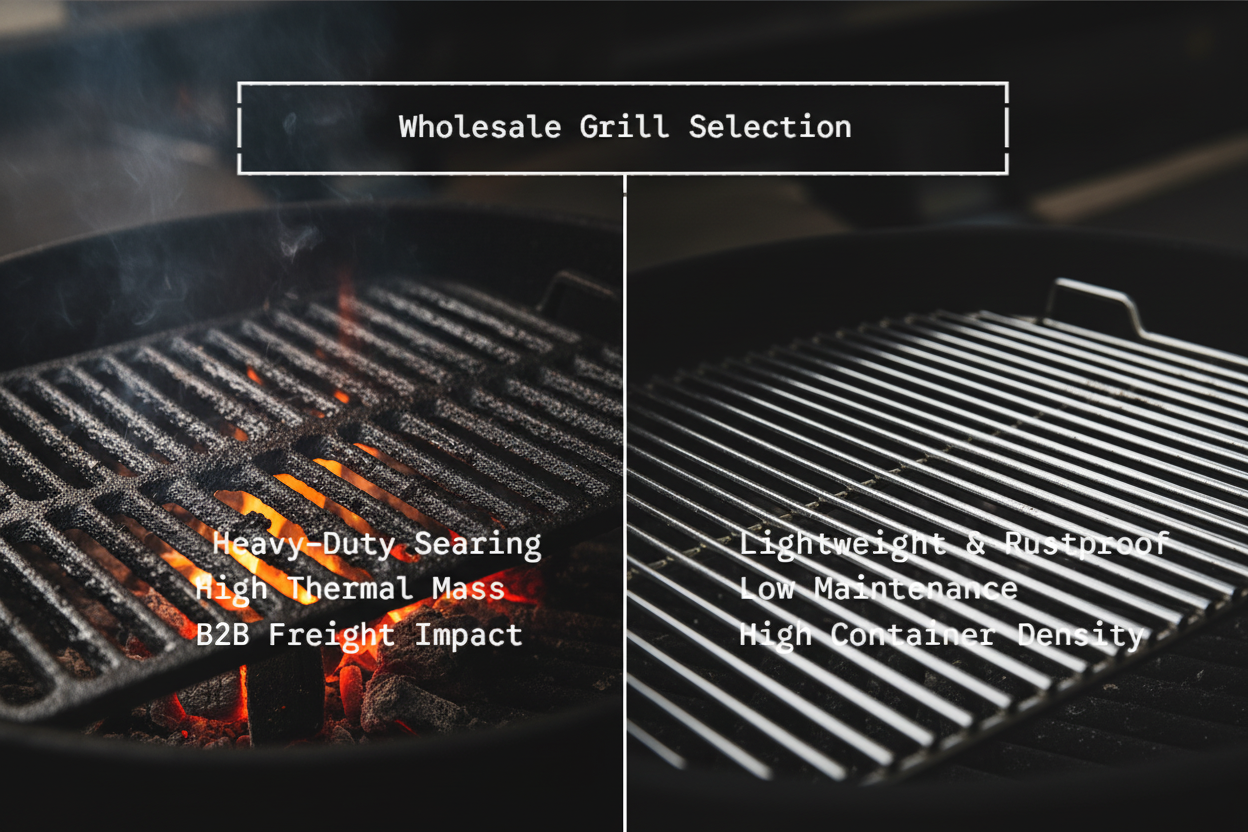
Material Overview
Cast Iron: A traditional staple in outdoor cooking, cast iron is valued for its thermal mass and heat retention. It is commonly used in heavy-duty portable grills, smoker accessories, and premium glamping equipment.
Stainless Steel: Composed of iron-chromium alloys (typically 304 or 430 grade), stainless steel offers corrosion resistance, lightweight structural strength, and clean modern aesthetics. It is the dominant material for flat-pack, foldable, and ultralight camping grills.
Why Material Selection Matters
For wholesale buyers, the choice between cast iron and stainless steel grates goes far beyond culinary preference. It directly impacts:
Product Positioning: Target demographics (e.g., ultralight hikers vs. car campers).
Profit Margins: Raw material expenses, molding costs, and ocean freight ratios.
Customer Satisfaction: Post-purchase maintenance requirements, return rates, and product durability.
Advantages of Cast Iron Grates: Thermal Performance and Flavor Profile
For outdoor cooking enthusiasts who prioritize food quality over packability, cast iron grates offer clear culinary advantages.
Exceptional Thermal Mass
Cast iron possesses high volumetric heat capacity. Once brought to temperature, it retains heat longer than thin metals. This heat stability prevents temperature drops when placing cold meat on the grill, ensuring consistent performance in cold or windy conditions.
Searing and the Maillard Reaction
The thick, solid bars of a cast iron grate deliver direct conductive heat to food. This creates distinct, dark grill marks and accelerates the Maillard reaction—the chemical reaction between amino acids and reducing sugars that gives seared meat its rich flavor and crust.
Seasoned Non-Stick Properties
Through a process called seasoning (baking layers of fat or oil into the porous iron at high heat), cast iron develops a hydrophobic, smooth polymer layer. This creates a natural non-stick surface without synthetic chemical coatings like PTFE or PFOA.
Disadvantages of Cast Iron: Heavy Mass and Maintenance Demands
While cast iron delivers excellent cooking results, its physical characteristics present distinct challenges for portable outdoor gear.
Excessive Weight: Cast iron's high density conflicts with modern demand for lightweight, portable camping equipment.
Rust and Maintenance Overhead: Unseasoned iron reacts quickly with moisture, causing rapid oxidation. End users must clean, dry, and oil the grates after every use—a process casual campers may find inconvenient.
Physical Brittleness: Cast iron has low tensile ductility. Severe mechanical impacts or rapid temperature changes (thermal shock from splashing cold water onto a hot grate) can cause the iron to crack or fracture.
Advantages of Stainless Steel: Lightweight and Corrosion Resistance
In the fast-growing market for portable and flat-pack camping grills, stainless steel is the standard material of choice.
Corrosion Resistance
Grates manufactured from 304-grade stainless steel contain a high percentage of chromium and nickel, forming a self-healing chromium oxide film that shields the metal from moisture, humidity, and food acids. This makes stainless steel ideal for wet, coastal, or humid outdoor environments.
Lightweight Portability
Stainless steel features high tensile strength, allowing manufacturers to use thinner wire rods ($3\text{ mm}$ to $5\text{ mm}$) or perforated sheets without sacrificing structural integrity. This significantly reduces overall product weight, supporting backpacking and minimalist camping.
Low Maintenance
Stainless steel requires no seasoning. It can be washed with standard dish soaps, scrubbed with wire brushes, or placed in a dishwasher without rusting.
Disadvantages of Stainless Steel: Heat Loss and Thermal Distortion
Despite its convenience, stainless steel grates present specific thermal and aesthetic limitations.
| Challende | Impact on Performance |
| Low Heat Retention | Cools down quickly; sensitive to wind and cold air |
| Thermal Deformation | Thin wire grates can warp under sustained high heat |
| Surface Discoloration | Forms permanent heat tint (yellow/blue oxidation) |
Lower Heat Retention: Stainless steel loses heat rapidly when exposed to wind or cold air, requiring a continuous bed of hot coals to maintain searing temperatures.
High-Temperature Warping: Thin stainless steel wires (<3 mm) can warp or twist when exposed to concentrated, high-heat charcoal fires over extended periods.
Heat Tint Discoloration: Under high heat, chromium in the steel reacts with oxygen to form a thin rainbow or blue-brown oxide layer ("heat tint"). While harmless, some consumers view this discoloration as a cosmetic defect.
B2B Analysis: Manufacturing Costs, MOQs, and Margins
From a wholesale perspective, production economics dictate pricing strategy and minimum order volumes.
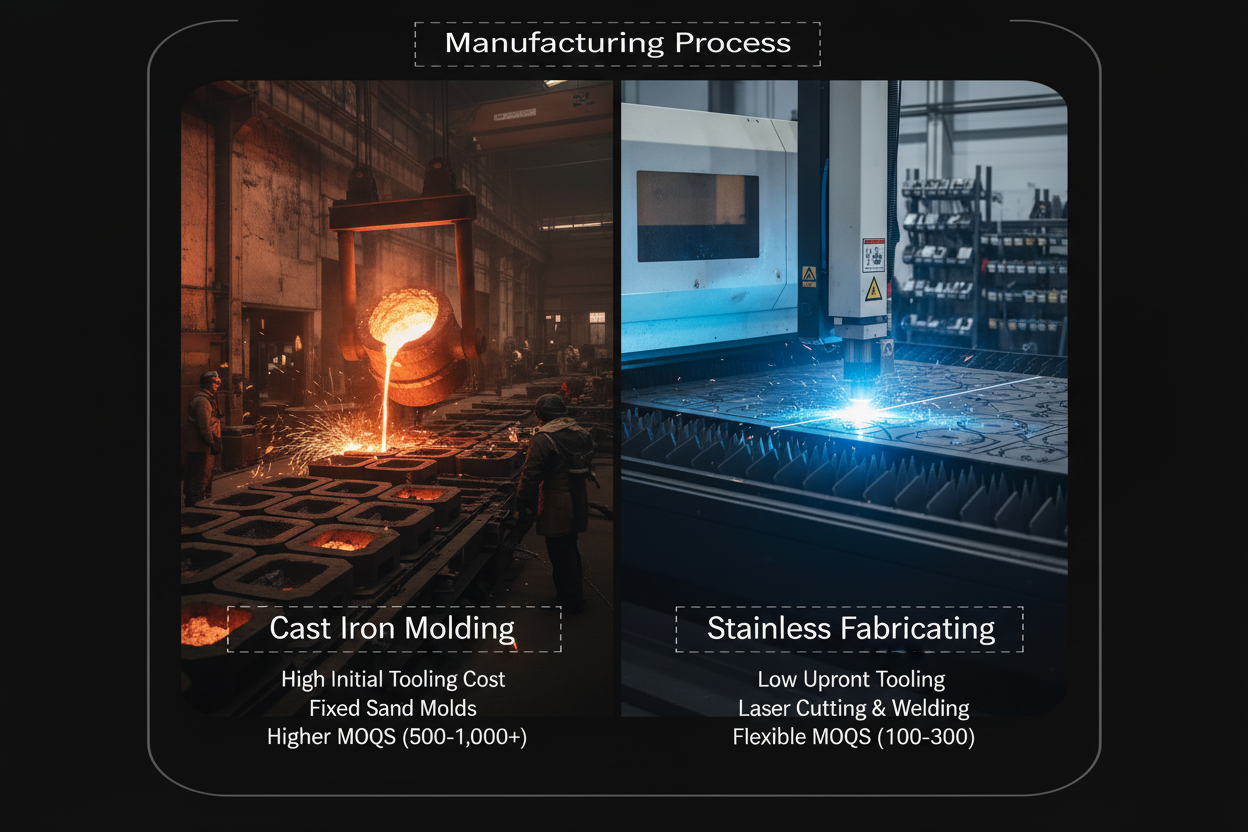
Manufacturing Processes and Tooling Costs
Cast Iron: Produced via sand-casting or shell-molding processes. Initial pattern tooling costs are high, requiring higher Minimum Order Quantities (MOQs)—typically 500 to 1,000 + units—to amortize fixed tooling expenses.
Stainless Steel: Manufactured through laser cutting, automated wire bending, and spot welding, followed by electropolishing. Upfront tooling is minimal, enabling lower MOQs (100 to 300 units) and faster prototyping for custom private-label designs.
Pricing Strategy
Stainless Steel Grills: Lower total production costs allow aggressive entry-level to mid-tier pricing (20—$60 USD wholesale), driving high volume across mass-market retail channels.
Cast Iron Grills: Positioned as premium products (50—120 + USD wholesale), allowing higher absolute dollar margins per unit sold.
Customer Personas: Matching Material to Target Demographics
Wholesalers must align product specifications with their buyers' end consumers.

Glampers, Overland Tourists, and RV Campers: Value heavy culinary performance, visual appeal, and cooking rituals. Weight is less critical because vehicles carry the gear. Recommendation: Cast iron grates.
Hikers, Backpackers, and Weekend Casual Families: Value fast setup, lightweight portability, and easy cleanup. Recommendation: Stainless steel grates.
Cross-Border Logistics and Warehousing Impact
International shipping costs and last-mile logistics heavily affect the landed cost of imported grills.
Container Loading Efficiency (40HQ)
A standard 40HQ ocean container has a practical volume of ~68 CBM and a maximum weight payload of approximately 26,000–28,000 kg.
Cast Iron "Weighs Out": Due to high material mass, containers loaded exclusively with cast iron grills hit maximum weight capacity long before filling physical volume (~68 CBM), raising freight costs per unit.
Stainless Steel "Cubes Out": Lightweight, flat-pack stainless grills optimize volume utilization, fitting up to 30–50% more units per container before hitting weight limits.
Last-Mile Delivery and E-Commerce Fulfillment
When fulfilling individual orders via platforms like Amazon FBA or 3PL networks, shipping fees scale based on package weight tiers. Heavy cast iron units incur higher dimensional weight penalties, reducing margins for direct-to-consumer (DTC) brands.
Packaging and Transit Damage
Cast iron requires thicker protective foam (such as EPE or molded pulp) to prevent cracking during transit, adding to total packaging volume. Stainless steel is ductile and resistant to cracking, requiring slimmer packaging profiles.
After-Sales Management: Minimizing Return Rates
Selecting the right material strategy reduces post-purchase customer complaints and maintains seller metrics on e-commerce platforms.
| Material | Common Customer Complaint | Mitigation Strategy |
| Cast Iron | "Item arrived rusty" | Pre-seasoning + VCI anti-rust poly-bag wrapping |
| Cast Iron | "Too heavy / uncomfortable" | Clear product weight listings on packaging |
| Stainless Steel | "Grates warped after single use" | Increase rod thickness to ≥4mm solid steel |
| Stainless Steel | "Discolored / burned dark" | Educate buyers on natural thermal oxidation |
Procurement Strategy: Building a High-Velocity Product Line
To optimize inventory turnover and cover multiple price tiers, wholesale buyers should structure a balanced product line.
Standardize Stainless Steel for Base SKUs: Use stainless steel flat-pack grills as core high-volume, lightweight SKUs (70—80% of total inventory). This maximizes shipping density and minimizes logistics costs.
Offer Cast Iron as a Premium Accessory: Sell cast iron grates or griddle plates as separate add-on accessories (20—30%$ of total inventory). This allows customers to upgrade their setup while keeping base shipping units lightweight.
Audit Engineering Specs: For stainless steel grates, specify minimum wire rod diameters (≥ 4mm for grates or ≥ 1.2 mm for stamped sheet panels) to prevent heat warping and maintain durability.
Conclusion
There is no single "superior" material—only the right material for a specific business model. Stainless steel excels in shipping efficiency, lightweight portability, and low-maintenance appeal, making it ideal for high-volume cross-border sales. Cast iron provides unmatched heat retention and traditional cooking performance, making it a valuable high-margin option for premium markets. Combining both materials strategically allows wholesalers to maximize logistics efficiency while serving diverse consumer needs.
FAQ
Q1: For cross-border e-commerce sellers, which camping grill material carries lower risk for wholesale purchasing?
A: For newly starting cross-border sellers, stainless steel grill grates generally carry lower risk. Their lightweight nature not only significantly saves on ocean freight and first-leg logistics costs, but also reduces last-mile delivery expenses. Additionally, stainless steel requires no complex maintenance, which effectively minimizes after-sales refund issues caused by rust complaints.
Q2: Between cast iron and stainless steel, which material has higher custom tooling/molding costs?
A: Cast iron typically has higher custom tooling costs. It requires specialized sand molds or metal molds for high-temperature casting, involving large upfront investments and higher Minimum Order Quantities (MOQs). In contrast, stainless steel grill grates are mostly produced using wire cutting, bending, and spot welding processes. They do not require large molds, offering greater design flexibility and suitability for small-batch customization.
Q3: Is it true that stainless steel grill grates will never rust?
A: Not absolutely. While high-quality 304 stainless steel offers exceptional corrosion resistance, rust spots can still appear under extreme humidity, high salinity (such as coastal camping), or if grease and food residue are left uncleaned for long periods. Furthermore, lower-cost 430 or 201 stainless steel has weaker rust resistance, so it is important to clarify the exact material grade with the factory during wholesale procurement.
Q4: How should I explain the high shipping costs of cast iron grills to my customers?
A: You can shift the focus to product lifespan and culinary performance. Although the heavy weight of cast iron grates leads to higher freight costs, proper maintenance allows them to last for decades or even become an "heirloom" piece. Additionally, their irreplaceable heat retention and superior searing capability make them the top choice for advanced outdoor enthusiasts. Emphasizing their heavy-duty build quality and long-term investment value can effectively address customer hesitation regarding freight costs or price.


 en
en ja
ja ko
ko zh
zh es
es ru
ru fr
fr ar
ar pt
pt tr
tr nl
nl it
it de
de


 RELATED MAGAZINE








 Leave a Message