Comprehensive Customization in Outdoor Gear Manufacturing
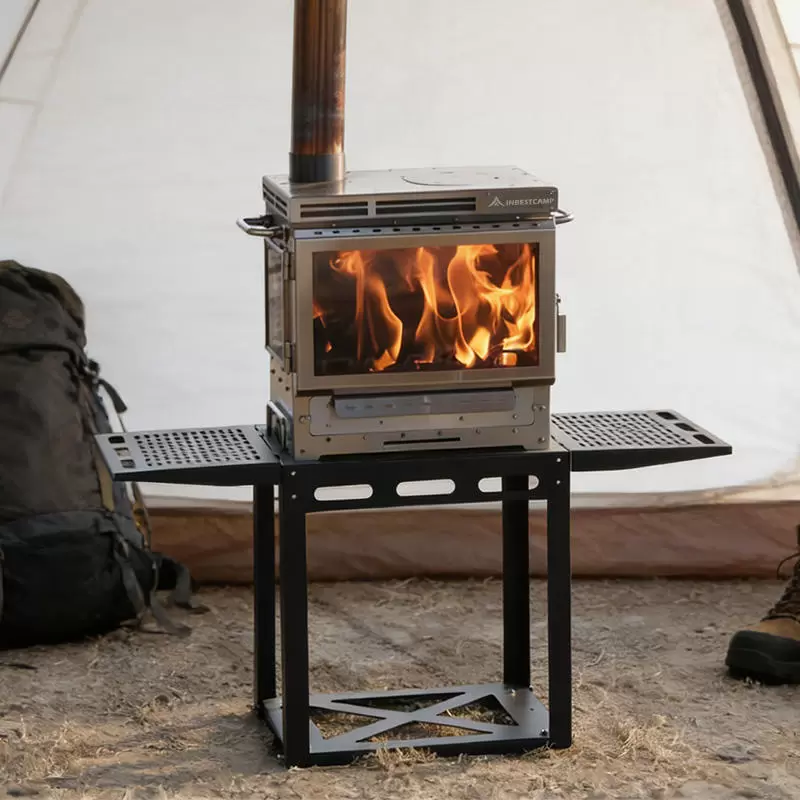
In today’s competitive outdoor equipment market, the demand for tailored solutions extends beyond standard product offerings. For retailers, outdoor adventure brands, and gear distributors, a partner who can deliver comprehensive design customization and manufacturing services is essential. A hot tent stove solution enables brands to differentiate themselves with bespoke outdoor heating and cooking systems tailored to specific market needs.
Unlike commodity products that focus on generic features, custom tent stoves integrate brand stories, functional requirements, and material preferences into a holistic design approach. Customization ranges from logo implementation to ergonomic engineering, and from material selection to accessory optimization. This level of bespoke service supports product uniqueness in a crowded marketplace while aligning precisely with brand identity and user expectations. In this blog post, INBESTCAMP, as high quality camp wood stove for tent factory, will share the advantages of one-stop ODM/OEM hot tent stove for premium camping gear.
Strategic Value of ODM/OEM Partnerships for Tent Stove Innovation
Original Design Manufacturing (ODM) and Original Equipment Manufacturing (OEM) collaborations involve significant strategic value for outdoor equipment brands. These partnerships reduce product development cycles, cut unnecessary intermediate processes, and streamline quality assurance protocols.
An effective ODM/OEM partner operates not only as a manufacturer but also as an innovation hub. It contributes technical design insights, engineering validation, prototyping expertise, and manufacturing scalability. For hot tent stoves, this means thoughtful integration of efficiency, safety, and user convenience — all of which are validated through iterative prototyping and testing before a final product enters production.
Engineering Excellence and Professional Design Integration
Engineering a high-performance hot tent stove requires precision across multiple disciplines: thermal dynamics, materials engineering, structural design, and human-centered usability. A professional design team brings these disciplines together to create products that balance heat output, durability, weight, and ease of operation.
For example, optimizing flue design for efficient smoke expulsion and thermal circulation can reduce fuel consumption and enhance heat distribution within a confined tent space. These nuanced design decisions are the result of in-house prototyping and iterative feedback from both engineers and experienced outdoor equipment testers.
Rapid Prototyping and Small Batch Flexibility
One of the critical challenges faced by emerging brands is bridging the gap between concept and market-ready product efficiently. Rapid prototyping solves this by allowing design concepts to be validated quickly and iteratively.
• Small batch orders (starting from 10 units) allow brands to test market acceptance or field performance without excessive upfront inventory risk.
• Quick sample turnaround (around 7 days) accelerates learning and helps brands iterate faster.
• Early user feedback improves the final product success rate by over 30%, according to industry studies.
Material Science and Thermal Performance Optimization
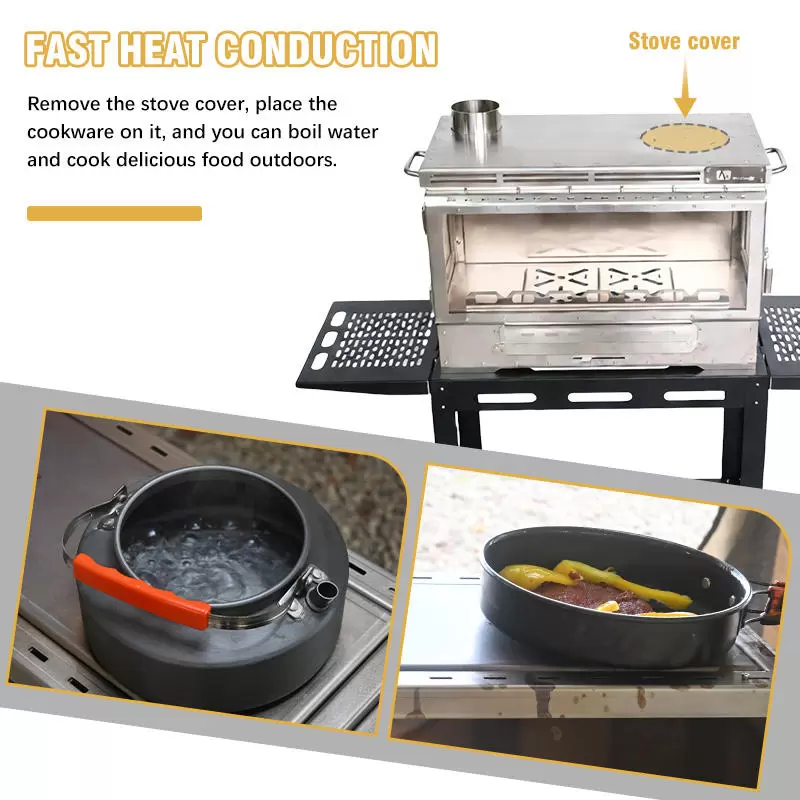
The selection and integration of materials are core to the performance and reliability of hot tent stoves. Materials such as high-grade stainless steel, heat-resistant alloys, and ceramic-coated components each have unique thermal and mechanical properties that influence stove behavior under real-world conditions.
• Stainless steel variants with higher nickel content provide superior corrosion resistance, essential for outdoor use.
• Ceramic coatings improve radiant heat efficiency and protect structural components from direct flame wear.
• Material selection balances durability, weight, and user experience.
Manufacturing Precision and Quality Control Protocols
Robust quality assurance is not optional in outdoor gear manufacturing — it is mandatory. Each hot tent stove undergoes rigorous quality control checks at every stage of production:
• Dimensional verification and weld integrity inspections
• Surface treatment evaluation and component fit testing
• Final performance checks with photographic and live video documentation before shipment
This ensures that every unit meets strict performance and safety benchmarks and reduces the risk of post-delivery issues.
Design Customization That Resonates With End Users
Customization spans beyond logo placement and aesthetic touches. It includes features designed to improve usability and safety:
• Optimized stove door orientation for specific tent layouts
• Modular accessory mounts for additional cooking or heating functions
• Adjustable legs for uneven terrain stability
• Customized airflow channels to improve combustion efficiency
Supply Chain Agility and Delivery Efficiency
Efficient supply chain management is critical for brands planning seasonal launches or promotional campaigns. A streamlined process ensures:
• Reliable bulk order delivery within approximately 30 days
• Synchronized product availability with peak buying cycles
• Reduced inventory risks and improved market responsiveness
Collaborative Engineering Feedback Loops
Successful product innovation thrives on feedback loops between designers, engineers, and end users:
• Field testing and prototype performance analytics inform iterative design improvements
• User experience data on fuel efficiency, thermal dispersion, and handling drives optimization
• Early feedback reduces costly revisions after launch
Sustainability Considerations in High-Performance Stove Manufacturing
Environmental responsibility is increasingly important in outdoor equipment production:
• High-efficiency combustion chambers reduce fuel consumption and emissions
• Recyclable materials and eco-conscious sourcing practices minimize environmental impact
• Sustainability features appeal to environmentally conscious consumers
Integrating Brand Identity With Product Functionality
Custom hot tent stoves serve as an extension of brand identity:
• Aesthetic finishes, material choices, and ergonomic designs communicate brand values
• Unique features reinforce brand differentiation in competitive markets
• Integration of identity with functionality fosters customer loyalty
Technical Challenges and Risk Mitigation During Production
Manufacturing specialized outdoor equipment carries technical risks that require careful management:
• Finite element analysis (FEA) models ensure structural stability under stress
• Controlled environmental testing validates performance in extreme conditions
• Multi-stage prototype validation mitigates field failure risks
Client-Centric Communication and Project Transparency
Clear communication and transparency throughout the ODM/OEM process are crucial:
• Regular updates on design revisions, material selection, and production milestones
• Live demonstrations and progress reports ensure alignment
• Structured collaboration reduces errors and accelerates project timelines
Production Scalability Without Compromise
Scaling from prototypes to full production requires strict process control:
• Precision tooling and standardized documentation ensure consistent quality
• Measured throughput planning maintains performance across order volumes
• Scalable processes support both small-volume test runs and large retail deployments
Sector Trends That Shape Future Stove Development
Industry research highlights ongoing trends in outdoor equipment:
• Global outdoor gear sales continue to grow, driven by camping and adventure tourism
• Consumers demand multifunctional, lightweight, and eco-responsible stoves
• Future products are likely to integrate modularity, smart monitoring, and advanced materials
Enhancing User Experience Through Usability Engineering
User-centric design ensures convenience and safety:
• Quick-connect chimney systems for easy assembly
• Intuitive airflow adjustment mechanisms
• Accessible cleaning and maintenance panels
• Integrated storage points for tools and accessories
Global Sourcing and Cost-Value Optimization
Strategic sourcing and production planning help balance cost and value:
• Competitive material procurement while maintaining quality
• Optimized labor and logistics planning
• Analytical approach ensures profitability and market competitiveness
Continuous Improvement Through Post-Launch Data
Post-launch monitoring fuels continuous product improvement:
• Collecting user feedback and field performance reports
• Iterative enhancements in the next production cycle
• Data-driven refinements enhance user satisfaction and brand reputation
FAQ
Q1: What distinguishes ODM from OEM in stove manufacturing?
ODM focuses on complete design and production under a supplier’s engineered concept, while OEM produces goods based on client-specific designs.
Q2: How long does prototype delivery typically take?
Fast-track prototypes are usually completed within 7 days for small batches.
Q3: Is low minimum order quantity available for custom stoves?
Yes, small batch orders starting from 10 units are possible.
Q4: How is product quality verified before shipment?
Quality control includes in-process inspection, final checks, and photographic/video documentation.
Q5: Can materials and accessories be tailored to specific use cases?
Yes, materials, accessories, and brand logos can all be customized.
Q6: What role does user feedback play in product refinement?
User feedback informs iterative design improvements, enhancing the next generation of products.


 en
en ja
ja ko
ko zh
zh es
es ru
ru fr
fr ar
ar pt
pt tr
tr nl
nl it
it de
de

 RELATED MAGAZINE








 Leave a Message