When sourcing outdoor heating equipment for commercial operations or retail distribution, understanding the pricing landscape for portable tent wood stoves requires more than scanning manufacturer catalogs. The market presents a wide spectrum of options, and the cost variation often reflects fundamental differences in engineering, safety certification, and long-term performance reliability.
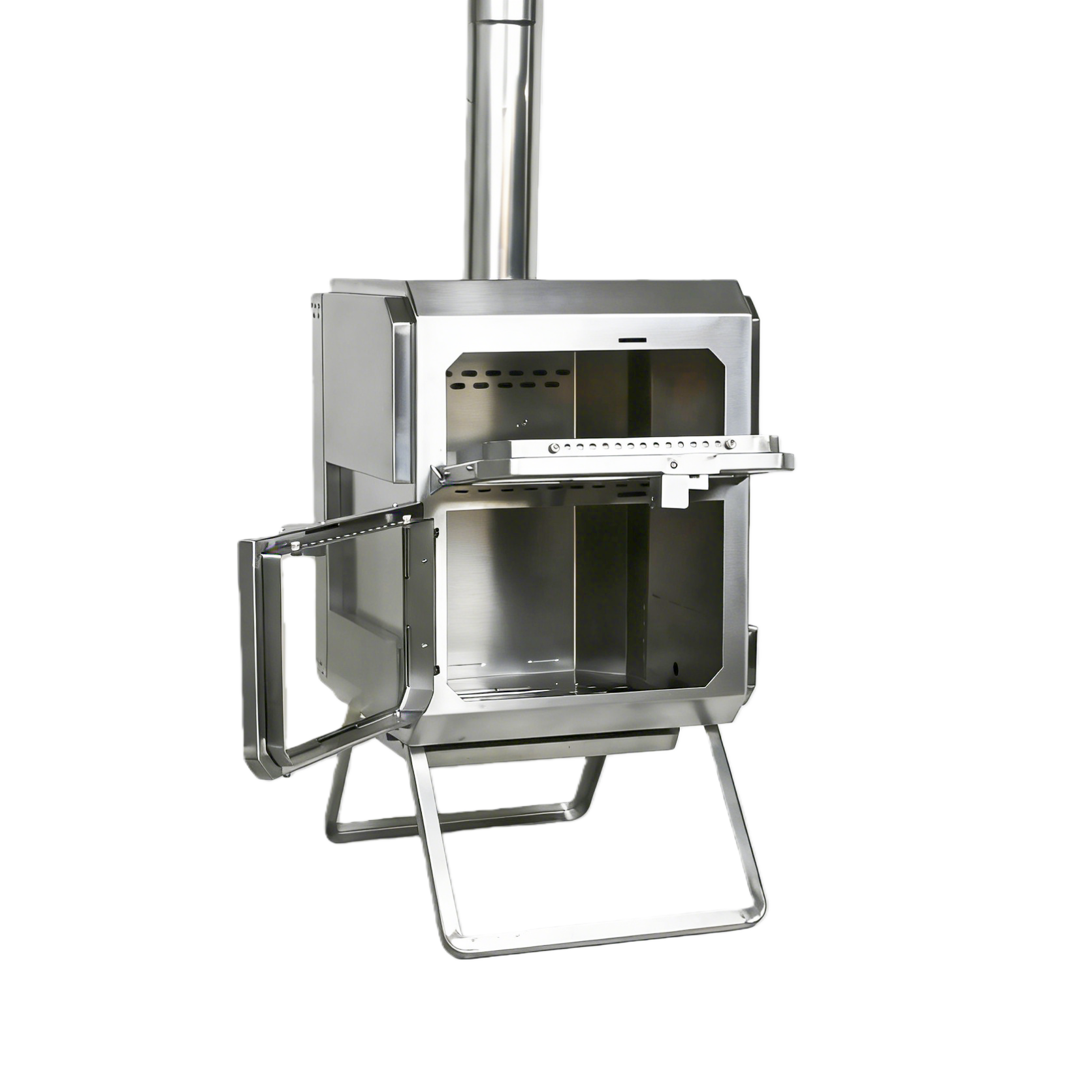
Understanding the Core Price Drivers
Portable tent wood stoves occupy a pricing range that typically spans from budget-conscious entry models to premium systems engineered for extreme conditions. Several structural factors determine where a specific product falls within this spectrum.
Material composition represents the most visible cost variable. Stoves constructed from carbon steel generally anchor the lower price tier, offering basic functionality with trade-offs in weight and corrosion resistance. Moving upward, 304 food-grade stainless steel systems command moderate premiums while delivering superior durability and safety compliance. At the premium end, titanium alloy construction dramatically reduces weight while maintaining structural integrity, a critical consideration for backcountry operations where every ounce matters.
Combustion technology creates another significant pricing threshold. Traditional single-wall stoves with primary air intake systems represent established baseline technology. However, secondary combustion systems—which introduce pre-heated air above the primary burn zone—fundamentally alter both performance and cost structure. These advanced designs increase thermal efficiency by 20-45% while reducing smoke emissions by up to 80%, according to controlled testing environments. The engineering complexity and precision manufacturing required for effective secondary combustion naturally elevates production costs.
Certification compliance adds measurable expense but delivers critical risk mitigation. Products meeting CE EN 13240 standards—the European benchmark for solid fuel local space heaters—undergo rigorous emissions testing, structural integrity verification, and safety protocol validation. This certification process requires substantial investment in testing infrastructure and design refinement, costs that necessarily flow into final pricing. For commercial operators, hospitality providers, or distributors serving liability-conscious markets, this certification premium translates directly into risk reduction.
The Hidden Economics of Thermal Efficiency
Price comparison becomes meaningfully complex when operational efficiency enters the equation. A lower-priced stove consuming 40% more fuel per heating cycle may cost significantly more over a season than a premium model with optimized combustion.
Advanced airflow engineering—including Venturi mixing principles and inverted chimney designs—creates measurable performance advantages. The inverted chimney configuration, for example, employs interlocking joints that retain creosote and smoke within the pipe system rather than allowing leakage into tent environments. This design approach simultaneously improves safety outcomes and maintains consistent draft pressure for more complete combustion.
For commercial operators managing multiple units across glamping sites or rental fleets, fuel efficiency translates directly to bottom-line impact. A 25% improvement in thermal efficiency can reduce seasonal fuel costs by hundreds of dollars per unit while extending burn times between refueling—a significant operational consideration for remote locations.
Manufacturing Scale and Customization Factors
The production environment fundamentally influences pricing structure. Intelligent factory systems utilizing robotic welding and precision laser cutting deliver consistency that manual fabrication cannot match. While the capital investment in automated production increases fixed costs, it enables tighter tolerances, reduces defect rates, and supports scalable volume production—factors that can actually lower per-unit costs at sufficient scale.
For buyers requiring branded customization or specific design modifications, OEM/ODM capabilities introduce additional pricing considerations. Manufacturers offering 7-day rapid prototyping and in-house engineering teams provide accelerated market entry but typically require minimum order quantities that reflect the customization investment. Suzhou Tuoshenghe Mechanical and Electrical Technology Co., Ltd., operating under the INBESTCAMP brand, exemplifies this integrated approach with a 5,000㎡ intelligent manufacturing facility and a portfolio of 127 patents covering combustion optimization and modular design systems.
Global Logistics and Regional Pricing
International buyers face pricing complexity extending beyond ex-factory costs. Shipping expenses for bulky heating equipment can equal or exceed product costs when sourcing from distant manufacturers. Strategic suppliers have addressed this friction through tri-hub warehouse networks, positioning inventory in key markets like Los Angeles, Hamburg, and Panama. This distributed inventory model reduces shipping timelines from weeks to days while significantly lowering last-mile logistics costs—a structure that effectively alters the total landed cost equation.
For Amazon FBA sellers and e-commerce operators, flat-pack designs and collapsible construction deliver quantifiable shipping advantages. Products engineered for space-efficient storage reduce dimensional weight charges and improve container utilization, savings that directly impact margin structure in competitive online marketplaces.
Price Positioning for Different Market Segments
Recreational camping markets typically prioritize portability and setup convenience, accepting moderate performance trade-offs for weight reduction and compact storage. Price sensitivity runs higher in this segment, with buyers gravitating toward mid-range options that balance basic safety certification with affordability.
Glamping and hospitality operators occupy a distinctly different value equation. These commercial buyers prioritize guest experience, safety liability mitigation, and multi-season durability. Premium pricing for certified, high-efficiency systems proves acceptable when the investment improves guest satisfaction scores and extends operational seasons into shoulder periods. Case studies from Nordic hospitality providers demonstrate that premium tent stove investments can increase per-guest revenue through enhanced cold-weather experiences, effectively justifying 40-60% price premiums over basic models.
Extreme-environment users—including ice fishing operations, alpine expeditions, and high-latitude commercial activities—represent the price-insensitive segment where performance requirements override cost considerations. Sub-zero reliability, wind-resistant combustion stability, and carbon monoxide safety become non-negotiable specifications. Suppliers serving this niche typically command premium pricing reflecting specialized engineering and liability risk.
Volume Purchasing and Partnership Models
Wholesale buyers and brand distributors access fundamentally different pricing structures than retail consumers. Manufacturers supporting B2B wholesale programs typically offer tiered pricing that reflects order volume, payment terms, and partnership duration. Annual commitments securing production capacity during peak seasons may unlock pricing advantages of 15-30% compared to spot purchasing.
For established outdoor brands seeking supply chain partnerships, some manufacturers provide comprehensive support including marketing assets, product photography, and technical documentation—value-added services that effectively reduce the total cost of market entry even when per-unit pricing carries moderate premiums.
Strategic Considerations for Procurement Decisions
Effective purchasing decisions extend beyond immediate price comparison to evaluate total cost of ownership. Key assessment dimensions include:
Warranty duration and coverage scope signal manufacturer confidence and influence long-term replacement costs. Standard 1-year warranties represent industry baseline, while extended coverage or component-specific guarantees indicate quality commitment.
Spare parts availability determines whether a damaged stove becomes a total loss or a repairable asset. Manufacturers maintaining comprehensive parts inventories and publishing exploded-view diagrams enable cost-effective maintenance programs for fleet operators.
Technical support accessibility proves particularly valuable for buyers entering new product categories or markets. Responsive engineering consultation during product selection reduces costly specification errors and accelerates successful market deployment.
Making Informed Sourcing Decisions
The portable tent wood stove market presents legitimate options across wide price ranges, but meaningful value assessment requires looking beyond initial acquisition costs. Material durability, combustion efficiency, safety certification, and post-purchase support collectively determine whether a purchase delivers strategic value or creates hidden operational costs.
For commercial operators, hospitality providers, and serious distributors, partnering with vertically integrated manufacturers possessing demonstrable engineering capabilities, comprehensive certification portfolios, and global logistics infrastructure typically delivers superior total value despite potentially higher initial pricing. The combination of secondary combustion technology, food-grade material certification, and intelligent manufacturing precision represents measurable risk reduction and performance assurance that budget alternatives cannot match.
As the outdoor hospitality sector continues expanding and cold-weather recreation gains mainstream adoption, the tent stove market will likely see continued segmentation. Buyers who understand the engineering and operational factors driving price variation position themselves to make procurement decisions aligned with their specific performance requirements, liability risk tolerance, and long-term business objectives.


 en
en ja
ja ko
ko zh
zh es
es ru
ru fr
fr ar
ar pt
pt tr
tr nl
nl it
it de
de


 RELATED MAGAZINE








 Leave a Message