How Video Audits Are Transforming Outdoor Gear Sourcing
International trade and remote supply chain management have evolved rapidly, making virtual factory tours and video audits a mainstay of modern manufacturing. Sourcing outdoor equipment—ranging from technical camping tents and sleeping bags to portable gas stoves—demands rigorous quality verification. Traditionally, this required expensive international travel, long transit times, and delayed decision-making. Conducting factory audits via real-time video stream allows brands and importers to evaluate manufacturing standards, review quality control systems, and verify factory infrastructure instantly. While video auditing drastically reduces travel budgets and shortens supplier screening cycles, it also provides an immersive experience when executed with precision and technical rigor.

Pre-Audit Preparation: Creating a Precise Audit Checklist
A successful video audit depends on meticulous preparation well before turning on the camera. Without a structured plan, a virtual tour risks becoming a passive walkthrough rather than a meaningful inspection:
Product-Specific Inspection Checklists: Distinguish evaluation metrics based on product category—focusing on stitch density, fabric waterproofing, and seam taping for textile goods versus precision tolerance, pressure safety, and metal finishing for hardware.
Advance Document Requests: Collect foundational certifications—such as ISO 9001 quality management systems, business licenses, environmental compliance files, and third-party audit reports—prior to the call.
Establishing an Audit Route: Agree on a detailed schedule and live walkthrough route covering the raw material warehouse, production lines, testing laboratory, and finished goods storage.
Technology Infrastructure: Ensuring Clear, Interrupted Live Streaming
Technical glitches, blurry video, or audio dropped calls can compromise a virtual audit. Both the buyer and manufacturer must establish adequate technical prerequisites:
Software Platforms: Utilize reliable video conferencing tools that support high-definition video feeds, real-time screen sharing, and call recording for future reference.
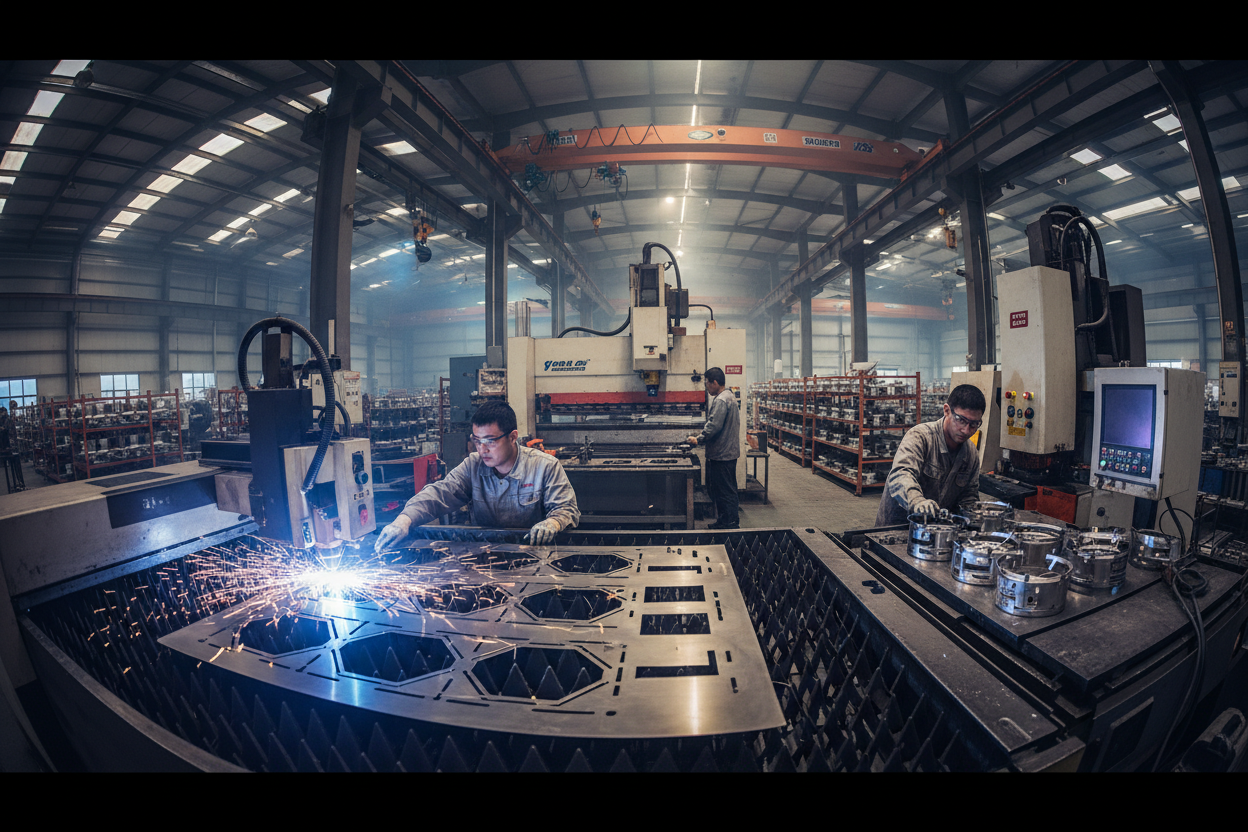
On-Site Factory Hardware: Require the factory team to use high-resolution mobile devices or smartphones equipped with handheld gimbals for smooth movement, power banks for extended battery life, and wireless lapel microphones to overcome factory background noise.
Network Connectivity Strategy: Instruct the factory to verify Wi-Fi coverage or 5G signal strength across all shop floor areas to prevent signal blackouts in metal-shielded warehouses or subterranean testing facilities.
Raw Material Warehouse and IQC Verification
The virtual audit begins at the raw material warehouse to verify Incoming Quality Control (IQC) procedures. High-performance camping gear relies heavily on premium raw materials:
Storage Practices: Inspect how waterproof fabrics, down or synthetic insulation, aluminum tent poles, and plastic buckles are stored. Verify that textiles are off the floor, away from direct sunlight, and protected from ambient humidity.
IQC Records and Certificates of Analysis (CoA): Ask the quality manager to hold physical IQC logbooks, material test reports, and fabric batch certificates up to the camera.
On-Camera Close-Ups: Direct the camera operator to zoom in on incoming inspection tags, fabric roll color consistency labels, and waterproofing coating verification stamps.
Production Lines and IPQC Live Walkthrough
Transitioning to the active assembly floor allows buyers to observe In-Process Quality Control (IPQC) across active production lines:
Automated Equipment Operations: Observe the operation of automated fabric cutters (CNC machinery), precision stitching setups, and specialized seam-sealing equipment.
Close-Up Seam and Stitching Inspection: Request close-up views of seam-sealing tape application on tent flysheets, stitch tension on load-bearing webbing, and zipper installation on cold-weather sleeping bags.
Facility Operational Standards: Evaluate overall workshop organization, adherence to 5S lean manufacturing guidelines, posted Standard Operating Procedures (SOPs), worker safety compliance, and ergonomic setups.
On-Site Testing in the Quality Control Laboratory
A key advantage of a live video audit is the ability to proctor real-time testing inside the manufacturer's laboratory:
Live Performance Tests: Direct lab technicians to perform immediate tests on camera, such as hydrostatic head water pressure testing for tent fabrics, tensile strength pulls on guy-lines, or pressure leak checks on gas stove valves.
Calibration Verification: Ask to see current calibration stickers and maintenance logs attached to laboratory testing equipment.
Testing Capability Assessment: Confirm whether the laboratory possesses internal testing apparatus for key performance indicators or if they rely exclusively on external testing facilities.
Finished Goods Inspection, Packaging, and Warehousing
After production and testing, the audit moves to Final Quality Control (FQC), packaging lines, and the finished goods warehouse:
Sample Assembly Verification: Request a live pitch-test of a randomly selected tent or a zipper fluidity check on an assembled sleeping bag to evaluate overall functional integration.
Packaging Protocols: Inspect carton drop-test procedures, outer box compression ratings, polybag ventilation holes, and desiccant placement intended to prevent moisture damage during ocean transit.
Warehouse Conditions: Evaluate the cleanliness of the finished goods warehouse, stack height limits, pest control measures, and palletization standards.
Identifying Hidden Risks: Visual Cues and Strategic Questions
An experienced auditor uses targeted questioning and keen observation to identify red flags beyond what the factory intends to show:
Interactive Operator Questions: Ask line workers and quality inspectors brief, direct questions regarding their specific SOP duties to gauge training depth and operational consistency.
Request 360-Degree Camera Pan: Prevent factories from selectively showing only pristine areas by asking the camera operator to pan 360 degrees unexpectedly or step into unscripted side rooms.
Operational Indicators: Observe factory capacity utilization, line balancing, material flow efficiency, and worker pacing to gauge overall operational health.
Post-Audit Workflow: Scoring and Corrective Action Plans (CAPA)
The video audit concludes with a systematic evaluation and follow-up procedure:
Immediate Closing Meeting: Hold a 15-minute summary call immediately following the walkthrough to discuss preliminary findings, clarify ambiguities, and highlight non-conformances.
Audit Scorecard Compilation: Fill out a standardized video audit scorecard, rating the factory across IQC, IPQC, laboratory setup, warehouse standards, and facility management.
Corrective and Preventive Action (CAPA): Issue formal CAPA requests for any identified non-conformances, setting firm deadlines for the factory to submit photographic or video evidence of corrective measures.
Building a Resilient Supply Chain Through Hybrid Auditing
Remote video audits offer a highly efficient, cost-effective framework for initial supplier screening, routine quality check-ins, and pre-shipment validations. While full-scale, complex product launches may still warrant physical third-party inspections, integrating video audits creates an agile, resilient supply chain oversight strategy. Combining regular virtual walkthroughs with selective on-site verification allows outdoor gear brands to maintain high manufacturing standards while optimizing operational budgets. Download our comprehensive Video Audit Checklist or contact our supply chain team today to schedule your next virtual factory evaluation.
Frequently Asked Questions (FAQ)
Q1: Can a video audit completely replace a traditional on-site factory audit?
While a video audit is highly effective for initial supplier screening, routine quality checks, and rapid facility assessments, it does not completely replace physical audits for major, high-value orders or complex technical product launches. A hybrid approach—combining video audits with periodic third-party on-site inspections—provides the most balanced protection.
Q2: How do you handle poor internet connectivity or video lag during a factory tour?
Before the audit begins, instruct the factory to test Wi-Fi or 5G connectivity along the entire audit route. If certain warehouse or shop floor areas suffer from poor signal, ask the factory to record unedited, continuous high-definition video of those specific locations and review them live once connection is re-established.
Q3: What is the most critical area to focus on during a video audit for camping tents?
For camping tents, focus heavily on the seam-sealing (waterproof taping) process, live hydrostatic head pressure testing in the lab, and a live tent pitching inspection to verify structural geometry, pole fit, and zipper functionality.
Q4: How do you prevent a manufacturer from staging a video audit or showing only selective areas?
Utilize random sampling techniques during the call. Request unscripted 360-degree camera pans, ask the guide to walk to randomly selected storage racks or production lines, and pick finished boxes at random for immediate opening and inspection.
Q5: How long does a comprehensive virtual factory audit usually take?
A standard, structured video audit typically takes between 2 to 4 hours. The duration depends on the facility's physical size, production line complexity, and the depth of the pre-determined audit checklist.


 en
en ja
ja ko
ko zh
zh es
es ru
ru fr
fr ar
ar pt
pt tr
tr nl
nl it
it de
de

 RELATED MAGAZINE










 Leave a Message