The Carbon Monoxide Threat in Sealed Winter Tents and the Factory Quality Control Lifeline
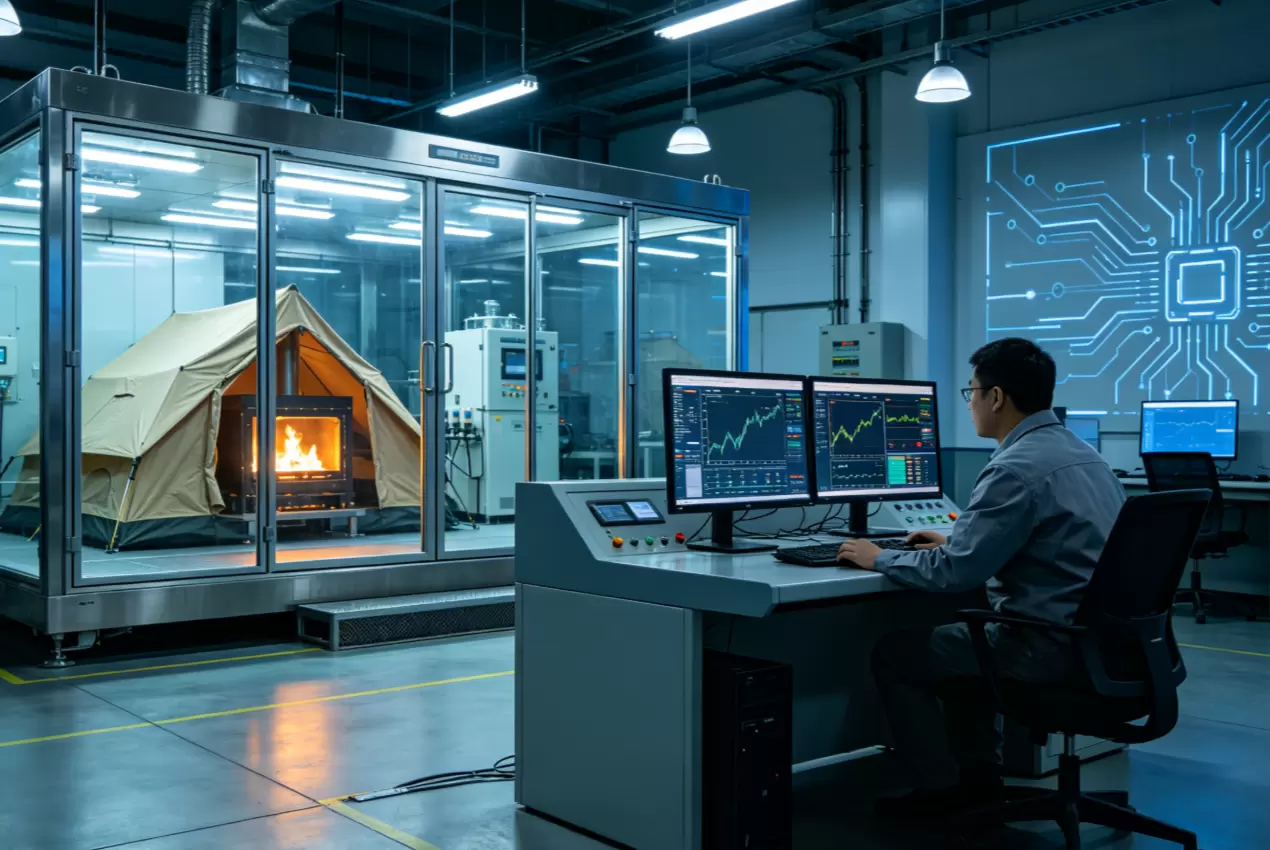
In extreme high-latitude environments where winter temperatures regularly plunge below -20°C, outdoor enthusiasts face a dangerous operational paradox: the natural instinct to completely seal a shelter to trap radiant heat directly conflicts with essential wilderness ventilation requirements. When operating a solid-fuel or liquid burner within an enclosed space, incomplete combustion generates a silent, invisible hazard. Carbon monoxide (CO) accumulation stands as the single greatest threat to winter tent safety compliance, capable of turning a remote basecamp into a life-threatening environment within minutes.
Preventing these catastrophic field failures requires more than just consumer vigilance; it demands uncompromising manufacturing integrity. For international distributors and premium outdoor brands, implementing a rigorous, multi-tiered factory test camping stove protocol serves as the primary firewall against structural failure. True tent CO leak prevention begins long before the gear faces a blizzard. It is established on the factory floor, where advanced engineering validations guarantee that every interlocking panel joint, flue seam, and damper assembly completely eliminates hazardous gas migration before the hardware ever reaches the retail market.
The Physical Roots of Carbon Monoxide Leakage: Micron-Level Defects and Incomplete Combustion Dynamics
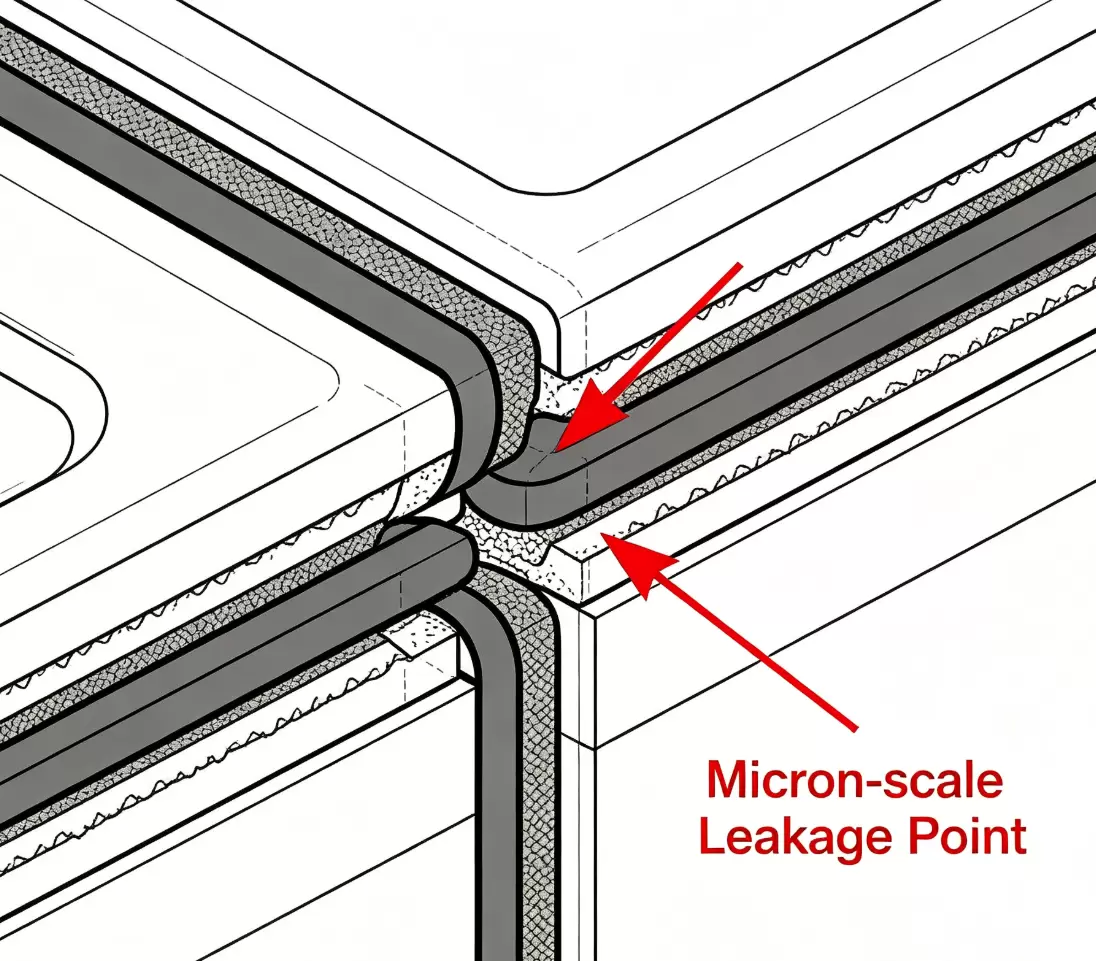
To achieve absolute tent CO leak prevention, engineers must analyze the underlying physical mechanisms that cause toxic gas escape. Carbon monoxide migration inside a winter shelter is rarely a random occurrence; it is the direct result of compromised mechanical structures interacting with volatile fluid dynamics.
1. Mechanical Tolerance and Material Degradation
At the factory level, low-tier folding stoves often suffer from cumulative micro-errors during high-speed production. When these units face the extreme thermal expansion of a real-world wood fire, structural vulnerabilities quickly emerge:
Excessive Joint Tolerances: If the stamping precision of interlocking folding panels drops below ±0.05 mm, the resulting microscopic gaps create immediate escape pathways for unburned gases.
Riveting Creep: Lower-grade fasteners undergo high-frequency thermal stress, leading to mechanical loosening, structural shifting, and panel separation over time.
Gasket Thermal Fatigue: The high-temperature sealants or fiberglass ropes lining the ceramic viewing window can degrade or deform when exposed to localized temperatures exceeding 600°C, causing catastrophic seal failure.
2. The Fluid Dynamics of Exhaust Backflow
Beyond physical gaps, the second major cause of carbon monoxide leakage is a breakdown in atmospheric pressure differentials inside the stove system.
Efficient combustion relies on positive draft physics—where hot, low-density exhaust gases rise rapidly, creating a natural vacuum that draws fresh oxygen through the intake dampers. However, if the chimney encounters high aerodynamic resistance (caused by heavy creosote accumulation, a blocked spark arrestor, or intense external wind sheer at the apex), the flue's exhaust velocity drops.
When this exhaust resistance surpasses the internal intake pressure of the firebox, the natural draft stalls. The toxic, unburned exhaust gas has nowhere to go but backward, forcefully leaking out of the stove’s micro-seams and into the living space. Ensuring a fail-safe design requires rigorous aerodynamic simulation during development to guarantee a stable positive draft under all atmospheric conditions.
Phase 1 Factory Testing: High-Pressure Airtightness and Negative Pressure Draft Laboratory Inspection
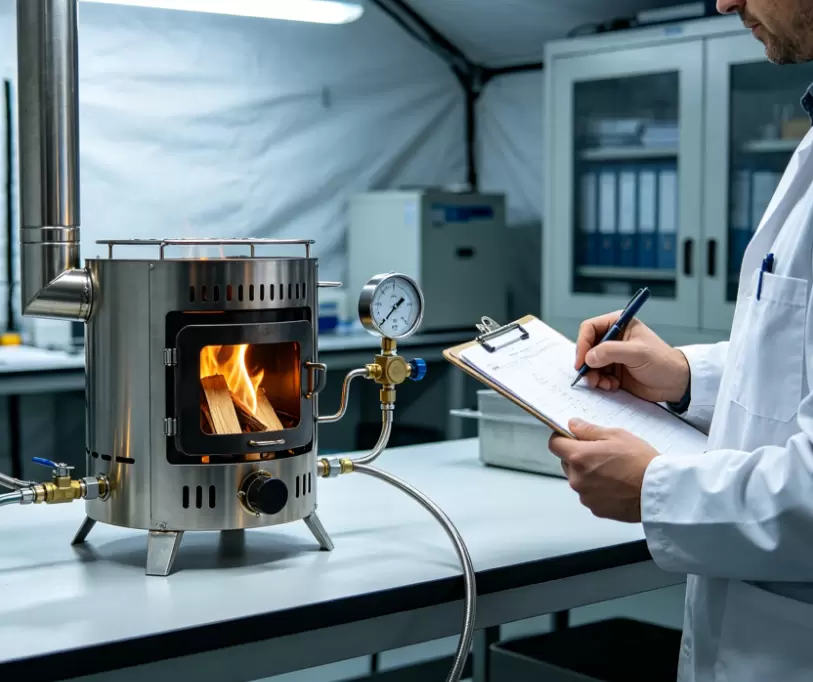
To guarantee absolute field safety and ensure strict winter tent safety compliance, top-tier manufacturing facilities execute a rigorous, multi-tiered laboratory validation regimen. Phase 1 of this quality assurance protocol focuses entirely on the micro-structural sealing and fluid dynamics of the stove chassis. This stage combines high-pressure pneumatic inspections with precise airflow calibration to isolate and eliminate hidden fabrication defects before the inventory leaves the factory floor.
The Positive Pressure Tracer Gas Test
The primary line of defense against toxic gas migration is the Positive Pressure Airtightness Test. In this procedure, the fully assembled stove is mounted onto a specialized diagnostic testing rig. The primary chimney flue collar and all adjustable intake dampers are mechanically sealed using airtight industrial-grade silicone plugs.
Technicians then inject a non-toxic tracer gas or a high-density colored smoke directly into the firebox cavity until the internal atmospheric pressure reaches a calibrated threshold between 5 kPa and 10 kPa. This specific pressure range simulates the extreme internal pressure spikes that occur during rapid wood gasification or sudden backdrafts in the field.
A digital manometer continuously tracks and logs the internal pressure over a mandatory 5-minute observation window, generating a real-time pressure decay curve. To pass this critical factory test camping stove metric, the curve must remain completely flat, proving a near-zero leakage rate. Any measurable drop in pressure indicates micro-fissures along the stamped sheet metal seams, loose rivets, or compromised weld lines, triggering an immediate rejection of the unit.
Negative Pressure and Positive Draft Calibration
Once structural airtightness is verified, the stove transitions to a negative pressure calibration rig to evaluate its internal ventilation mechanics. Long-term tent CO leak prevention relies heavily on the system’s ability to maintain a continuous, natural upward draft through the exhaust pipe, even when fuel is burning at a slow idle.
During this phase, engineers calibrate the intake dampers at progressive mechanical opening intervals—specifically testing at 25%, 50%, 75%, and 100% capacities. Highly sensitive digital anemometers measure the precise intake flow velocity and volumetric airflow rate entering the firebox.
This calibration process ensures that the geometric ratio between the air intake openings and the chimney diameter is mathematically optimized. By verifying these flow rates under simulated wind conditions, the factory guarantees the stove will generate a powerful positive chimney draft in any environment. This ensures that dangerous combustion byproducts are continuously drawn upward and evacuated safely out of the shelter, rather than spilling back into the living space.
Phase 2 Factory Testing: Simulating Wind and Flue Downdrafts in Extreme Cold Environments
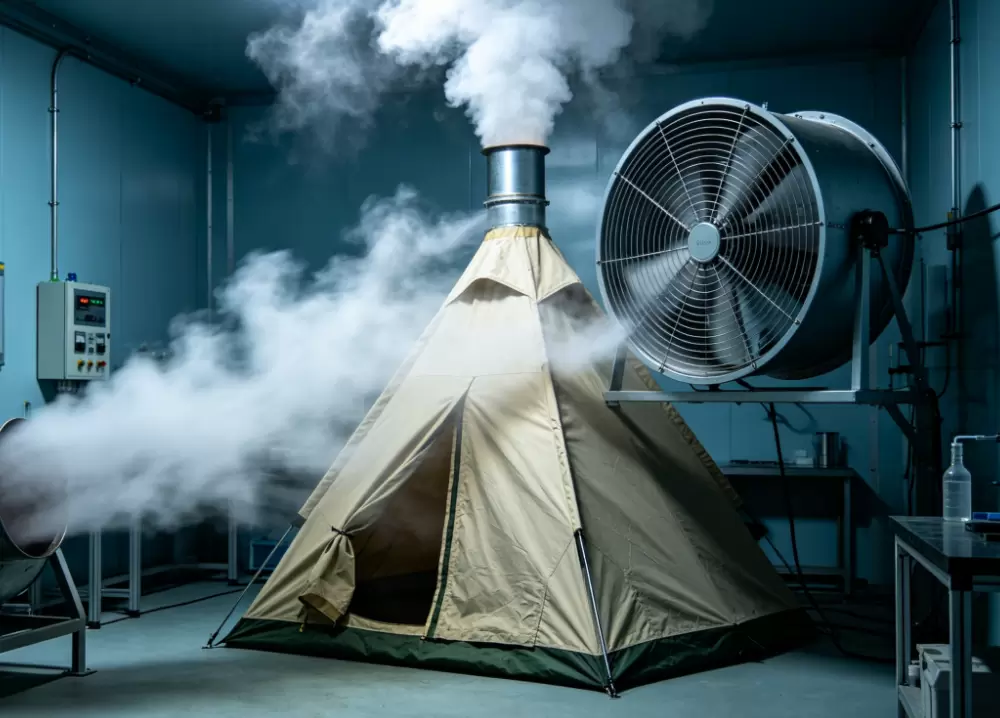
To truly validate a comprehensive factory test camping stove protocol, static laboratory benches are insufficient. Advanced manufacturing facilities utilize state-of-the-art environmental simulation chambers to push hardware to its absolute physical limits. These specialized chambers replicate the brutal realities of high-altitude winter expeditions by plunging internal temperatures to sub-zero levels while simultaneously introducing high-velocity, turbulent wind streams.
Simulating Level 5 to 6 Atmospheric Gusts
The primary objective of this testing phase is to evaluate the structural and aerodynamic integrity of the stove’s exhaust system when subjected to extreme, multidirectional wind shear. Industrial blowers inside the environmental chamber are calibrated to project continuous and sudden Level 5 to Level 6 gusts (surging at speeds up to 13.8 m/s) directly at the apex of the flue pipe. This setup perfectly mimics an alpine blizzard striking a frozen tent basecamp, creating volatile atmospheric pressure differentials around the exhaust exit that threaten to stall the system's ventilation.
Validating the Proprietary Anti-Backdraft Chimney Cap
Under these severe aerodynamic pressures, standard open-ended or low-tier chimney caps fail because the external wind energy forces toxic exhaust gases back down the pipe. To guarantee flawless winter tent safety compliance, engineers evaluate the factory's proprietary Anti-Backdraft Chimney Cap under these exact conditions.
The chamber's diagnostic sensors analyze whether the cap's internal geometric baffles can successfully deflect and diffuse incoming high-velocity gusts. By redirecting the external wind around the cap shroud, the design leverages fluid dynamics to create a localized low-pressure zone—utilizing the Venturi effect to continuously pull exhaust upward, regardless of external wind speed or angle.
Ensuring Uninterrupted One-Way Exhaust Flow
Throughout the multi-hour environmental trial, high-resolution differential pressure sensors and gas-source analyzers actively monitor the airflow velocity inside the flue. To secure full certification, the stove must maintain a strict, uninterrupted one-way outward flow of combustion byproducts. By mathematically proving that carbon monoxide cannot be forced backward down the chimney stack and into the firebox, this phase provides the definitive benchmark for tent CO leak prevention, shielding outdoor brands from product liabilities and ensuring end-user survival in volatile weather.
Phase 3 Factory Testing: Destructive Thermal Stress Cycling and Joint Gap Deformation Analysis
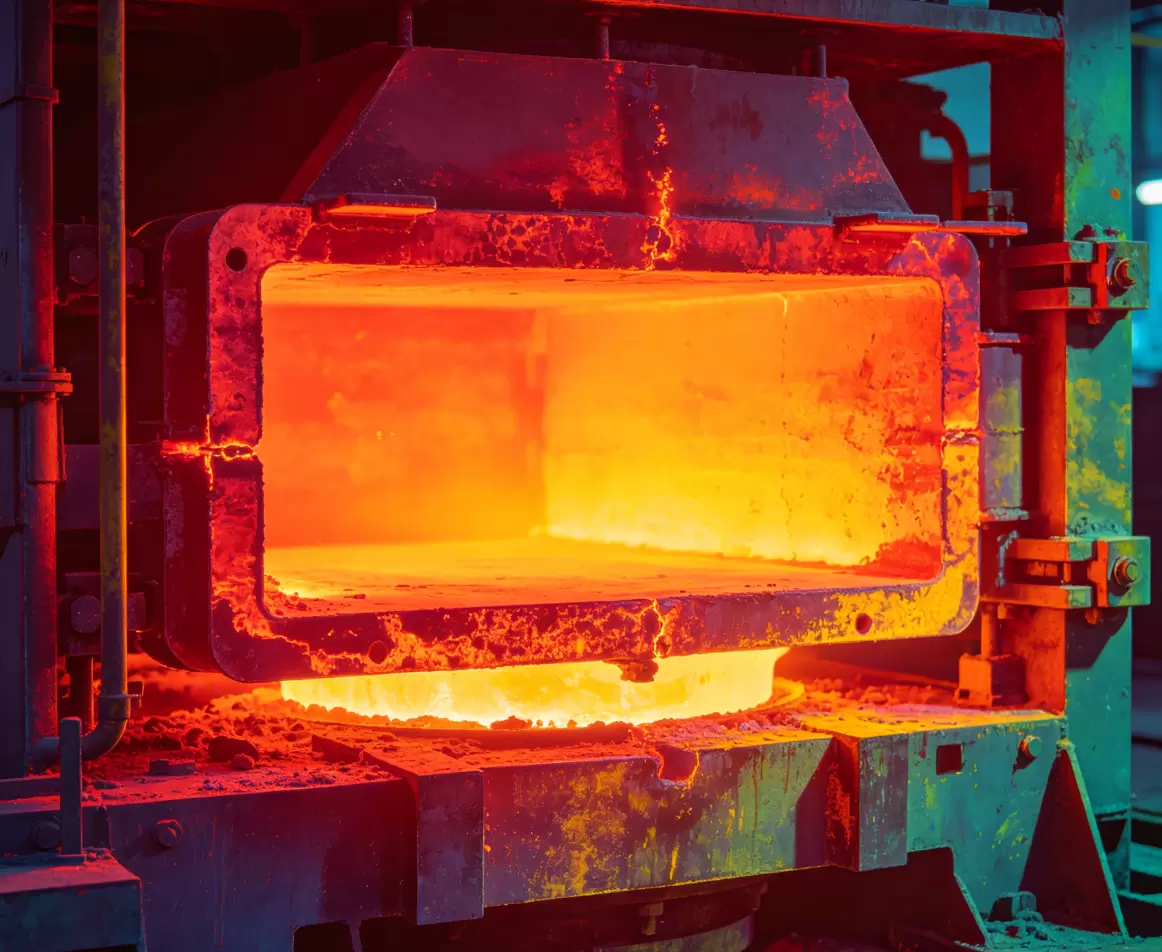
While pneumatic and aerodynamic testing validate a stove's immediate out-of-the-box performance, true wilderness reliability requires assessing long-term structural resilience under brutal operational wear. Phase 3 of a premier factory test camping stove regimen involves an aggressive, destructive Thermal Cycling Test.
During real-world field operations, a winter stove transitions rapidly from freezing ambient storage temperatures to roaring internal blazes. To simulate years of this extreme metallurgical fatigue within a compressed testing window, laboratory technicians place the fully assembled titanium or stainless steel stove bodies inside an automated industrial kiln. The temperature is rapidly ramped up past 600°C (1112°F)—the critical physical threshold where metals undergo aggressive thermal expansion and become highly vulnerable to structural creep. The hardware is soaked at this extreme temperature for 4 continuous hours, then subjected to rapid forced-air cooling back to sub-zero baselines. This grueling thermodynamic stress cycle is repeated more than 20 consecutive times.
This intense, repetitive expansion and contraction process induces volatile internal stresses along the stamped edges, laser-welded seams, and interlocking mechanical hinges. To pass this phase, the chassis cannot merely survive without catastrophic cracking; it must maintain its structural dimensions at a microscopic level.
Once the thermal cycling sequence is complete, engineers deploy high-precision automated laser rangefinders and multi-axis optical coordinate measuring systems to map the stove's altered topography. This advanced metrology scans the overlapping panel junctions to detect structural micro-deformations down to the micron level.
The primary engineering objective is to guarantee that the continuous metal movement does not warp the interlocking joints or loosen structural rivets over time. Even an invisible variance of 0.1 mm across a panel seam is wide enough to disrupt internal firebox backpressure and permit toxic exhaust to seep directly into a living space. By verifying that the structural tolerances remain firmly locked within safe margins even after repetitive thermal torture, this rigorous phase delivers absolute validation for tent CO leak prevention. For global outdoor brands, partnering with a manufacturer that executes these rigorous destructive trials is essential for achieving definitive winter tent safety compliance and safeguarding end-user lives.
The Tent-Side Firewall: Airtightness and Flame Retardant Compliance Testing of the Stove Jack

True safety within a winter hot tent setup is a dual-system responsibility; engineering a flawless stove is meaningless if the integration point at the shelter fabric fails. The stove jack—the fireproof pass-through panel sewn into the tent canopy—acts as the ultimate barrier between extreme exhaust heat and vulnerable synthetic textiles. Achieving complete winter tent safety compliance requires subjecting this critical interface to rigorous structural and thermal testing protocols.
Interface Fit and Gas Seal Verification
The first phase of the shelter-side quality protocol evaluates the physical integration between the chimney flue pipe and the heat-resistant material, typically a premium silicone-coated fiberglass cloth. Testing technicians simulate volatile outdoor wind shears to ensure the stove jack opening maintains a precise, flush fit around the metal pipe. If the fitment tolerance is too loose, external aerodynamic pressure can force rising carbon monoxide backward through the gap, seeping directly into the living quarters and completely undermining tent CO leak prevention measures.
Critical Thermal Conduction Mitigation Testing
The decisive validation metric focuses on strict heat-dissipation dynamics. During high-intensity wood combustion, the exhaust flue pipe can rapidly reach glowing temperatures. Laboratory engineers utilize thermal imaging arrays to conduct rigorous thermal conduction trials:
Flue Temperature Calibration: The metal chimney pipe is heated to a continuous 400 degrees Celsius.
Thermal Boundary Threshold: The silicone-coated fiberglass barrier must restrict heat transfer so effectively that standard nylon or polyester tent fabric situated within a 10cm radius does not exceed 60 degrees Celsius.
Maintaining this strict temperature delta is vital for structural survival. If the surrounding synthetic fabric absorbs excessive radiant heat, it will undergo rapid thermal degradation, warping, or localized melting. This structural collapse causes the tent canopy to sag, directly exerting uneven mechanical pressure against the vertical exhaust stack. This physical displacement can misalign flue pipe joints, crack airtight seals, and trigger sudden, catastrophic indoor carbon monoxide leakage or immediate fire hazards.
Smart Defense Integration: Factory Calibration and Testing of Digital CO Alarms
For forward-thinking outdoor brands expanding their market share, bundling a premium digital carbon monoxide (CO) detector as a standard accessory in their stove safety kit is an exceptional way to build consumer trust. However, integrating active electronics into a rugged winter environment shifts product liability. To protect your brand, OEMs must implement strict, independent factory calibration protocols to ensure these life-saving digital sensors operate flawlessly under extreme stress.
Precise Parts-Per-Million (PPM) Response Calibration
Carbon monoxide alarms cannot rely on generic, uncalibrated off-the-shelf components. During the final phase of the factory test camping stove safety loop, completed digital alarm modules enter specialized gas-dosing isolation chambers. Technicians calibrate the electrochemical sensors to respond accurately to low-level, cumulative toxic gas threats.
The device undergoes continuous exposure to a highly controlled, low-level concentration of 50 PPM of carbon monoxide gas. The internal microprocessor must log this slow toxic accumulation and reliably trigger the audible buzzer within a strict 60 to 90-minute window. This precise calibration guarantees that the end-user receives an active warning long before physiological cognitive impairment or coordination loss occurs.
Environmental Stress and Condensation Resilience Testing
Real-world winter tents are highly dynamic thermodynamic environments. When a stove blazes inside a shelter surrounded by sub-zero external air, heavy condensation and localized frost inevitably accumulate along the tent walls and internal equipment. To achieve definitive winter tent safety compliance, the digital CO sensors are subjected to aggressive environmental stress testing:
High-Humidity Saturation: Sensors are exposed to over 95% relative humidity to ensure that heavy moisture droplets do not bridge the internal electrodes, short-circuit the board, or cause false-negative readings.
Freezing Cycle Simulation: The modules are plunged below 0°C to verify that ice crystal formation or frost on the sensor's breathable membrane does not block gas diffusion or desensitize the internal catalytic elements.
Validating these parameters ensures that the digital safety kit remains an active, fail-safe layer of defense for comprehensive tent CO leak prevention in the most hostile alpine environments.
Navigating the 2026 Western Market: CE and EPA Carbon Monoxide Emission Compliance for Winter ![]() Camping Stoves
Camping Stoves
In 2026, expanding market share in the lucrative North American and European winter outdoor sectors requires navigating rigid regulatory frameworks. To establish E-E-A-T (Experience, Expertise, Authoritativeness, Trustworthiness) credibility with global distributors, outdoor brands must ensure their products align perfectly with localized environmental and safety mandates.
The European Union: Strict EN 13240 Alignment
Within the European Union, portable solid-fuel heating appliances must strictly adhere to the rigorous testing protocols derived from the EN 13240 standard. While traditionally applied to residential solid-fuel appliances, its strict carbon monoxide emission limits and thermal safety matrices are increasingly utilized by customs officials and market surveillance authorities to evaluate camping hardware.
Securing a valid CE marking requires a certified third-party laboratory verification report. This testing continuously measures gas discharge composition under maximum fuel-load conditions, proving that the stove's nominal CO gas output remains safely below European safety limits before the product can legally enter EU borders.
North America: EPA Particulate Matter and Regional Regulations
Across the Atlantic, the North American market presents a decentralized but equally stringent compliance landscape. Beyond basic structural integrity, specific states and premier retail distribution networks enforce clear safety red lines regarding smoke and gas output inside populated wilderness sectors.
Certain jurisdictions require compliance metrics reminiscent of EPA Particulate Matter Certification guidelines to regulate solid-fuel smoke density. To secure placement in major retail chains, a factory test camping stove profile must be backed by accredited laboratory data tracking both carbon monoxide PPM counts and microscopic particulate matter (PM2.5) emission rates.
Before committing to high-volume manufacturing contracts, international procurement teams must verify that their OEM partner provides official laboratory certification reports from recognized testing bodies like TÜV, SGS, or Intertek. Having these certified compliance documents ready ensures seamless customs clearance, shields your brand from product liability claims, and guarantees absolute winter tent safety compliance across the global supply chain.
B2B Procurement Guide: Three Core Metrics for Evaluating a Factory's Leak Prevention Capabilities
For international procurement managers and outdoor brand directors sourcing high-performance hardware, selecting the right manufacturing partner requires looking past basic marketing claims. You need an OEM/ODM partner with verifiable engineering credentials. When evaluating an industrial facility's true tent CO leak prevention capabilities, prioritize these three critical technical metrics during your next factory audit.
1. Advanced Production Machinery and Diagnostic Equipment
Examine the factory floor's automation level. A premier manufacturer must utilize advanced robotic fiber laser seamless welding lines rather than relying entirely on manual welding or basic mechanical riveting. Seamless laser welds minimize human error and ensure structurally unified, gas-tight panel joints. Furthermore, verify that the facility uses dedicated, custom-engineered high-pressure pneumatic testing jigs specifically calibrated for stove chassis validation, rather than makeshift diagnostic setups.
2. Traceable Quality Assurance Documentation (QA Logs)
A reliable factory must back its safety claims with hard data. During the vetting process, request the manufacturer’s historical quality control documentation. Specifically, analyze their batch-specific 100% pneumatic pressure leak testing and pressure-retention logs. A transparent, high-standard supplier will easily provide documented evidence proving that every production batch undergoes strict pressure decay analysis before being cleared for global shipping.
3. Advanced Structural DFM and Secondary Combustion Engineering
The ultimate form of defense does not merely trap toxic gases inside the stove; it prevents them from forming in the first place. Evaluate the factory’s internal Design for Manufacturing (DFM) capabilities to see if their firebox architectures feature Secondary Combustion technology.
By routing fresh air through specialized internal preheating channels and injecting it into the top of the firebox, the stove creates a secondary burn that breaks down complex, unburned volatile carbon chains. This advanced combustion physics ensures that fuel is completely consumed, reducing carbon monoxide generation by up to 80% at the source. Sourcing stoves with integrated secondary burn chambers provides your brand with a massive competitive edge and guarantees top-tier winter tent safety compliance for end-users.
Conclusion: From Laboratory to Wilderness, Engineering a Fail-Safe Winter Camping Baseline
The ultimate allure of winter hot tent camping must always be anchored by cold, precise industrial safety standards. A premium manufacturing facility's obsession with 0.1mm panel tolerances and 1 PPM gas concentrations during laboratory evaluations is the only true guarantee that outdoor enthusiasts can sleep soundly through a freezing alpine blizzard.
For international B2B distributors and outdoor brands, investing in an OEM partner that prioritizes rigorous factory test camping stove protocols is not merely a strategy for achieving winter tent safety compliance—it is a structural necessity to protect your brand's reputation and consumer trust. By transforming meticulous factory data into reliable wilderness hardware, we achieve definitive tent CO leak prevention. From the automated production line to the deep backcountry, your supply chain security remains completely uncompromised.
Frequently Asked Questions: Advanced Stove Safety Engineering and Global Compliance
Q1: How does "Secondary Combustion" technology actively reduce carbon monoxide emissions during factory emissions testing?
Carbon monoxide (CO) is the direct byproduct of the incomplete combustion of solid biomass when a firebox is deprived of sufficient oxygen. Stoves engineered with secondary combustion systems resolve this chemical bottleneck by incorporating specialized, double-walled channels that draw fresh air upward, preheating it to extreme temperatures before injecting it into the apex of the firebox.
When this superheated secondary air meets the rising, unburned volatile wood gases (including raw carbon monoxide), it triggers a secondary ignition. This volatile reaction converts dangerous CO into stable, non-toxic carbon dioxide (CO2). During standardized factory emissions testing, this advanced airflow configuration eliminates over 80% of initial carbon monoxide generation, providing a crucial engineering advantage for brands aiming to pass stringent clean-air standards.
Q2: Given that titanium possesses exceptional heat resistance, why must factories still perform destructive "Thermal Cycling Tests" on folding models?
While titanium alloy features an incredibly high melting point, premium ultralight backpacking stoves utilize exceptionally thin sheets—typically between 0.6mm and 1.0mm—to optimize pack weight. During operation, severe thermal gradients develop across the stove chassis; the core combustion zone can easily spike past 700°C, while the outer perimeters and legs might remain under 200°C.
This radical temperature delta generates intense localized thermal stress within the thin metal matrix. Subjecting the hardware to dozens of rapid, automated "extreme heat to extreme cold" cycles is the only way to evaluate metallurgical fatigue and reveal long-term structural warping. If a titanium panel warps even a fraction of a millimeter over repeated field uses, the interlocking folding joints will fail to seal flush. This creates microscopic gaps that allow toxic exhaust gases to bypass the chimney and leak directly into the tent.
Q3: Can a factory's internal airtightness test report replace third-party laboratory certifications for North American or European customs clearance?
No. Internal factory documentation cannot legally substitute for official third-party certifications, though it is a vital prerequisite for a successful product launch. Internal testing procedures—such as pressurized smoke-retention checks—are localized In-Process Quality Control (IPQC) and Final Quality Control (FQC) measures designed to guarantee assembly line consistency and protect your brand from receiving defective batches.
To legally clear customs and enter mainstream Western retail networks, products must possess official Certificates of Compliance (CoC) issued by internationally accredited ISO 17025 laboratories (such as TÜV, SGS, or Intertek) adhering to regional mandates like the European Union's CE-EN standards. However, maintaining a comprehensive, data-backed internal QA log from your manufacturer is incredibly valuable; it proves your hardware's structural integrity upfront, which dramatically expedites the third-party laboratory auditing timeline and reduces your overall time-to-market overhead.


 en
en ja
ja ko
ko zh
zh es
es ru
ru fr
fr ar
ar pt
pt tr
tr nl
nl it
it de
de

 RELATED MAGAZINE









 Leave a Message