The outdoor cooking equipment industry is undergoing a structural shift, driven by cross-border e-commerce expansion, private label acceleration, and rising demand for portable yet professional-grade grilling systems. According to Statista, the global outdoor cooking market continues to show steady growth, with gas-based portable grills gaining increasing share due to convenience, efficiency, and safety compliance requirements.
For outdoor brands, distributors, and e-commerce sellers, success is no longer defined by sourcing alone. It depends on how effectively a product can be engineered, branded, certified, and adapted across multiple markets.
In this blog post, INBESTCAMP, as high quality camping grill ODM factory, will share the advantages of outdoor foldable portable gas grill with flexible MOQ & private label growth.
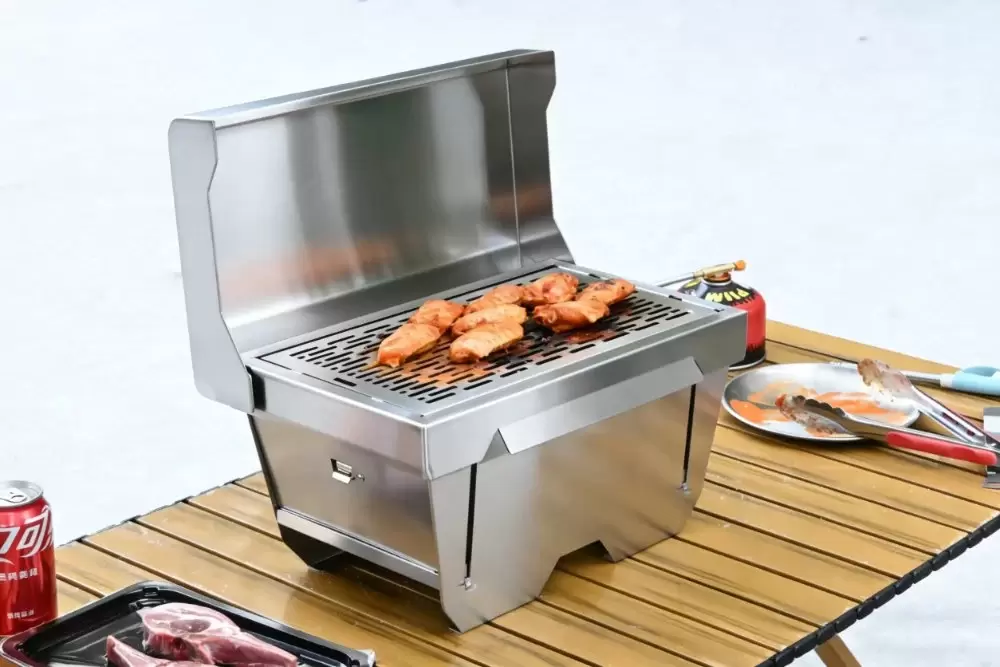
Outdoor Foldable Portable Gas Grill OEM Factory as Product Engineering Partner
The role of a modern OEM factory has shifted from passive manufacturing to active system integration. In the case of foldable gas grills, this means combining combustion engineering, structural design, and regulatory alignment into a unified development process.
A capable manufacturing partner typically operates with:
Integrated combustion testing systems for stable flame output under variable conditions
Engineering platforms focused on heat distribution and burner efficiency optimization
Safety validation frameworks aligned with international gas appliance standards
Material processing capabilities covering stainless steel structures and reinforced folding mechanisms
Instead of simply producing grills, the factory functions as a product architecture partner, ensuring that design intent translates into real-world performance stability.
Private Label Strategy in Foldable Gas Grill Market Expansion
Private label development has become a primary growth path for outdoor brands entering the grilling category.
Rather than competing on identical products, brands are increasingly focusing on:
Distinct structural design identity
Custom ignition and burner systems
Brand-specific accessory ecosystems
Packaging optimized for e-commerce and retail channels
This shift is particularly relevant for portable foldable grills, where product differentiation is highly visible in both physical and digital retail environments.
A well-structured private label strategy allows brands to:
Build recognizable product families instead of single SKUs
Control positioning across multiple distribution channels
Reduce reliance on commodity-based pricing competition
Engineering Foundation Behind Portable Foldable Gas Grill Systems
The performance of a foldable gas grill is determined by more than just material selection. It depends on a tightly controlled system of combustion, airflow, and structural stability.
Key engineering domains include:
Venturi mixing control
This ensures precise air-to-gas ratio, which directly impacts flame stability and fuel efficiency.
Piezoelectric ignition reliability
Consistent ignition performance is critical in humid, cold, or high-altitude environments.
Thermal radiation distribution
Heat must be evenly dispersed across the grilling surface to avoid localized overcooking or underheating.
Structural folding integrity
Repeated folding cycles require reinforced hinge systems that maintain alignment without deformation.
These technical layers determine whether a product performs as a consumer-grade grill or a professional outdoor cooking system.
Certification Integration for Global Market Access
International expansion requires compliance with multiple regulatory frameworks.
Typical certification requirements include:
CE compliance for European markets
CSA certification for North American distribution
AGA compliance for Australian regulatory alignment
Factories with in-house validation systems can simulate certification conditions during development, reducing delays during final approval stages.
This integration is especially important for gas-based systems, where safety compliance directly influences market entry timelines.
Flexible MOQ Models and Supply Chain Adaptability
One of the most significant shifts in OEM manufacturing is the introduction of flexible minimum order quantities.
Traditional production models often required large upfront commitments, limiting access for emerging brands. Modern manufacturing systems now support:
Small-batch validation runs for market testing
Scaled production aligned with seasonal demand cycles
Mixed SKU production within a unified platform
This flexibility enables:
Cross-border sellers to test multiple product variations
Retail distributors to diversify catalog offerings
New brands to enter the market with controlled risk exposure
Material Engineering and Structural Configuration Options
Material selection plays a critical role in defining product positioning and durability.
Common structural configurations include:
High-grade stainless steel for corrosion resistance and durability
Reinforced folding aluminum alloys for weight reduction
Hybrid structures combining rigid frame support with lightweight panels
Each configuration influences:
Heat retention efficiency
Transport weight and logistics cost
Long-term mechanical stability
A well-designed folding system must balance portability with structural integrity, particularly for outdoor environments such as coastal areas, cold climates, and high-humidity regions.
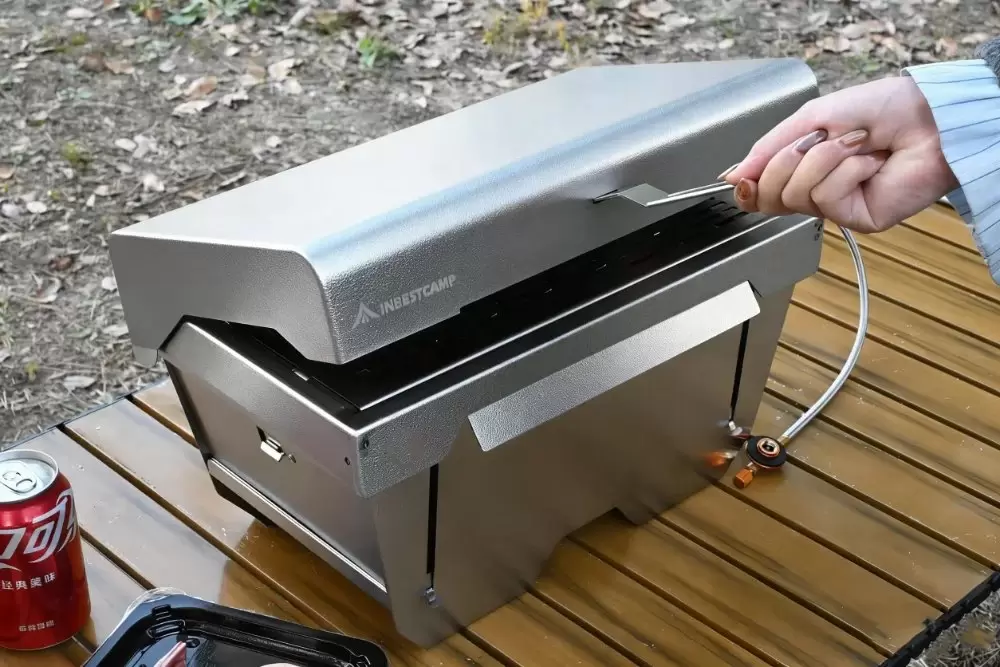
Product System Design Beyond the Grill Unit
Modern outdoor grill systems are no longer single-function products.
They are evolving into modular cooking platforms that may include:
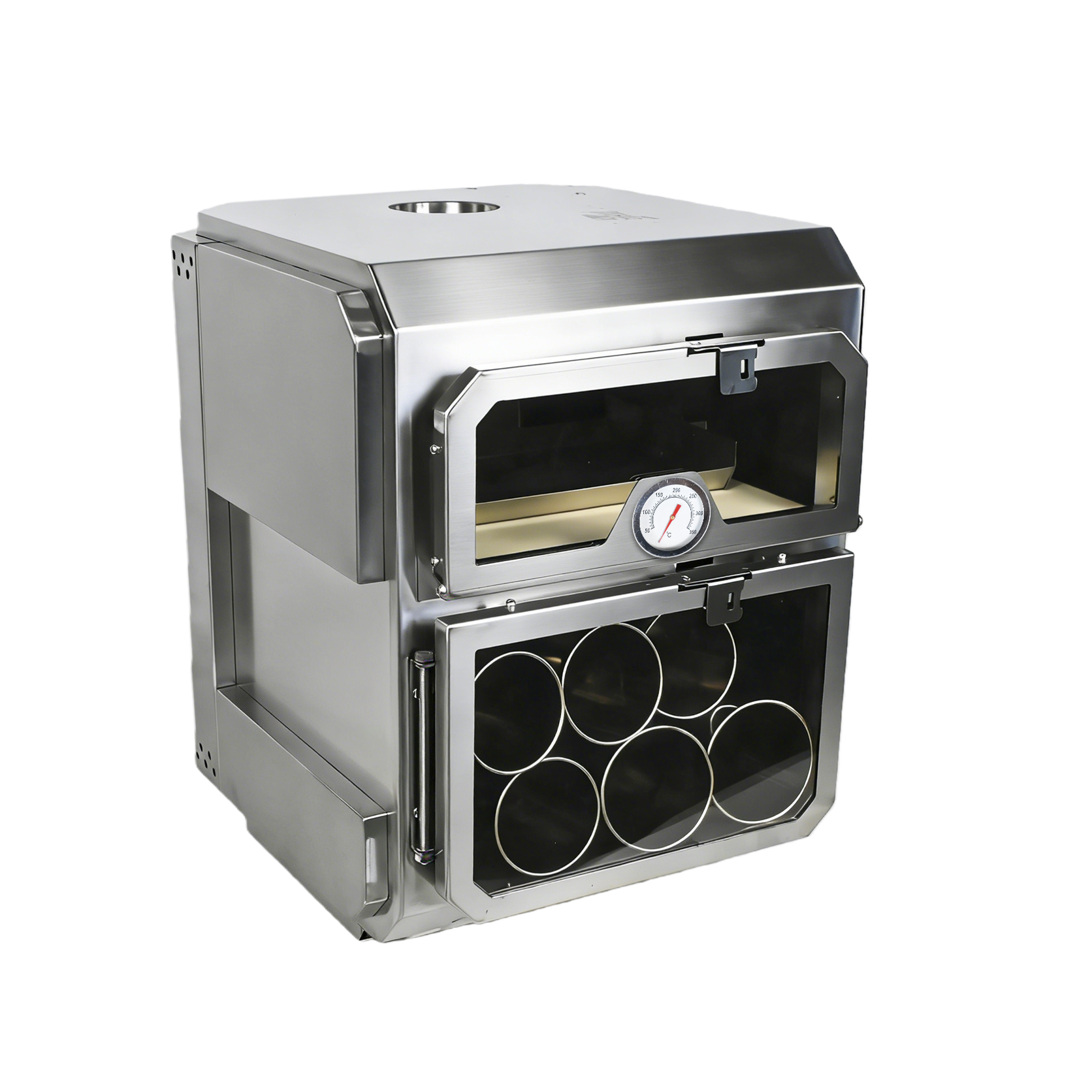
Detachable lids for oven-style cooking
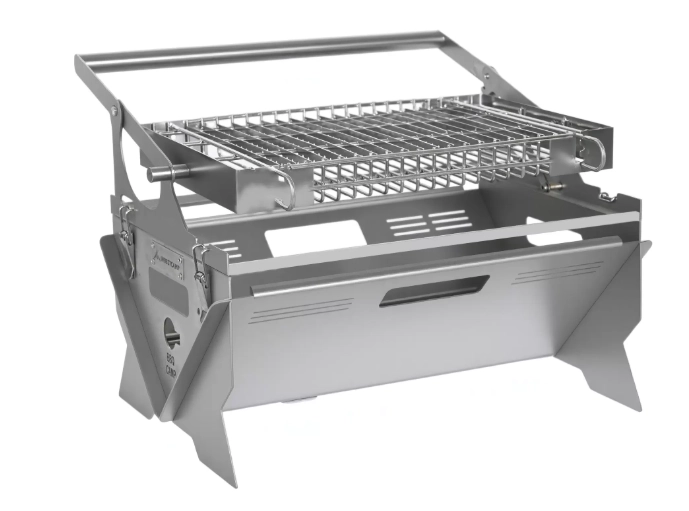
Interchangeable grill surfaces
Wind protection systems
Heat retention chambers for slow cooking
This modularity allows brands to position products across multiple use scenarios rather than limiting them to basic grilling applications.
It also supports upselling strategies through accessory ecosystems.
Manufacturing Workflow Optimization for OEM Production
Efficient production systems are structured around predictable, repeatable workflows.
A typical development cycle includes:
Requirement mapping and technical specification alignment
Prototype fabrication and thermal testing
Structural validation under folding and load conditions
Pilot batch production for quality consistency evaluation
Scaled manufacturing with continuous inspection checkpoints
This structured approach minimizes deviations between design intent and final output, especially in complex mechanical systems like foldable gas grills.
Private Label Branding Integration Strategy
Brand integration is no longer limited to logo placement. It now extends into structural and user interaction design.
Common branding integration points include:
Laser-etched branding on metal surfaces
Custom-designed ignition knobs and control interfaces
Personalized storage and transport systems
Color treatment aligned with brand identity systems
These elements contribute to long-term brand recognition across both digital and physical retail environments.
Market Positioning for Foldable Gas Grill Products
Foldable gas grills occupy a unique position between portability and performance.
They are typically positioned toward:
Outdoor cooking enthusiasts requiring fast ignition systems
RV and camping users prioritizing compact storage
Backyard users seeking flexible cooking setups
Cross-border e-commerce buyers focusing on multifunctional products
The challenge for brands is not only product design but also aligning positioning with user expectations across different regions.
OEM Factory Selection Criteria for Outdoor Grill Brands
Selecting the right manufacturing partner requires evaluation across multiple dimensions:
Engineering depth in combustion and airflow systems
Capability in folding mechanism design and fatigue testing
Experience with international certification frameworks
Flexibility in production scale and customization scope
Transparency in quality control processes
Factories that integrate both development and production functions reduce fragmentation across the supply chain and improve consistency.
INBESTCAMP operates within this integrated model, combining system-level engineering with scalable production capacity.
Quality Control Framework for Gas Grill Manufacturing
Quality assurance in gas grill production must extend beyond visual inspection.
Critical testing layers include:
Gas leakage pressure testing under controlled conditions
Repeated ignition cycle verification
Thermal stress endurance evaluation
Folding mechanism fatigue testing over extended cycles
Surface corrosion resistance validation
These processes ensure that products maintain stability under real-world outdoor conditions such as wind exposure, low temperatures, and humidity fluctuations.
Supply Chain Efficiency and Logistics Optimization
Foldable grill design directly impacts logistics performance.
Compact folded structures allow:
Increased container utilization efficiency
Reduced warehousing space requirements
Lower transportation complexity
These efficiencies are particularly valuable for cross-border e-commerce sellers operating at scale.
OEM Collaboration for Long-Term Brand Development
OEM partnerships should be viewed as long-term strategic relationships rather than transactional production agreements.
Effective collaboration includes:
Joint product roadmap planning
Continuous design iteration based on market feedback
Accessory ecosystem development
Expansion into adjacent product categories
This approach supports sustainable brand growth rather than short-term product launches.
FAQs
Q1: What is the typical development timeline for a custom foldable gas grill?
Sample development generally requires around 7 days after technical confirmation, followed by a production cycle of approximately 30 days for bulk manufacturing.
Q2: Can the product be customized for different regional gas standards?
Yes, gas valve systems and connectors can be adapted to meet CE, CSA, and other regional compliance requirements.
Q3: Is it possible to customize branding elements beyond logos?
Branding can be integrated into structural components, including control knobs, lids, packaging systems, and accessories.
Q4: What level of order flexibility is available for new brands?
Flexible MOQ structures support both small-scale testing orders and larger production runs depending on market strategy.
Q5: Can the grill design support both open grilling and closed oven-style cooking?
Yes, modular lid systems allow dual-mode cooking configurations for expanded use scenarios.
A well-structured Outdoor Foldable Portable Gas Grill OEM factory partnership is no longer just about manufacturing efficiency. It is a complete system that integrates engineering, branding, certification, and market strategy into a unified growth model for outdoor brands.


 en
en ja
ja ko
ko zh
zh es
es ru
ru fr
fr ar
ar pt
pt tr
tr nl
nl it
it de
de


 RELATED MAGAZINE








 Leave a Message