Why Titanium Tent Stoves Command a Premium in the Winter Backpacking Market
In the premium outdoor sector, ultralight winter gear commands unparalleled market margins. For elite backpackers navigating sub-zero terrains, sourcing a high-performance wholesale backpacking stove is not a luxury—it is a baseline necessity for survival. These end-users demand an extreme lightweight footprint—typically under 2kg—without compromising on absolute structural integrity and warp resistance under intense thermal stress in extreme cold.
While retail prices for these specialized units consistently top the outdoor market, distributors must look past consumer-facing markups to understand true supply chain value. What factors actually drive the premium titanium tent stove cost at the factory level? To optimize your sourcing strategy, we must break down the raw realities of OEM camp stove manufacturing and analyze the precise engineering variables that dictate factory-floor production costs.
Titanium Raw Material Cost Analysis: Market Rates and Yield Rates of Gr1 vs. Gr2 Titanium
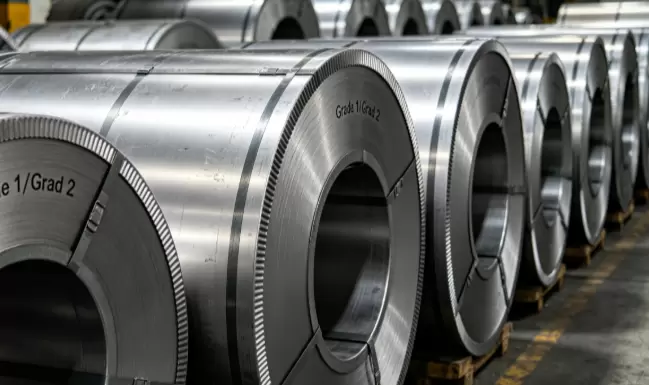
In the premium outdoor hardware supply chain, raw material selection directly dictates both the initial Bill of Materials (BOM) and downstream manufacturing feasibility. For ultra-lightweight stove production, factories primarily choose between two grades of commercially pure titanium sheets: TA1/Gr1 and TA2/Gr2.
Material Grade Comparison in the Supply Chain
TA1/Gr1 Titanium: This grade features superior ductility and a high elongation rate. It is highly optimized for complex cold metal stamping, tight-radius bending, and deep-drawing processes. Because it is softer, it minimizes micro-cracking along structural folds, though its raw market price fluctuates slightly higher due to strict purity requirements.
TA2/Gr2 Titanium: Offering significantly higher yield strength and tensile strength, Gr2 titanium is the preferred choice for structural stove panels. It provides superior long-term resistance to thermal warping when exposed to intense wood fire combustion. However, its increased structural hardness demands higher stamping pressure and specialized tooling calibration to avoid springback issues.
The Yield Rate Factor: Analyzing 30% to 40% Material Scrap
Procurement managers cannot calculate the true titanium tent stove cost based on the net weight of the finished product alone. The decisive factor driving factory-floor expenses is the Material Yield Rate during the sheet metal fabrication process.
Folding backpacking stoves require intricate engineering features, such as laser-cut air intake arrays, sliding intake dampers, interlocking side brackets, and precision stove jack cutouts. During high-precision fiber laser cutting, the nesting configuration inevitably leaves significant skeleton scrap and unrecoverable offcuts.
Supply Chain Insight: Due to the risk of atmospheric contamination and the high cost of specialized smelting, this manufacturing scrap cannot be recycled or remelted at the factory level.
As a result, folding stoves suffer an aggressive material loss or scrap rate of 30% to 40%. For a premium backpacking stove with a net weight of 1.5 kg, a factory must utilize approximately 2.1 kg to 2.5 kg of raw titanium sheet. This substantial material loss directly inflates the net material cost amortized into each finished SKU, making advanced CAD nesting optimization a critical competitive edge for top-tier OEM factories.
Tooling and Capital Expenditure (CapEx): The High Fixed Cost of Folding Titanium Stoves
Transitioning from a prototype to a mass-produced folding titanium tent stove requires significant initial Capital Expenditure (CapEx). While consumers focus entirely on material value, B2B buyers must evaluate the upfront investment required for specialized hard tooling. To achieve extreme flat-packing capabilities, a premium folding stove integrates dozens of intricate components, including interlocking side panel latches, mechanical friction hinges, integrated draft dampers, and structural reinforcement ribs. Fabricating these components with precise repeatability necessitates advanced Progressive Die Stamping Systems.
Quantifying the Hard Tooling Investment
A progressive die feeds a continuous strip of raw titanium through multiple sequential stations, performing piercing, blanking, bending, and forming operations under hundreds of tons of high-frequency pressure. Due to titanium's low elastic modulus, it exhibits roughly 25% more "springback" and abrasive galling than standard carbon steel, demanding premium tool steel (such as SKD11 or DC53) and complex wipe radii.
| Die Type & Complexity | Typical Upfront Cost (USD) | Ideal Production Volume |
| Single-Station Compound Dies | $5,000 – $15,000 | Low-volume / Early market testing |
| Medium Progressive Dies (4–8 Stations) | $15,000 – $45,000 | Mid-volume / Regional distribution |
| Complex Multi-Station Progressive Tooling | $50,000 – $100,000+ | High-volume / Global OEM supply chains |
Amortization and the Volume Economics Break-Even Point
This heavy initial tooling investment directly dictates the amortized unit cost of your early-stage inventory. In OEM camp stove manufacturing, upfront tooling acts as a flat fixed cost that must be absorbed across your initial production releases.
$$\text{Amortized Unit Cost} = \text{Base Unit Manufacturing Price} + \frac{\text{Total Tooling CapEx}}{\text{Total Production Volume}}$$
For example, if a custom multi-station progressive die costs $30,000, the cost distribution curves look like this:
At a low initial order volume of 1,000 units, the tooling alone injects a staggering $30.00 premium onto every individual stove.
When scaling to a standard production run of 10,000 units, that tooling amortization drops sharply to $3.00 per unit.
At a mass-market threshold of 50,000 units, the impact completely dilutes to just $0.60 per unit.
For global distributors and outdoor brands, securing a manufacturing partner with in-house tooling capabilities or negotiating amortized mold-fee repayment terms is vital to protecting early-season working capital before reaching the retail break-even point.
Processing Technology Cost Breakdown: Laser Cutting, Precision Stamping, and 3D Rib Forming
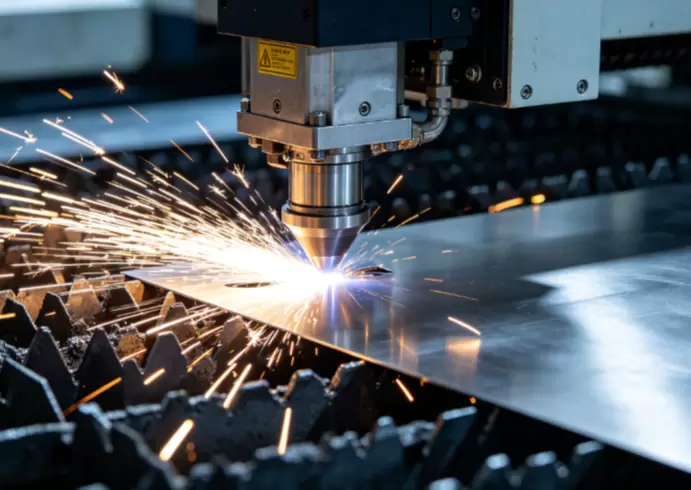
Beyond raw materials and initial tooling CapEx, the ongoing runtime operational expenses on the factory floor dictate the final ex-works price of your inventory. Manufacturing an ultralight titanium stove is an intensive process that requires specialized fabrication techniques to balance weight reduction with structural durability.
High-Precision Laser Cutting for Ultra-Thin Titanium
To achieve a sub-2kg footprint, wholesale backpacking stove designs utilize ultra-thin titanium sheets, typically ranging between 0.6mm and 1.0mm. While thin sheets minimize pack weight, they are highly susceptible to severe thermal distortion during traditional fabrication.
High-speed, high-heat laser cutting lines will cause the edges of thin titanium to warp, ruining the flush fit required for airtight folding panels. To circumvent this, top-tier OEM camp stove manufacturing facilities utilize high-precision fiber laser cutting systems running on optimized, low-thermal-input parameters (frequently referred to as "cold" laser cutting) using high-purity nitrogen or argon assist gas.
This slower, highly controlled feed rate directly impacts the production line's throughput. In B2B sourcing, this is calculated via the processing fee per meter. Because cutting thin titanium requires a slower beam velocity to eliminate the Heat-Affected Zone (HAZ), the machine-hour cost per meter is significantly higher than that of standard stainless steel, directly elevating the baseline fabrication cost.
3D Anti-Warping Rib Forming and Defect Rate Control
Commercially pure titanium exhibits low thermal conductivity, meaning heat does not dissipate quickly across the metal's surface. When a flat 0.6mm panel is exposed to a concentrated wood fire inside the stove, the extreme temperature delta causes rapid, uneven thermal expansion, leading to severe body warping.
To counteract this physical limitation, factories must stamp deep 3D anti-warping ribs into the structural side and top panels. These geometric ridges redistribute structural stress and dramatically increase the rigidity of the thin metal.
However, forming these 3D profiles introduces a challenging metallurgical bottleneck. Titanium has a low elastic modulus and high springback rate, making it highly prone to micro-cracking, tearing, or wrinkling during localized deep drawing.
If the stamping punch speed, die clearance, or lubrication viscosity deviates even slightly, the component becomes scrap. Controlling this specific defect rate is a major hidden driver of the final titanium tent stove cost. Factories must factor the cost of mid-stage stress-relief annealing and rigorous machine-vision QA into their processing fees to absorb the material losses of rejected components, making precision quality control a critical factor in final pricing.
Secondary BOM Cost Breakdown: Roll-up Chimneys, Ceramic Glass, and High-Temperature Hardware
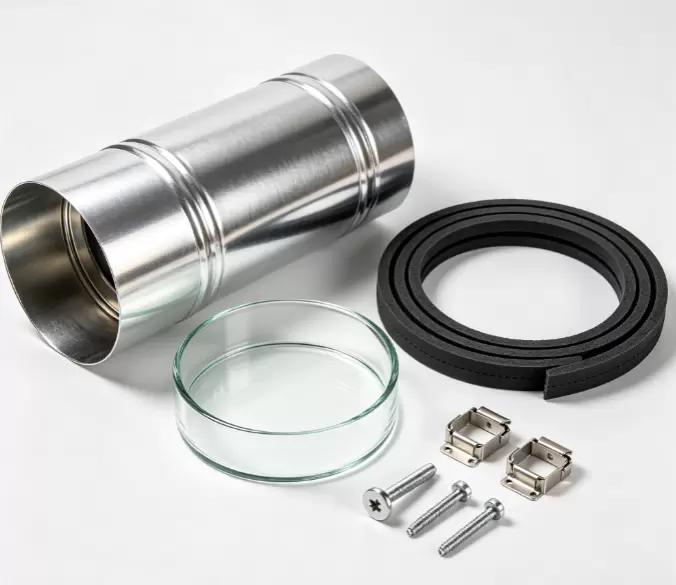
When evaluating the total titanium tent stove cost, procurement teams often focus exclusively on the primary chassis panels. However, an industrial Bill of Materials (BOM) reveals that a significant portion of the factory-floor expense lies in specialized, third-party sourced core components and hardware. For a premium wholesale backpacking stove, these ancillary parts are non-negotiable for safety and performance.
Ultralight Roll-up Titanium Chimneys
The exhaust system of a backpacking stove requires extreme packing efficiency. Instead of rigid interlocking pipes, elite systems utilize a single sheet of ultra-thin 0.1mm titanium foil that rolls up tightly into a compact cylinder.
Material Costs: This highly specialized foil requires precise cold-rolling manufacturing techniques, driving up its raw price per square meter compared to standard industrial sheets.
Processing Fees: During factory processing, the foil must undergo advanced slitting, deburring, and surface finishing. Because 0.1mm titanium is highly susceptible to creasing and surface micro-scratches—which act as structural stress failure points under high wind or heat—OEMs must invest heavily in protective film coating lines and precision tension-winding machinery, inflating the processing premium.
Premium Microcrystalline Viewing Glass (Ceramic Glass)
The iconic ambient glow of a hot tent stove relies on a durable viewing window. Standard tempered glass will immediately shatter under localized wood fire temperatures.
Sourcing Constraints: Top-tier OEM camp stove manufacturing requires specialized microcrystalline ceramic glass, typically imported from market leaders like Schott Robax (Germany) or Nippon Electric Glass (Japan), engineered to withstand continuous thermal shocks up to 800°C.
Fabrication & Logistics: Beyond raw material sourcing, costs are driven by CNC diamond-wire cutting and strict edge-polishing protocols required to eliminate microscopic burrs that cause thermal fracturing. Furthermore, due to the brittle nature of ceramic sheets, factories must budget for specialized, shock-absorbing EVA internal packaging templates to ensure zero breakage during cross-border transit.
Extreme-Environment Specialty Hardware
The mechanical integrity of a folding stove depends entirely on its fasteners. Standard zinc-plated or lower-grade stainless steel hardware will quickly oxidize, seize, or suffer catastrophic thermal creep at high operating temperatures.
Rivets & Fasteners: Premium builds utilize custom Grade 5 titanium or 310S/316 grade stainless steel rivets to ensure uniform thermal expansion across all interlocking joints.
Damping Springs: Airflow control levers and folding leg mechanisms require high-nickel alloy or Inconel damping springs. These high-spec components maintain their mechanical elasticity and torque profile under repeated, high-frequency heating cycles, preventing loose dampers or collapsing legs in the field.
Quality Control and Compliance Testing Fees: The Hidden Cost of Safety Assurance
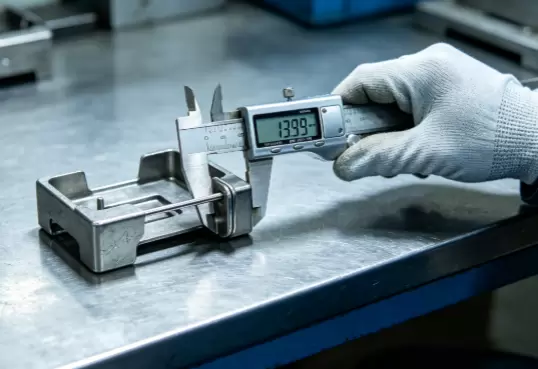
In the high-stakes sector of OEM camp stove manufacturing, cutting corners on Quality Assurance (QA) is an operational liability. For international distributors, purchasing a wholesale backpacking stove requires absolute validation of its safety metrics. Consequently, comprehensive quality control and regulatory compliance represent a fixed, necessary percentage of the total titanium tent stove cost structure.
Rigorous On-Line Structural Testing
To prevent catastrophic field failures, factories must implement strict testing protocols on the assembly line. A major cost driver is the specialized smoke airtightness testing executed on production batches. Technicians utilize pressurized smoke-generation systems to simulate extreme, gale-force wind conditions against the interlocking panel joints and hinges. This test ensures the chassis maintains a perfect internal draft and seals toxic carbon monoxide inside the flue system, preventing dangerous gas leakage into the shelter.
Amortizing Global Compliance and Certification Costs
Exporting premium outdoor hardware into highly regulated Western markets requires substantial upfront investment in third-party laboratory testing, the costs of which are amortized across your production runs:
European Market Requirements: Stoves must pass strict RoHS screenings to certify that the titanium alloy and fastening hardware are entirely free of hazardous heavy metals under extreme heat.
North American and German Markets: Because tent stoves regularly double as direct-contact cooking surfaces, the alloy panels must secure FDA and LFGB food-contact material safety certifications.
Investing in these rigorous compliance frameworks prevents costly customs seizures and shields your brand from severe product liability claims, making QA an indispensable component of premium, market-ready product development.
The Marginal Effect of Minimum Order Quantity (MOQ) on Unit Production Cost
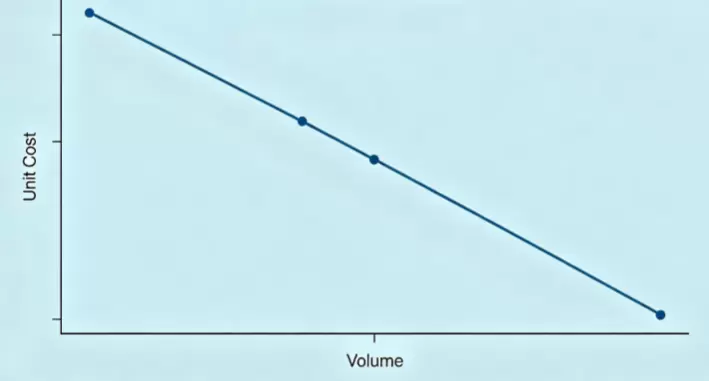
In OEM camp stove manufacturing, selecting the right purchase volume is the most powerful lever for optimizing your gross margins. Titanium fabrication is highly sensitive to the economic law of diminishing marginal returns. Understanding how various Minimum Order Quantity (MOQ) tiers impact your final unit production cost allows your brand to make data-driven, risk-mitigated procurement decisions.
The Three Strategic MOQ Sourcing Tiers
MOQ 100 Units (The High-Premium Testing Phase): Sourcing at this baseline tier carries the highest financial penalty. At 100 units, factories cannot secure volume discounts on raw titanium sheets from upstream smelters. Furthermore, the manufacturer incurs substantial machine setup costs—the labor and downtime required to calibrate fiber lasers and install heavy stamping dies for a short run. Because these fixed operational costs are squeezed into a tiny volume, it results in the highest possible unit cost.
MOQ 500 Units (The Golden Balance Point): This tier represents the commercial sweet spot for growing outdoor brands looking to scale their wholesale backpacking stove inventory. At 500 units, the supply chain achieves baseline standardization: raw material procurement enters wholesale pricing brackets, and factory lines run long enough to stabilize the initial fabrication defect rates. Consequently, brands typically realize an aggressive 20% to 25% reduction in unit price compared to the 100-unit tier.
MOQ 1,000+ Units (The Economies of Scale Threshold): Crossing the 1,000-unit mark unlocks maximum profitability. At this volume, the heavy initial hard tooling and progressive die expenditures are largely amortized and depreciated. Production lines achieve peak automated throughput with minimal human intervention, driving labor costs to their absolute floor and maximizing your brand’s retail margins.
By aligning your Q3 procurement projections with these structural manufacturing tiers, you can balance upfront capital allocation against per-unit profitability, ensuring your winter product launch is both highly competitive and fiscally resilient.
Hidden Cost Analysis: DFM, Prototyping Iterations, and Factory Overheads
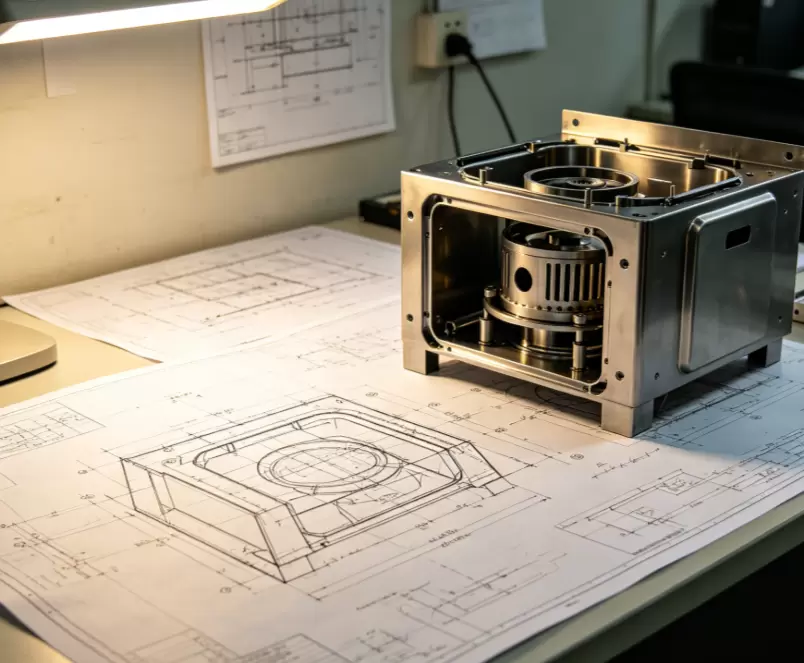
When calculating the true bottom line of OEM camp stove manufacturing, product teams frequently overlook pre-production engineering and administrative indirect costs. These backend expenditures are just as critical to your final margins as raw titanium sheet prices.
The Value of Design for Manufacturing (DFM)
Front-end engineering hours dedicated to Design for Manufacturing (DFM) are a significant, yet highly valuable, cost center. A raw aesthetic design rarely aligns with high-speed factory automation.
Experienced DFM engineers analyze the stove’s structural architecture to optimize manufacturing efficiency. For example, by adjusting the geometry of interlocking side panels to utilize integrated snap-fits or precision-bent tabs instead of traditional rivets, engineers can dramatically reduce the total component count. Minimizing hardware fasteners slashes downstream manual assembly time on the factory floor, significantly lowering your final titanium tent stove cost at scale.
The True Cost of Pre-Production Iteration
Furthermore, rushing a product to market without accounting for the pre-production validation loop is a major financial risk. Developing a reliable wholesale backpacking stove requires an average of 3 to 4 rounds of rapid prototyping and extreme field testing.
Each iterative cycle incurs hidden expenses:
High-premium, short-run CNC or laser-cutting machine hours.
Low-volume material purchasing at non-wholesale market rates.
Dedicated engineering labor to analyze thermal warping after destructive real-world winter field testing.
While these iterative engineering phases require upfront capital, they serve as your primary defense line against catastrophic, high-volume defect recalls during full-scale production.
Global Logistics and Tariff Estimation: Calculating the Ultimate Landed Cost for Overseas Warehousing

A truly resilient global sourcing strategy requires shifting focus from the basic Ex-Works (EXW) factory price to the comprehensive Landed Cost. In the 2026 cross-border supply chain landscape, off-season procurement during July helps mitigate peak-season ocean freight volatility. However, international logistics, customs clearance, and terminal handling fees still directly impact your net retail margins.
The CBM Efficiency of Flat-Pack Design
One of the greatest hidden economic advantages of a folding titanium stove is its structural configuration. Rigid, fully welded stainless steel stoves occupy massive cubic space, resulting in a high volumetric weight that inflates your shipping expenses.
Conversely, premium titanium backpacking stoves utilize an advanced flat-pack design. Because they collapse entirely flat, their total Cubic Meter (CBM) footprint per unit is exceptionally low. This spatial efficiency allows distributors to pack up to four times as many units into a standard 20ft or 40ft ocean container compared to traditional box stoves, drastically driving down your per-unit freight allocation and reducing long-term third-party logistics (3PL) fulfillment storage fees.
Navigating HS Codes and Western Tariffs
When importing bulk outdoor hardware into major Western markets like North America and the European Union, precise classification is vital to avoid customs delays. Most portable solid-fuel camping stoves are classified under HS Code 7321.19 (Cooking appliances and plate warmers for solid fuel), though variants featuring specialized alloys may sometimes fall under titanium article codes.
North American Market (US/Canada): Importers must budget for standard columns of the Harmonized Tariff Schedule (HTS), where duties generally range between 2% and 4.5%, alongside Merchandise Processing Fees (MPF).
European Union: Import duties typically settle between 2.7% and 5%, depending on the exact material composition and country of origin.
The Standard Landed Cost Framework
To safeguard your gross profit margins, procurement managers must utilize the classic total landed cost equation before finalizing factory purchase orders:
Landed Cost = EXW Price + Freight Logistics + Customs Duties & Tariffs + Insurance + Local 3PL Inbound Fees
By factoring this comprehensive matrix into your July sourcing calculations, your brand can accurately project domestic wholesale pricing structures, eliminate unexpected logistical surcharges, and maximize seasonal profitability.
Conclusion: Partner with Inbestcamp for Your Next High-Standard Outdoor Stove System
Navigating the complex cost structures of premium outdoor hardware requires a manufacturing partner that combines technical expertise with absolute supply chain transparency. At Inbestcamp, we specialize in turning innovative concepts into market-leading outdoor cooking gear. Whether your product portfolio demands ultralight titanium backpacking stoves, robust stainless steel wood burners, or high-efficiency gas systems, our seasoned DFM R&D team and robust industrial supply chain ensure unmatched product reliability.
We offer comprehensive, flexible OEM branding and deep ODM customization services engineered to meet the exacting standards of global outdoor brands. From initial conceptual drafting and rapid prototyping to mass-volume precision manufacturing and secure cross-border logistics, Inbestcamp delivers a seamless, one-stop closed-loop solution. Partner with us to optimize your manufacturing costs, protect your profit margins, and scale your business with rugged, high-performance hardware built to survive the elements. Contact Inbestcamp today to launch your next custom project.
Frequently Asked Questions: Titanium Stove Sourcing and Manufacturing Optimization
Q1: Why are raw material procurement costs for titanium tent stoves most stable during the summer months?
The outdoor gear supply chain is highly seasonal. Summer represents the production off-season for winter heating equipment like hot tents and wood stoves, meaning upstream titanium sheet suppliers and laser fabrication facilities operate with surplus manufacturing capacity. Securing your raw material pricing and issuing Purchase Orders (POs) in July allows brands to effectively hedge against autumn commodity price spikes. This proactive timeline also prevents the steep factory rush fees commonly imposed during peak production surges from September through November.
Q2: How do processing costs differ between Grade 1 pure titanium and Grade 2 titanium for folding stove manufacturing?
Grade 1 commercially pure titanium is softer and possesses a higher elongation rate, making it highly optimized for deep stamping and intricate edge-folding with minimal tooling wear, which keeps machining labor costs relatively low. Conversely, Grade 2 titanium features added trace elements that increase structural hardness and warp resistance under heat. However, this increased structural integrity results in an exceptionally high springback rate during stamping, requiring ultra-precise tooling calibrations. It accelerates the wear and tear on CNC punching heads, which ultimately increases tooling amortization and machine depreciation expenses by over 15 percent compared to Grade 1 production.
Q3: How can outdoor brands utilize Design for Manufacturing (DFM) to significantly reduce their OEM unit quotes for titanium stoves?
The most effective method to slash production costs is to minimize the design's reliance on manual assembly labor. During the initial engineering phase, product designers should prioritize one-piece CNC bending and interlocking friction flaps over complex multi-panel construction that requires miniature stainless steel rivets. Every fastening point eliminated directly reduces delicate manual labor hours on the assembly line, allowing your brand to secure a much more competitive FOB or EXW factory quote.


 en
en ja
ja ko
ko zh
zh es
es ru
ru fr
fr ar
ar pt
pt tr
tr nl
nl it
it de
de


 RELATED MAGAZINE







 Leave a Message