The global outdoor cooking and residential pizza oven market is experiencing rapid growth, driven by culinary enthusiasts seeking restaurant-quality Neapolitan pizza at home. However, entry-level models offering only basic baking capabilities are increasingly caught in price-driven competition that erodes profit margins. To unlock premium price points and satisfy demanding B2B buyers and D2C brands, OEM/ODM manufacturers must focus on feature integration. This guide provides product managers, procurement directors, and brand strategists with a practical blueprint for incorporating high-value, differentiated engineering into next-generation OEM pizza ovens.
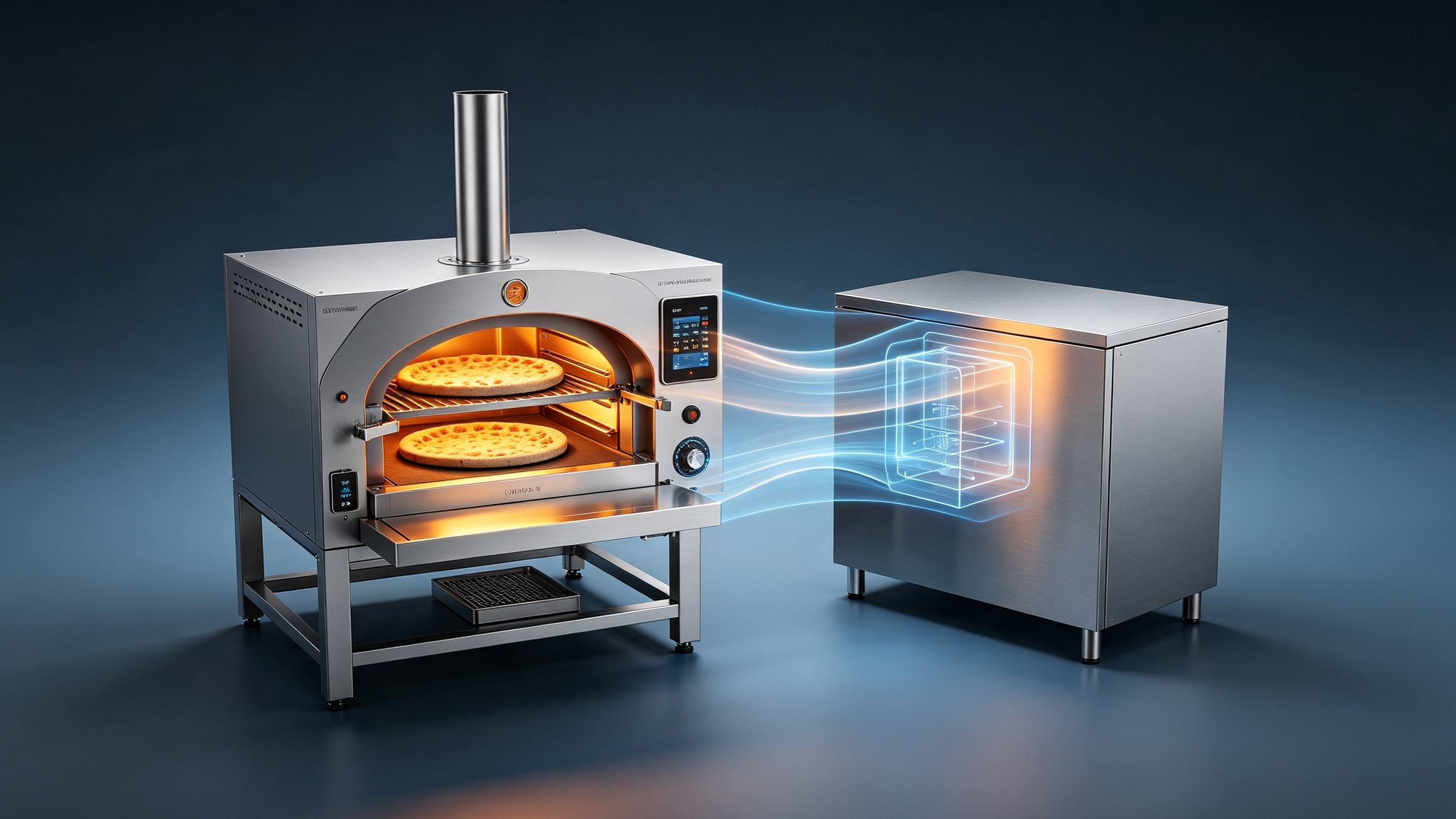
Introduction: The Evolution of Commercial and Residential OEM Pizza Ovens
The transition from traditional masonry ovens to compact, high-performance OEM pizza ovens has reshaped the backyard appliance landscape. Consumer expectations have evolved from simple outdoor baking to demanding precise temperature control, rapid heat recovery, and multi-fuel versatility.
For brands looking to capture market share, relying on commodity designs creates vulnerability to low-margin price wars. Differentiating your product lineup requires adding advanced features that solve real user pain points, elevate the cooking experience, and justify higher retail margins.
Smart Temperature Control & Dual-Zone Heating Systems
Traditional pizza ovens often struggle with uneven heat distribution, resulting in burnt bases or undercooked toppings. Integrating independent dual-zone heating systems resolves this fundamental baking challenge.
Dual Independent Elements: Independent temperature control for the top dome and bottom baking stone allows precise heat ratio tuning necessary for authentic 60-second Neapolitan pizzas.
PID Precision Controls: Microcomputer-driven PID controllers dynamically adjust gas valve orifices or electric heating elements, suppressing temperature fluctuations to within tight tolerances.
Optimized Preheat Cycles: Dual-zone management accelerates preheating times to reach 500°C (900°F) in under 18 minutes while preventing stone thermal collapse during consecutive bakes.
Automated Rotating Pizza Stones for Effortless Baking
Manual turning with a pizza peel requires constant supervision, causes significant dome heat loss, and often leads to charred crusts in inexperienced hands.
Solving Operator Error: An automated rotating cordierite stone ensures 360-degree heat exposure without requiring the door to be opened, preserving internal convection currents.
Engineered Drive Systems: Premium OEMs utilize high-torque, low-noise DC gear motors paired with heat-isolated transmission shafts and removable turntable assemblies for easy cleaning.
User Experience Impact: Hands-free rotation eliminates the steep learning curve for consumers, leading to higher product satisfaction, better user reviews, and lower customer return rates.
Hybrid Fuel Flexibility: Gas, Wood, and Electric Combinations
Consumers desire the authentic smoky flavor of wood firing alongside the quick setup and precise control of gas or electric power.
Meeting Multi-Fuel Demand: Designing a versatile combustion cavity allows users to switch seamlessly between hardwood pellets, lump charcoal, propane, or electric heating.
Quick-Release Burner Assemblies: Engineering modular, quick-release gas burner units and interchangeable wood fuel trays allows safe, tool-free conversion in seconds.
Global Market Adaptability: Multi-fuel capability allows brands to utilize a single body chassis across European, North American, and Asian markets with varying regional fuel preferences.
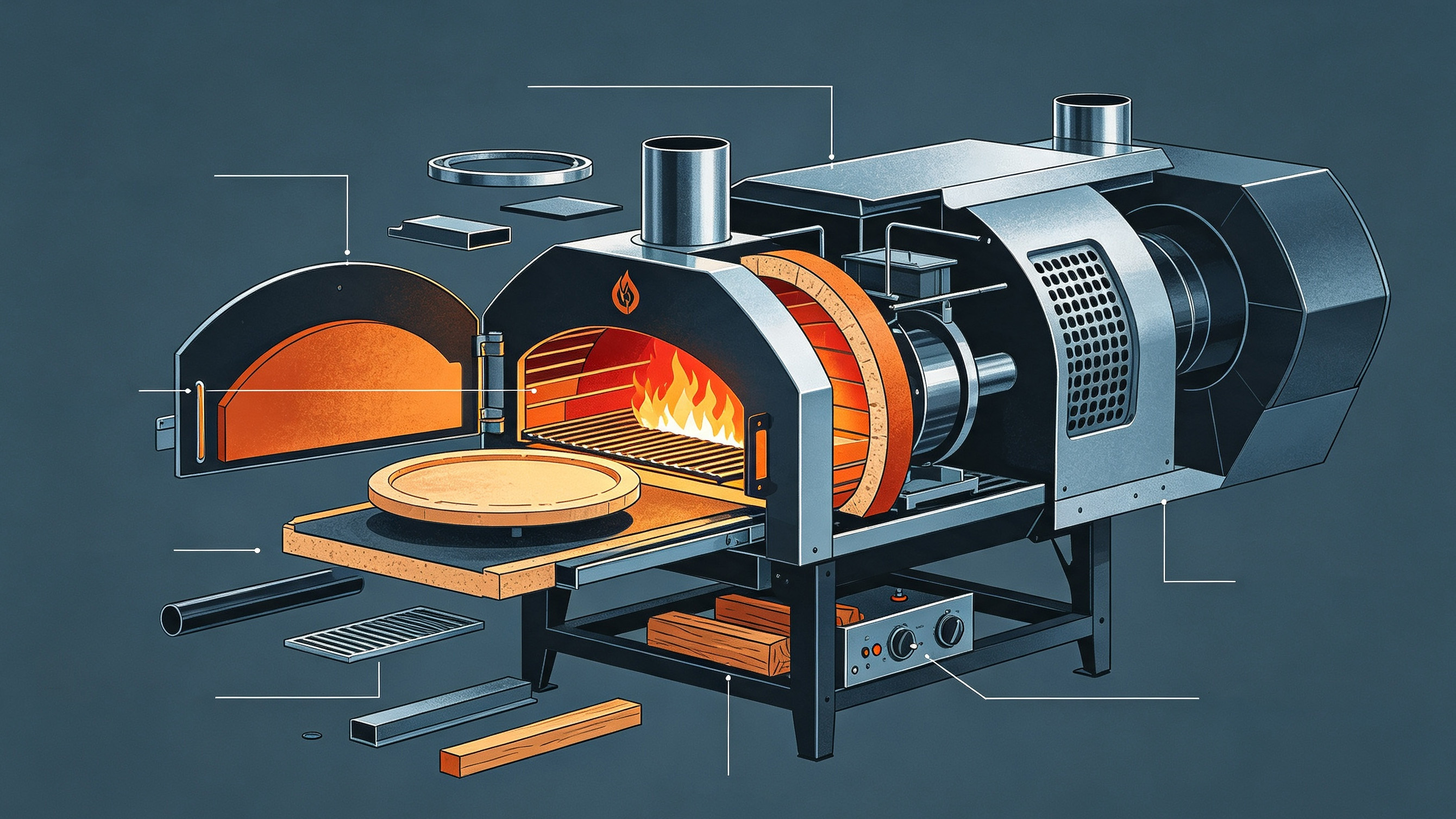
Advanced Insulation & Heat Retention Technologies
Superior thermal retention is the cornerstone of fuel efficiency, rapid recovery times, and user safety in high-temperature outdoor appliances.
High-Performance Materials: Incorporating multi-layer ceramic fiber blankets, calcium silicate insulation boards, and double-walled stainless steel vacuum gaps drastically reduces thermal loss.
Upgraded Baking Stones: Utilizing high-density cordierite or silicon carbide stones enhances thermal shock resistance and maintains heat retention across consecutive cooking sessions.
Cool-Touch Shell Engineering: Effective thermal isolation keeps outer shell temperatures safe to the touch, protecting users and reducing gas or electrical energy consumption by up to 30%.
Integrated Digital Sensors and IoT Connectivity
Infusing digital intelligence transforms a standard cooking appliance into a high-tech smart oven that appeals to modern tech-savvy consumers.
Embedded Infrared and Thermocouples: Direct infrared stone surface sensors and multi-point dome thermocouples deliver real-time, accurate temperature readouts on digital LED displays.
App-Connected Monitoring: Bluetooth and Wi-Fi modules enable smartphone app integration for tracking temperature curves, setting countdown timers, and receiving automated recipe alerts.
Brand Equity Enhancement: Smart connectivity justifies higher retail price tiers and positions the brand as an innovative leader in the premium outdoor appliance category.
Airflow Engineering and Smoke Management Systems
Airflow dynamics dictate combustion efficiency, heat distribution speed, and ambient smoke emissions during indoor or semi-enclosed operation.
Aerodynamic Airway Design: Utilizing Venturi-effect air intake channels optimizes oxygen supply, producing clean combustion and enabling 15-minute rapid preheating cycles.
Adjustable Chimney Dampers: Precision-engineered damper valves allow users to fine-tune exhaust rates, locking in ambient heat or controlling smoke retention for wood bakes.
Low-Smoke Filtration: Integrating catalytic smoke purifiers or secondary combustion jets makes unit operation suitable for balconies and semi-enclosed patio environments.
Premium Exterior Finishes and Weather-Resistant Materials
Outdoor pizza ovens must withstand harsh weather conditions, intense UV exposure, and coastal salt air without rusting or degrading.
High-Grade Metal Selection: Constructing bodies with 304 or 316 medical-grade stainless steel alongside high-temperature powder-coated or ceramic enamel shells prevents corrosion.
Ingress Protection (IP) Ratings: Sealing electronic displays, igniters, and motor compartments to IPX4 or IPX5 standards ensures reliable performance under outdoor weather conditions.
Deep OEM Customization: Offering bespoke Pantone color options, embossed 3D branding, and custom textured finishes helps OEM clients establish strong brand identity.
Safety First: Auto-Flameout Protection and Cool-Touch Housings
Safety compliance is critical for passing international regulatory hurdles and protecting brand reputation in global retail markets.
Essential Safety Devices: Installing Flame Failure Devices (FFD) with fast-acting thermocouples and anti-tilt automatic shutoff switches protects gas models against leaks.
Protective Touchpoints: Heat-resistant silicone handles and double-pane quartz glass viewing doors keep exterior contact points safe during high-temperature bakes.
Global Certification Ready: Standardizing safety components simplifies compliance testing for CE, CSA, UL, and UKCA certifications across target export markets.
Value Engineering (VAVE) for Adding Premium Features Efficiently
Adding advanced features does not have to result in uncompetitive Bill of Materials (BOM) costs if proper Value Analysis and Value Engineering principles are applied.
Modular Architecture: Designing a unified core chassis that supports both entry-level manual models and flagship smart models reduces tooling amortization costs.
BOM Cost Standardization: Standardizing internal electronics, igniters, and fasteners across product lines lowers component purchasing costs through economies of scale.
Collaborative R&D Partners: Partnering with an experienced OEM/ODM factory with automated testing lines shortens development cycles and accelerates time-to-market.
FAQ
What advanced feature offers the highest Return on Investment (ROI) for OEM pizza ovens?
Automated rotating stones and hybrid multi-fuel systems consistently deliver the highest return on investment. The rotating stone eliminates the single biggest operational barrier for beginner home cooks, making it an ideal feature for visual D2C marketing campaigns. Meanwhile, hybrid fuel compatibility broadens total addressable market reach across varied consumer preferences.
How does adding an automated rotating stone affect manufacturing complexity and warranty rates?
While adding a gear motor and transmission shaft increases internal structural complexity, modern OEM designs utilize sealed, heat-isolated gearboxes driven by low-voltage DC motors. Isolating drive components from direct flame exposure keeps failure rates low and minimizes long-term warranty risk.
Are hybrid fuel (gas and wood) pizza ovens compliant with CSA and CE safety standards?
Yes, provided the engineering includes dedicated safety separations. Gas burners must be shielded so ash or debris cannot clog gas orifices or interfere with Flame Failure Device (FFD) thermocouples. Removable gas burner modules simplify dual-certification testing for both CSA and CE standards.
How can OEM brands maintain affordability while integrating smart IoT sensors?
Brands should adopt a modular add-on strategy. By pre-wiring the main internal harness with standardized quick-connect ports, base models can ship with standard digital displays while premium variants integrate Bluetooth or Wi-Fi smart modules without requiring separate chassis tooling.


 en
en ja
ja ko
ko zh
zh es
es ru
ru fr
fr ar
ar pt
pt tr
tr nl
nl it
it de
de


 RELATED MAGAZINE








 Leave a Message