Introduction: The Strategic Importance of Manufacturer Vetting
The global camping gear market—encompassing technical tents, sleeping bags, camp furniture, and outdoor lighting—is experiencing rapid international expansion. However, intensified market competition leaves little margin for operational error. Partnering with an unvetted manufacturer exposes outdoor brands to severe risks, including production delays, material defects, customs detentions, and reputational damage. Developing a standardized B2B manufacturer vetting checklist is essential to mitigate supply chain risks, safeguard brand equity, and secure sustainable profit margins.
Factory Legal Compliance and Business Licenses
Before evaluating production capabilities, sourcing managers must verify a supplier's legal standing and corporate identity:
Business Registration: Inspect the official Business License, export licenses, and tax registration records to confirm the company's legal status.
Manufacturer vs. Trading Company: Differentiate true Tier-1 manufacturing facilities from intermediary trading companies by reviewing operational scope and facility ownership records.
Intellectual Property Compliance: Confirm that the factory holds valid authorization for proprietary structural designs and utility patents to prevent IP litigation in destination markets.
Production Capacity and Machinery Audit
Evaluating a factory's machinery and operational scale ensures they can fulfill volume demands without sacrificing lead times:
Automated Equipment: Inspect core manufacturing machinery, such as automated fabric cutters, fiber laser cutters, CNC machining centers, and robotic welding stations.
Capacity Utilization: Audit monthly and annual output capacity alongside current machinery utilization rates to gauge order capacity.
Peak Season Scalability: Establish clear agreements regarding seasonal capacity allocation to ensure priority scheduling during peak production cycles.

Quality Management System (QMS) and Testing Protocols
A robust quality assurance system prevents defective goods from reaching retail distribution networks:
International Certifications: Verify the validity and scope of ISO 9001 certifications or equivalent quality management accreditations.
Comprehensive QC Protocols: Review standard operating procedures for Incoming Quality Control (IQC), In-Process Quality Control (IPQC), and Final Quality Control (FQC/PSI).
In-House Testing Facilities: Ensure the factory operates internal testing labs equipped for fabric hydrostatic head tests, tensile strength evaluations, and salt-spray corrosion testing.
Raw Material Sourcing and Supply Chain Traceability
The quality of technical camping gear depends heavily on raw material inputs and sub-tier supplier reliability:
Tier-2 Supplier Verification: Audit the stability of raw material suppliers providing waterproof textiles, aluminum tubing, plastic buckles, and zippers.
Environmental Material Standards: Confirm compliance with international environmental standards, including GRS (Global Recycled Standard), OEKO-TEX, and PFC-free DWR requirements.
Batch Traceability: Ensure full lot-traceability protocols are maintained to trace raw material batches back to primary mills in the event of component failure.
Social Responsibility, Labor Practices, and ESG Compliance
Meeting international labor standards is critical for brands importing into North America and Europe:
Social Audit Reports: Require valid third-party social responsibility audit reports, such as BSCI, SEDEX (SMETA), or WRAP certifications.
Labor Compliance: Verify factory compliance regarding fair compensation, workplace safety, reasonable working hours, and ethical employment practices.
Environmental ESG Metrics: Audit industrial waste management, emissions controls, and sustainable manufacturing practices to meet Western retail entrance thresholds.
Prototyping, OEM/ODM Engineering, and R&D Capabilities
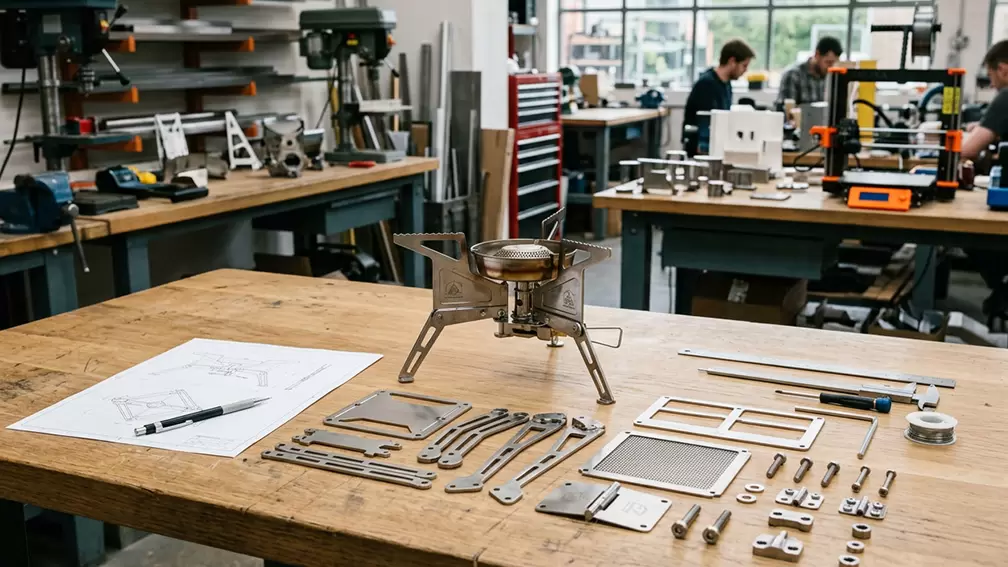
Strong engineering expertise accelerates time-to-market for custom gear developments:
Tech Pack Interpretation: Assess the engineering team's ability to interpret 3D CAD drawings and tech packs, evaluating sampling lead times and prototype accuracy.
ODM Design Support: Review factory capabilities in structural optimization, lightweight material substitution, and packaging engineering.
Golden Sample Protocol: Establish formal Golden Sample sign-off protocols to define production tolerance ranges prior to mass production.
Financial Stability and Payment Terms Flexibility
A supplier's financial health directly impacts order fulfillment security:
Financial Health Check: Evaluate factory solvency to prevent sudden insolvency risks or material procurement disruptions.
Payment Terms Negotiation: Transition from standard initial terms (30% deposit / 70% balance against Bill of Lading) toward open account (OA) or Letter of Credit (LC) terms as order volume scales.
Tooling Amortization: Negotiate structured tooling cost amortization agreements to rebate initial mold fees against volume milestones.
Supply Chain Security and Intellectual Property Protection
Protecting proprietary product designs requires enforceable legal and operational safeguards:
NNN Agreements: Execute legally binding Non-Disclosure, Non-Use, and Non-Circumvention (NNN) agreements before releasing technical drawings.
Tooling Ownership: Secure explicit contract terms confirming sole ownership and transfer rights for custom molds.
Physical & Digital Security: Enforce factory security controls to prevent unauthorized production or direct sales of proprietary designs to third parties.
Post-Order Performance Metrics and Vendor KPI Tracking
Maintaining long-term supplier relationships requires continuous performance tracking:
On-Time Delivery (OTD): Monitor OTD rates and enforce clear delivery delay penalty clauses within purchasing contracts.
Return Rate Targets: Set maximum acceptable Return Merchandise Authorization (RMA) thresholds below 1% with clear compensation terms for defective units.
Quarterly Reviews: Implement formal supplier scorecard evaluations to reward top-performing manufacturing partners with preferred order allocation.
Frequently Asked Questions
What is the single most important document to check when first vetting a Chinese camping gear factory?
Answer: The most critical baseline document is the official Business License showing the Unified Social Credit Code and registered business scope. For initial screening, buyers should also review valid ISO 9001 quality certificates and BSCI or SEDEX social audit reports to confirm manufacturing legitimacy and export compliance.
How can a B2B buyer distinguish a true manufacturer from a trading company posing as a factory?
First, check the Business License: a true factory's registered scope includes "manufacturing, production, or processing," whereas trading companies list "sales or import/export services." Second, request an on-site video walk-through or a third-party factory audit to inspect active production lines. Third, ensure the corporate bank account name matches the factory name on the business license.
What quality control protocols should be included in the sourcing checklist for technical outdoor products?
The checklist must cover three stages: IQC (testing fabric hydrostatic pressure and aluminum tube wall thickness), IPQC (checking seam-sealing tape adhesion and structural assembly), and FQC/PSI (conducting final AQL 2.5/4.0 inspections for aesthetics, load capacity, and ISTA 1A/3A package drop tests).
How do you handle initial High Minimum Order Quantities (MOQs) with top-tier suppliers during early sourcing?
Buyers can manage high initial MOQs by standardizing raw materials across multiple SKUs (such as using uniform fabrics or frame tubing), utilizing existing ODM factory molds to reduce custom tooling thresholds, or negotiating annual purchasing agreements that allow split-shipment production runs.


 en
 ja
 ko
 zh
 es
 ru
 fr
 ar
 pt
 tr
 nl
 it
 de



 RELATED MAGAZINE









 Leave a Message