Introduction: Why Airflow Engineering Matters in Modern Tent Stoves
The global surge in hot tent camping and winter overlanding has elevated wood-burning tent stoves from primitive emergency heaters into sophisticated outdoor equipment. However, traditional tent stoves present persistent operational headaches for campers: unmanageable burn rates, excessive fuel consumption, rapid creosote buildup inside the flue, and dangerous smoke backdrafts during door openings. For B2B sourcing managers and outdoor gear buyers, understanding airflow engineering is the key to identifying market-leading stoves. Modern airflow designs optimize oxygen distribution to achieve higher thermal efficiency, extend burn times, eliminate smoke, and ensure safety within enclosed canvas tents.
Primary vs. Secondary Airflow Systems: The Science of Complete Combustion
To evaluate modern stove performance, buyers must understand the distinction between primary and secondary air distribution:
Primary Airflow: Ambient air fed directly into the base of the firebox or under the fuel bed. Primary air fuels initial timber ignition and maintains the primary bed of coals.
Secondary Airflow: Fresh air drawn into double-walled channels, superheated along the firebox walls, and injected into the top of the combustion chamber.
This superheated secondary air ignites unburnt volatile gases and wood smoke that would otherwise escape up the chimney. Secondary combustion transforms smoke into usable heat output, drastically reducing creosote formation inside flue pipes and delivering near-smokeless chimney emissions.
Air-Wash Technology: Keeping Glass Windows Clean and Clear
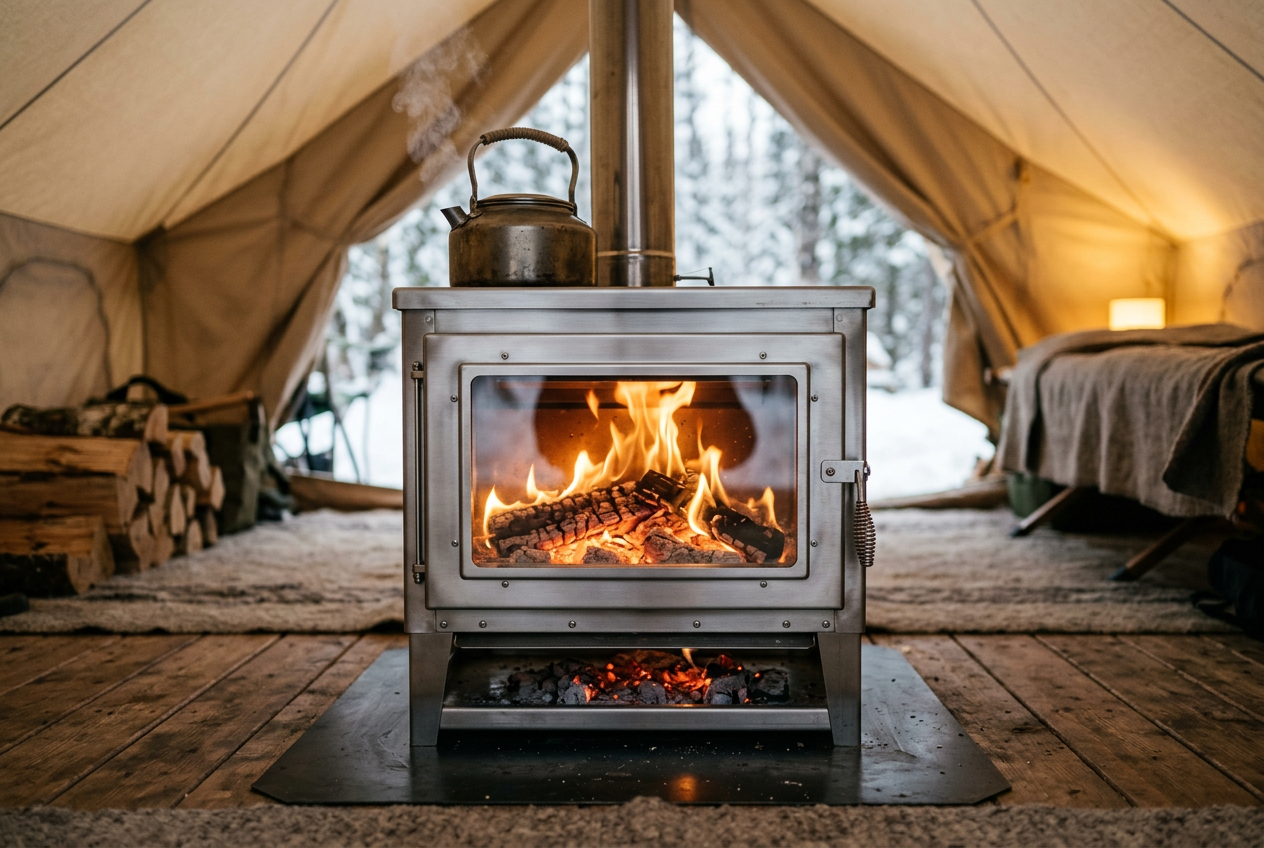
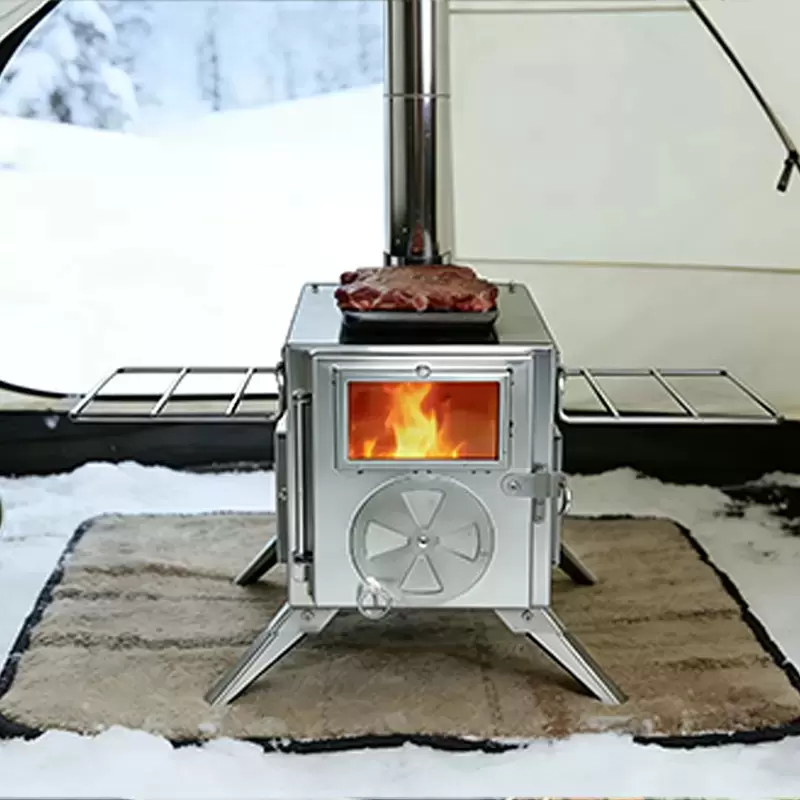
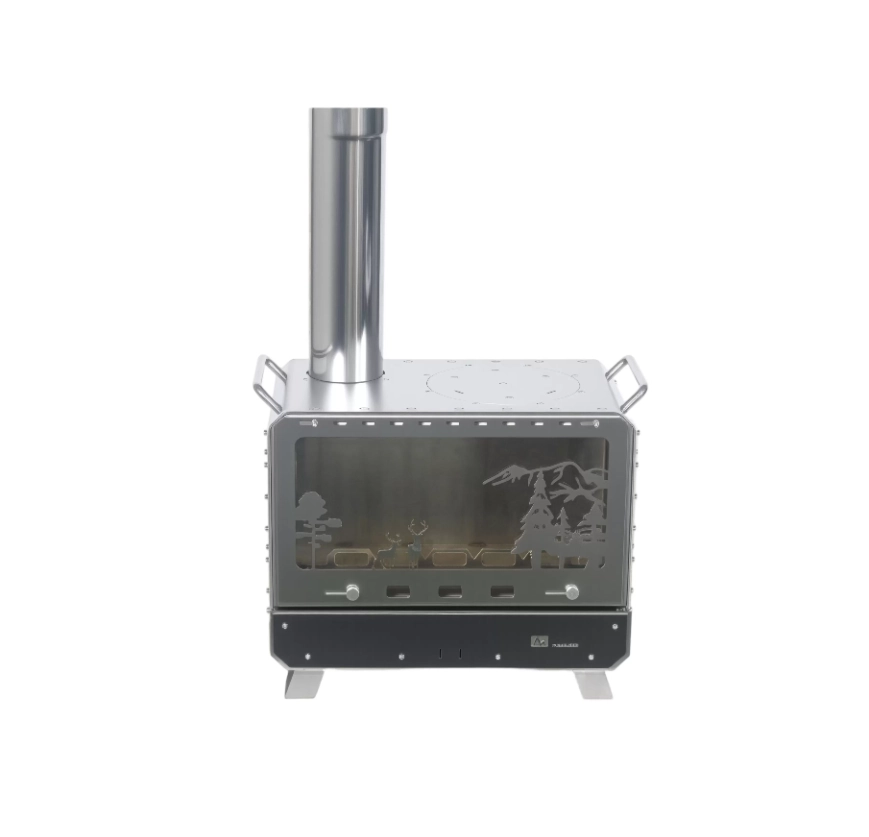
Heat-resistant pyroceram glass windows add significant aesthetic and ambient value to hot tents, but soot buildup can quickly blacken the view. High-performance tent stoves solve this using air-wash technology.
An air-wash system channels a controlled curtain of cool or preheated air downward across the interior surface of the glass window. This high-velocity air barrier prevents floating carbon particles, ash, and wood resins from adhering to the glass. For commercial buyers, air-wash technology serves as a compelling retail feature that elevates customer satisfaction by reducing glass maintenance.
Precision Damper and Intake Control Mechanisms
Controlling air velocity into the firebox directly dictates burn rate and heat duration:
Sliding Draft Vents vs. Rotary Valves: Precision-machined sliding vents offer linear airflow adjustment, whereas threaded rotary intake valves provide micro-fine tuning that prevents unwanted air leaks.
Draft Balancing: Pairing precision intake vents with a chimney flue damper allows campers to balance intake oxygen with exhaust draw.
Overnight Burn Optimization: By sealing primary intake vents down to a trickle while feeding secondary air channels, high-efficiency stoves achieve a slow, complete smolder that maintains stable tent temperatures for 6 to 10 hours on a single load of hardwood.
Secondary Combustion Jets and Internal Baffle Plates
Internal chamber architecture determines how long combustion gases remain inside the stove:
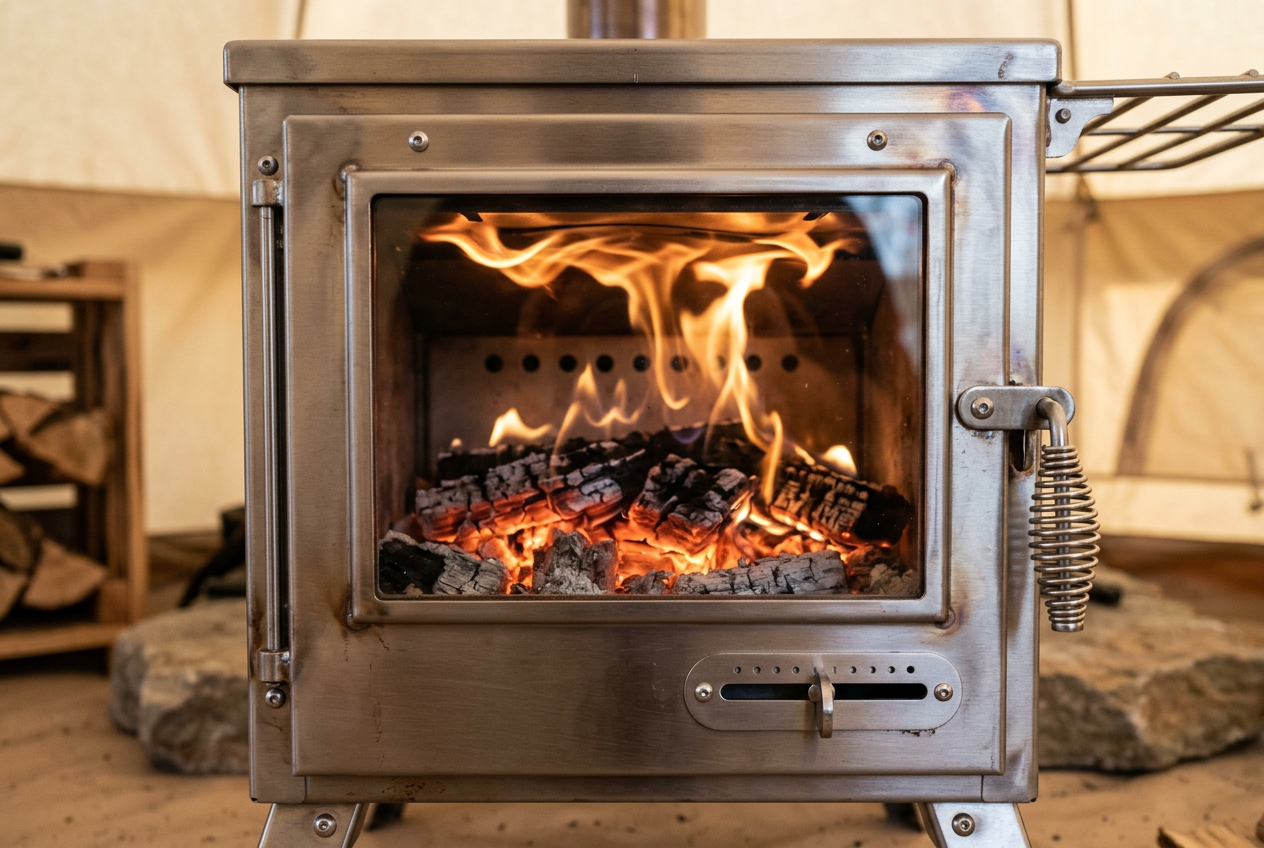
Internal Baffle Plates: Horizontal steel or titanium baffles force rising hot gases to travel along a serpentine path before exiting into the chimney. This extends gas dwell time, allowing maximum heat absorption through the stove cooktop.
Air Injection Jets: Strategically positioned secondary air nozzles create turbulent flame mixing at the baffle line. This creates visible secondary flame dances across the upper chamber, boosting top-plate cooking temperatures while capturing heat that would otherwise escape.
Micro-Fan-Assisted Airflow Systems and Thermoelectric Integration
A recent innovation in premium tent stoves is forced-air convection powered by Thermoelectric Generators (TEG).
TEG modules convert waste conductive heat from the stove surface into electricity to drive micro-blower fans. These fans inject pressurized oxygen directly into the primary ember bed or secondary air manifolds. Forced airflow enables rapid ignition of damp wilderness wood, maintains stable burning in extreme sub-zero conditions, and offers a high-tech point of differentiation for premium brand portfolios.
Airflow Optimization for Compact and Foldable Tent Stoves
Engineering precise airflow controls in ultralight, collapsible titanium stoves presents unique manufacturing challenges. Ultra-thin titanium sheets experience minor thermal expansion and warping under intense heat, which can jam sliding vents or create air leaks along panel seams.
Leading manufacturers solve this by stamping structural reinforcement ribs into titanium side panels and housing sliding dampers within precision-machined tracks. Additionally, nesting air intake ducts and removable baffle plates allow the entire stove to collapse flat into a compact carry bag without compromising combustion efficiency.
Safety Architecture: Preventing Smoke Backdraft and Sparks
Safety is paramount when operating wood stoves inside synthetic or canvas tents:
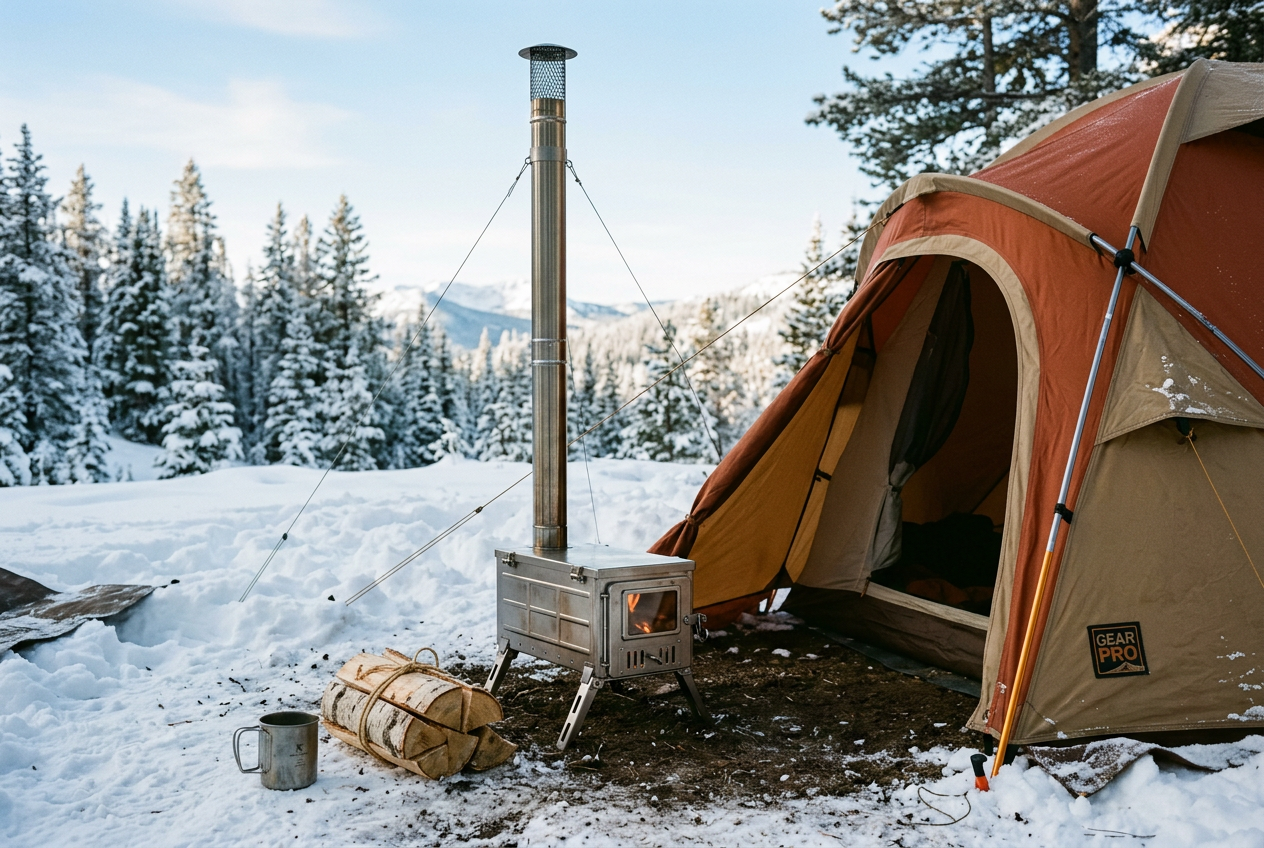
Smoke Backdraft Prevention: Sudden wind gusts across the flue exit can reverse chimney draft, pushing toxic carbon monoxide and smoke into the tent. Anti-backdraft chimney caps and interior door baffle lip deflectors maintain positive pressure differential during door openings.
Spark Suppression: Integrated mesh spark arrestors combined with internal airflow baffles trap flying embers within the stove body before they can escape the chimney and burn holes in tent fabric.
Buyer’s Guide: Evaluating Airflow Performance when Sourcing Tent Stoves
When auditing prospective tent stove suppliers, procurement managers should evaluate the following criteria:
Chassis Airtightness: Test door gasket seals and panel seam tolerances to ensure precise airflow control.
Baffle Removability: Verify that internal baffle plates can be removed easily for chimney sweeping and internal cleaning.
Fuel Versatility: Confirm that airflow controls accommodate diverse wood types, from resinous softwoods to dense hardwoods and damp timber.
Target Application: Select heavy-gauge stainless steel models with dual airflow for car-camping glamping, or ultralight titanium stoves with folding baffles for backcountry winter trekking.
Industry Trends and the Future of Clean-Burning Tent Heating
The outdoor heating sector is moving toward stricter environmental standards and clean-burning designs. Future stove development will focus on self-regulating airflow systems, modular multi-fuel conversion kits (supporting wood, gas, and biomass pellets), and ultralight heat-retention alloys. Sourcing stoves equipped with advanced airflow technology positions outdoor brands at the forefront of quality, performance, and environmental compliance.
Frequently Asked Questions
How does an air-wash system in a tent stove work, and why is it important for buyers?
An air-wash system channels a directed stream of fresh air down the interior surface of the glass window, creating a protective air barrier. This air feeds combustion while preventing black soot, resin, and ash from settling on the glass. For buyers, this feature preserves fire viewing aesthetics and reduces window cleaning maintenance.
What is the difference between primary and secondary airflow in a hot tent wood stove?
Primary airflow feeds air directly to the base of the fire to maintain wood combustion. Secondary airflow draws air through double-walled channels, superheats it, and injects it into the upper chamber to ignite floating wood gas and smoke. Secondary airflow increases thermal output and delivers cleaner, smokeless burning.
Can advanced airflow designs really help a tent stove burn overnight?
Yes. Stoves with airtight fireboxes, precision intake dampers, and internal baffle plates restrict oxygen intake while maintaining complete combustion. By closing the primary vent and relying on secondary air, a stove packed with dense hardwood can maintain steady heat output for 6 to 10 hours.
Do lightweight folding titanium stoves have effective airflow controls compared to heavy stainless steel stoves?
Modern titanium stoves feature advanced airflow controls, including sliding intake vents and internal baffles. To counter thermal expansion warping, high-quality titanium stoves use stamped reinforcement ribs and precision damper tracks to ensure smooth airflow adjustment during high-heat operation.


 en
 ja
 ko
 zh
 es
 ru
 fr
 ar
 pt
 tr
 nl
 it
 de



 RELATED MAGAZINE









 Leave a Message