The global outdoor gear market is shifting from conventional camping tools toward integrated thermal systems that combine efficiency, portability, and brand customization. Within this transition, compact wood tent stoves are no longer simple heating devices but engineered combustion platforms designed for cold-region mobility, expedition logistics, and branded outdoor ecosystems.
Manufacturing structures behind these products are equally evolving. A modern wood tent stove factory now operates as a hybrid of industrial design studio, thermodynamics lab, and scalable supply chain hub for global outdoor brands. The focus is no longer only production volume but controlled combustion performance, modular architecture, and brand-driven customization capability.
In this blog post, INBESTCAMP, as outdoor wood burning stove manufacturer, will share the compact wood tent stove OEM manufacturing factory for global outdoor brand supply chain, its structural innovation, combustion engineering, material systems, and OEM workflow design behind next-generation wood tent stoves used in professional camping and expedition environments.
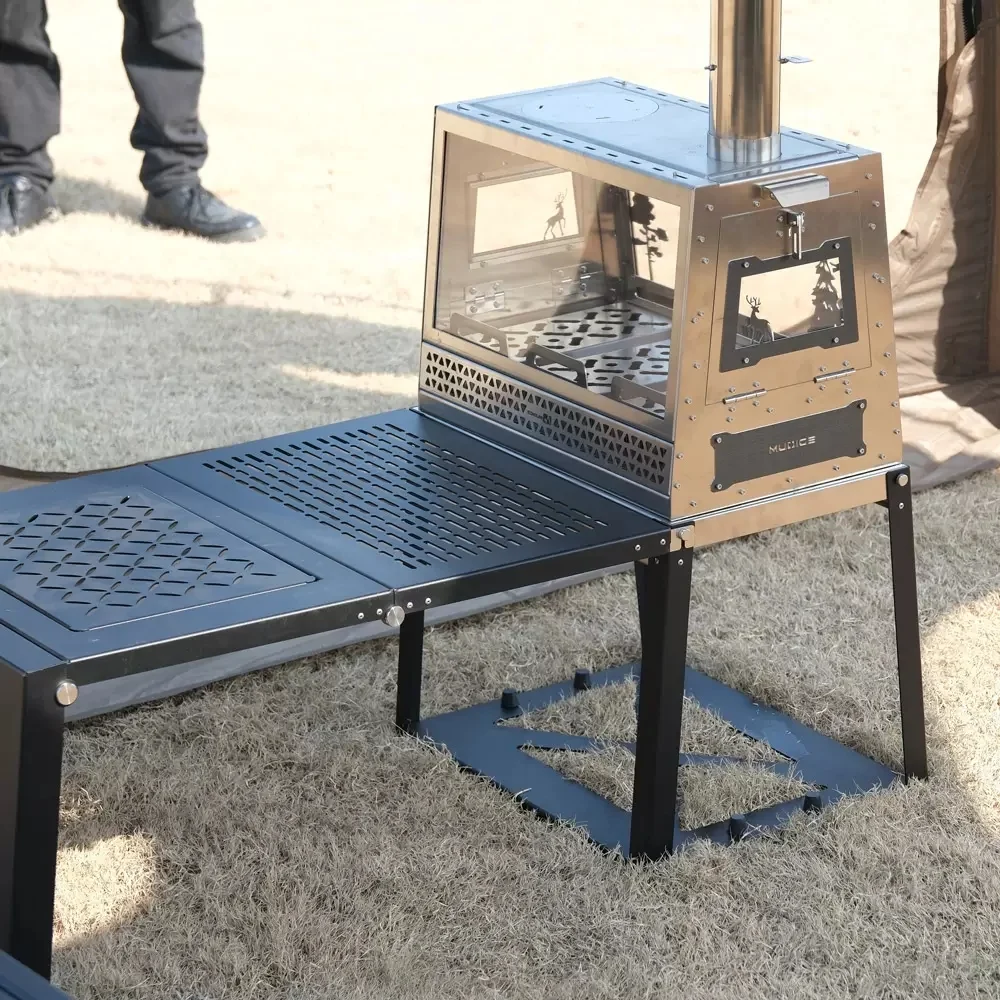
Thermodynamic Architecture in Compact Wood Tent Stove OEM Engineering
Modern compact wood tent stove systems are designed around airflow-controlled combustion rather than passive burning. The internal geometry determines energy conversion efficiency, heat concentration, and smoke reduction behavior.
A key structural innovation is the honeycomb-trapezoidal thermal chamber design, which introduces bionic airflow dynamics inspired by natural hexagonal structures. This configuration creates spiral flame acceleration through layered deflectors, improving heat concentration efficiency by up to 60% under controlled laboratory conditions.
Industry testing data from outdoor combustion engineering studies (International Journal of Energy Research, 2023) indicates that optimized airflow stoves can reduce fuel consumption by 35–55% compared to traditional cylindrical wood stoves, primarily due to secondary combustion efficiency and oxygen recirculation control.
Within OEM production systems, this architecture is translated into scalable stainless steel stamping and precision laser-cut modules, allowing consistent performance across batch manufacturing.
Airflow Control and Twin-Vortex Combustion Design Systems
One of the most significant engineering upgrades in compact tent stove systems is the integration of dual airflow vortex combustion channels.
A twin-vortex system typically includes:
Bottom intake cyclonic air injection
Side-wall auxiliary oxygen ducts
Secondary combustion re-burn chamber
Ash separation flow path
This structure increases combustion completeness by promoting fuel-air mixing at multiple pressure levels. Smoke emissions can be reduced by approximately 40–60% depending on wood moisture content and oxygen calibration settings.
From a manufacturing standpoint, airflow geometry must remain consistent across production batches. This requires CNC-controlled duct alignment and tolerance-controlled welding procedures, ensuring stable vortex formation even under field deformation conditions.
Compact Wood Tent Stove OEM Manufacturing Factory Material Engineering
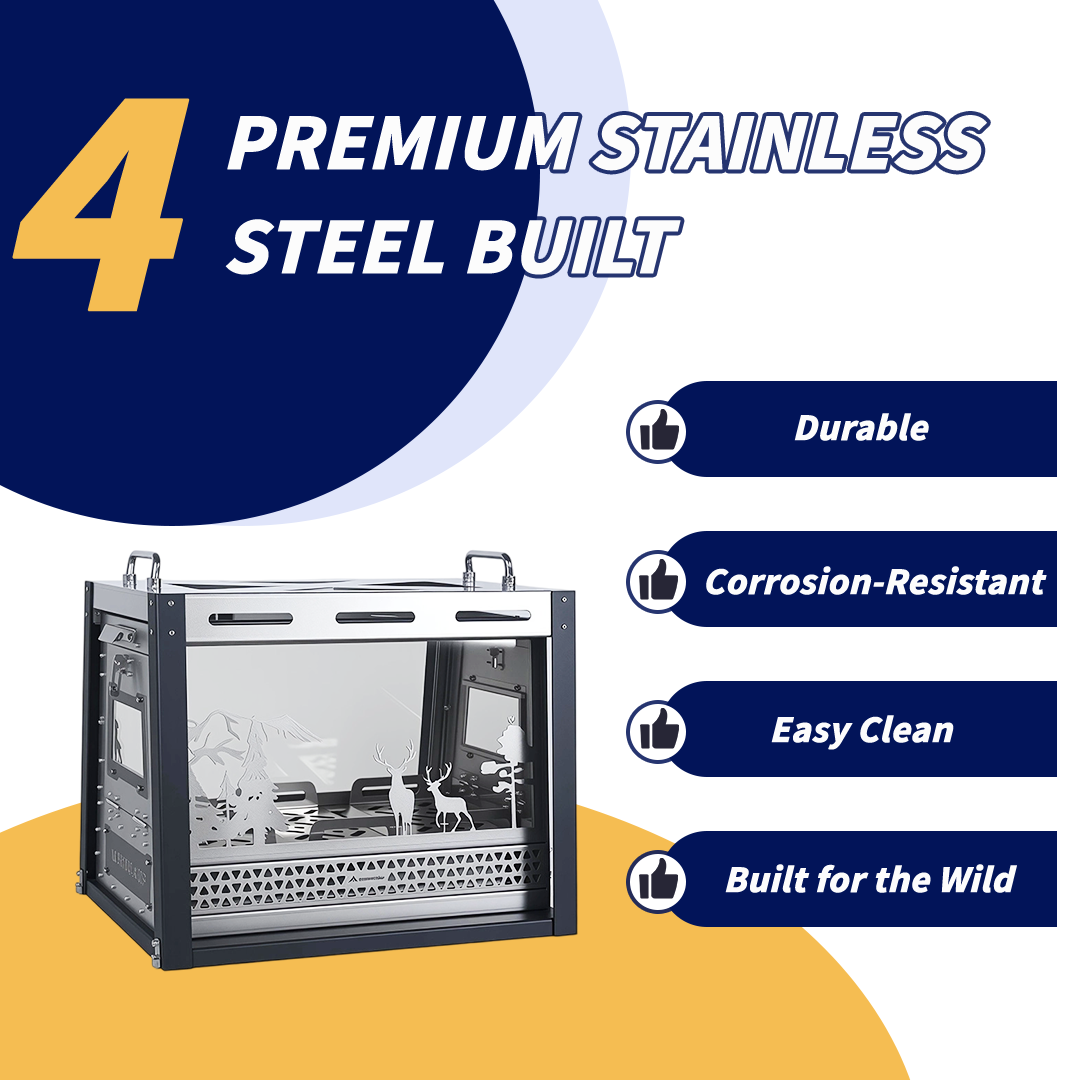
Material selection defines durability and thermal stability in extreme outdoor environments. A professional OEM system integrates multiple material layers based on thermal zones rather than uniform sheet construction.
Typical configuration includes:
High-temperature combustion chamber steel (1.2–2.0mm reinforced alloy)
Thermal radiation glass panels (borosilicate up to 800°C resistance)
Anti-corrosion external shell coating (ceramic or powder-based treatment)
Reinforced load-bearing base frame (aviation-grade aluminum alloy)
Industry field data from cold-region expeditions in Northern Europe shows that structural fatigue failure in low-temperature environments accounts for nearly 18% of stove malfunction cases, primarily due to uneven thermal expansion. OEM-grade engineering addresses this by modular thermal expansion joints and floating glass mounting systems.
Combustion Chamber Optimization and Extended Thermal Retention Design
In advanced compact wood tent stove manufacturing systems, combustion chamber volume is no longer purely size-driven. It is designed around thermal retention cycles and fuel endurance stability.
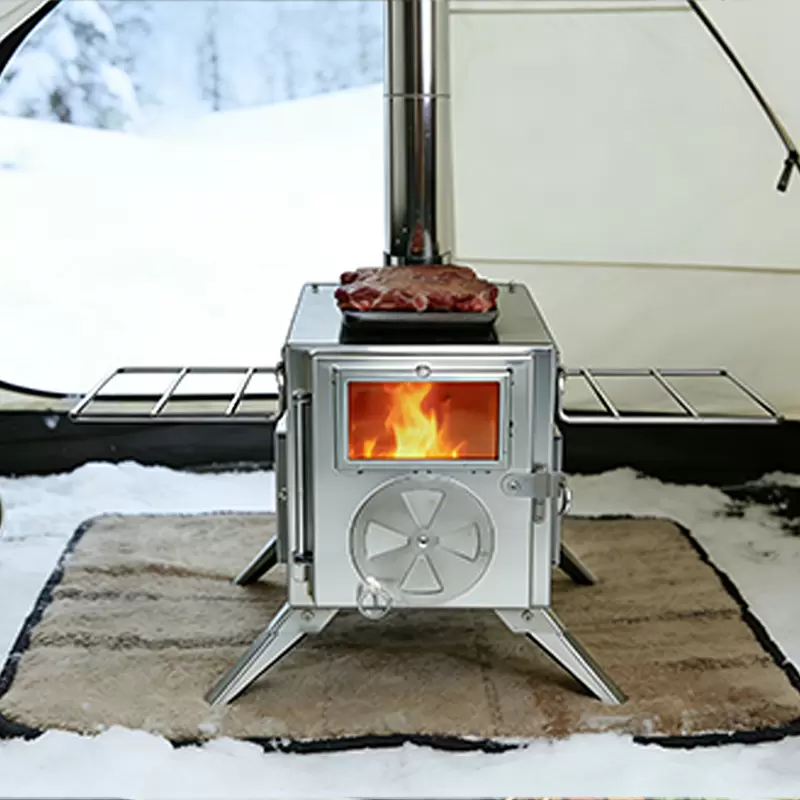
A high-capacity dome chamber system can support log diameters up to 15 cm, enabling continuous combustion cycles of 6–8 hours under sub-zero conditions. This is particularly relevant for expedition-grade camping environments where overnight heating stability is required.
Thermal retention engineering focuses on:
Heat storage geometry optimization
Vertical energy stacking circulation
Controlled oxygen depletion phases
Radiative heat rebound layering
These mechanisms create a slow-release energy profile rather than rapid burn loss, increasing overall thermal efficiency in enclosed tent environments.
Glass Radiation Systems and Visibility-Driven Heat Experience
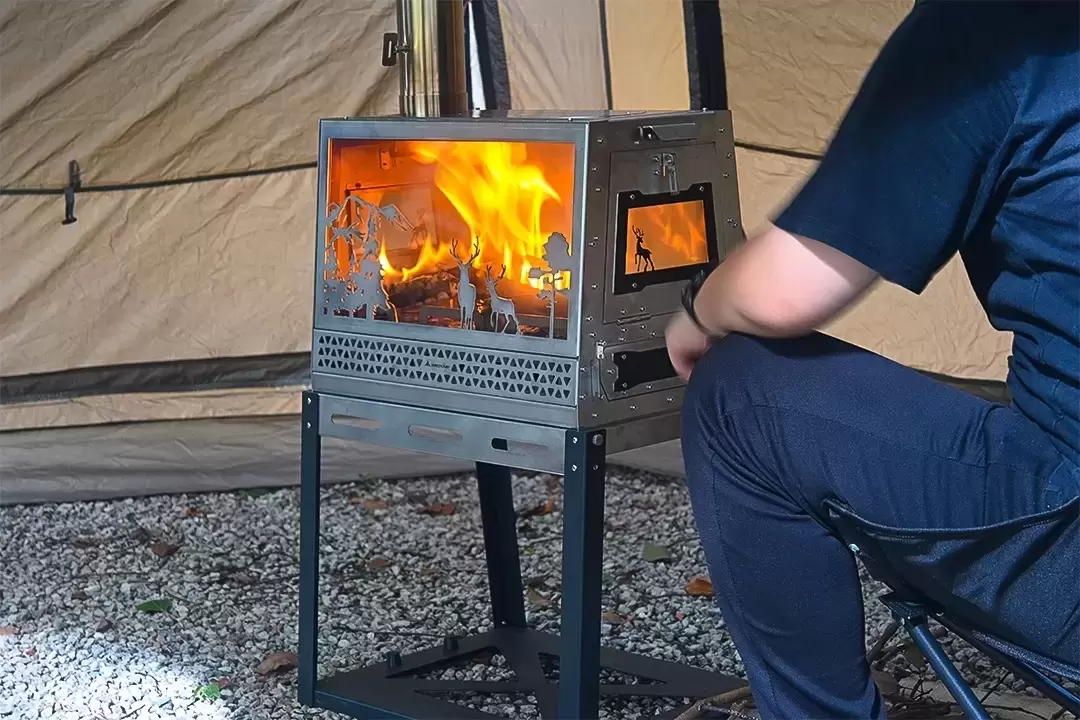
Modern tent stove systems increasingly integrate panoramic fire-view glass structures that serve both functional and experiential purposes.
A 270-degree multi-panel borosilicate glass configuration enables:
Continuous flame monitoring
Improved radiant heat distribution
Reduced internal heat fluctuation
Enhanced safety visibility during combustion cycles
Some systems embed metallic nano-filament reinforcement between glass layers to increase impact resistance and prevent microfracture propagation under thermal shock conditions.
According to materials testing benchmarks used in industrial thermal glass applications, borosilicate systems maintain structural integrity at temperature differentials exceeding 500°C when properly mounted in flexible frame systems.
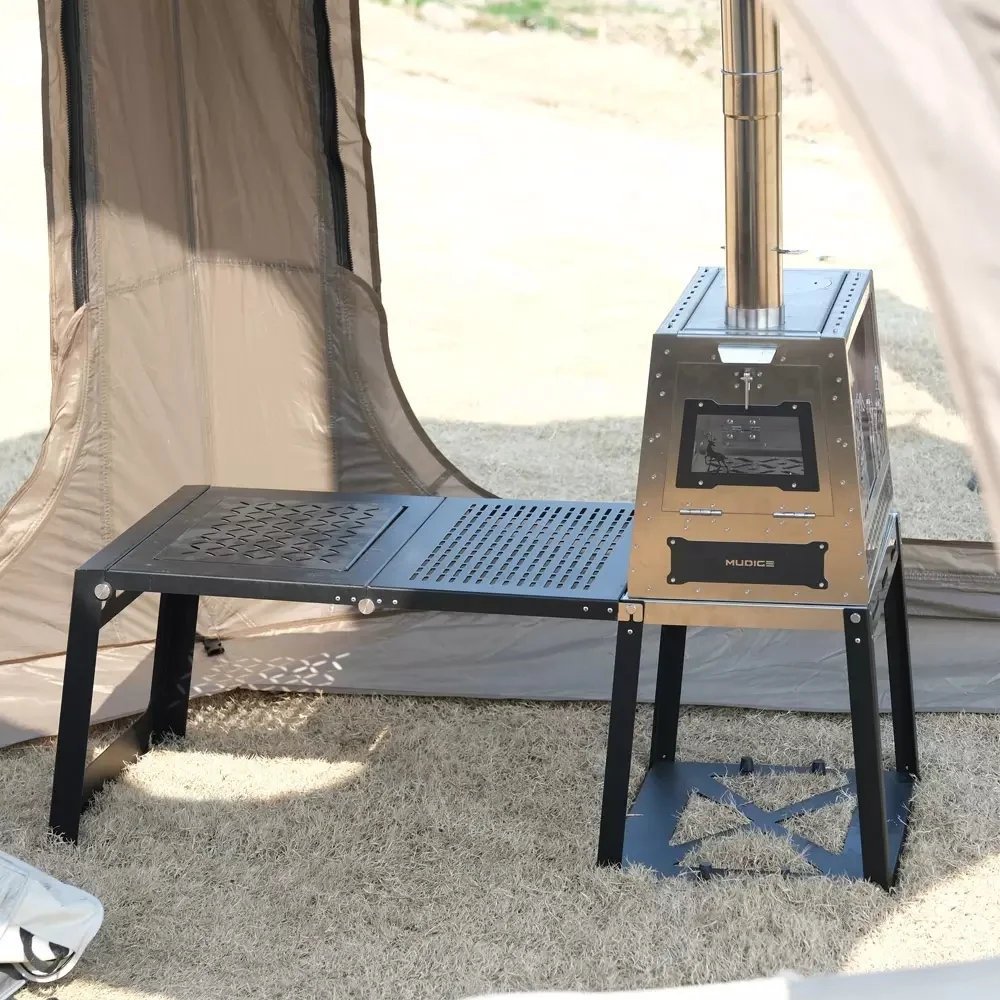
Modular Base Systems for Transport and Multi-Scenario Deployment
A key evolution in compact stove design is the transformation of the base structure into a multifunctional deployment platform rather than a passive support element.
Modern OEM base systems integrate:
Fuel storage compartments for dry wood reserves
Shock-resistant transport casing with TPE edge damping
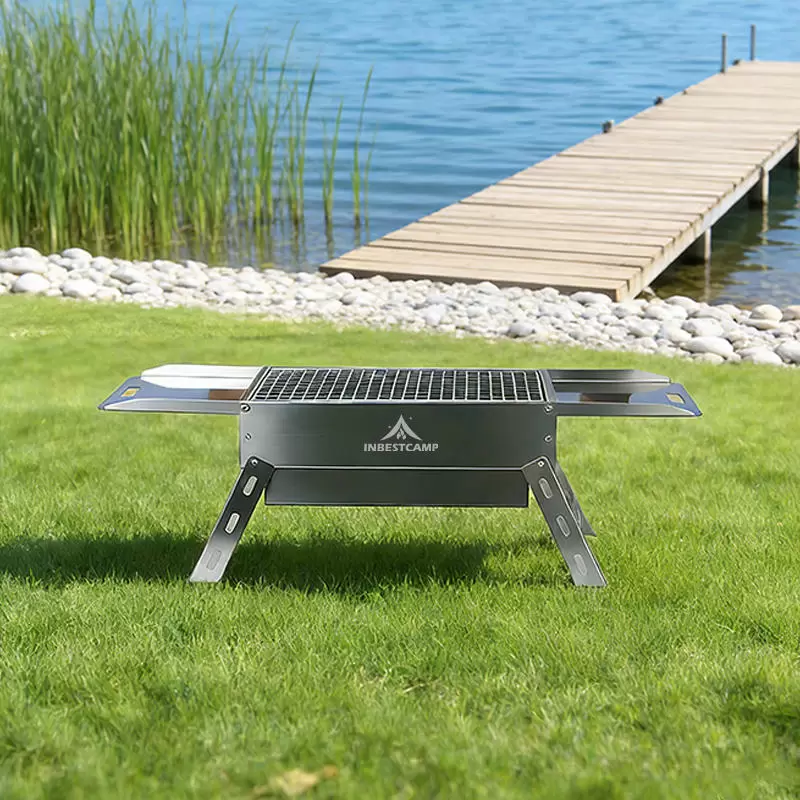
Foldable auxiliary cooking or preparation platform
Quick-mount vehicle integration interfaces for expedition transport
This modular approach supports both backpacking and vehicle-based expedition logistics, reducing dependency on separate storage systems.
From a supply chain perspective, modularization also reduces SKU complexity and improves customization efficiency for global outdoor brands.
OEM Manufacturing Workflow in a Camping Tent Stove China Factory
A professional camping tent stove China factory operates through structured OEM/ODM pipelines that integrate design, prototyping, testing, and scalable production.
Standard workflow includes:
Requirement mapping and functional specification alignment
Thermal simulation modeling and airflow design validation
Rapid prototyping within 7–10 days
Structural stress testing under variable temperature conditions
Pilot batch verification before mass production
Full-scale production with multi-stage quality inspection
Lead-time optimization is critical in global supply chains. Efficient factories can achieve production cycles of approximately 30 days for standardized customized orders, depending on material complexity and surface finishing requirements.
Quality Control Systems in Compact Stove Manufacturing
Quality assurance in compact wood tent stove production is not limited to final inspection. It is embedded across the entire manufacturing chain.
Key control stages include:
Incoming material certification and alloy verification
Weld integrity inspection using ultrasonic testing
Thermal cycle fatigue simulation
Airflow consistency validation
Final assembly leakage and combustion efficiency testing
In addition, batch-level documentation systems are increasingly adopted to provide traceability for international export compliance and brand-level quality assurance requirements.
Visual inspection support through photo verification and live production monitoring is also commonly used for overseas clients requiring transparent manufacturing processes.
Customization Engineering for Global Outdoor Brand Supply Chains
Customization is a core differentiator in modern OEM stove manufacturing. Global outdoor brands require not only functional products but also identity-driven design integration.
Custom engineering options typically include:
Brand logo laser engraving or stamping
Material substitution for weight or thermal adjustment
Custom chimney systems for tent compatibility
Accessory ecosystems such as spark arrestors and extension pipes
Packaging system aligned with brand positioning
Manufacturers like INBESTCAMP provide integrated design support, allowing clients to transition from concept to production without fragmented supplier coordination. The emphasis is on unified supply chain control rather than isolated component sourcing.
Industrial Performance Table for Compact Wood Tent Stove Systems
System Component | Engineering Focus | Functional Output |
Combustion Chamber | Thermal retention geometry | 6–8h burn stability |
Airflow System | Dual vortex oxygen control | 40–60% smoke reduction |
Glass Panel System | Borosilicate heat resistance | 270° flame visibility |
Base Module | Structural + storage integration | Transport + deployment |
Material Layering | Alloy + ceramic coating | Thermal durability |
Industry Demand and Market Direction
According to Grand View Research (2024), the global camping equipment market is projected to exceed USD 22 billion by 2030, with heating and cooking systems showing one of the fastest growth rates in cold-weather and expedition segments.
Within this category, demand is increasingly concentrated in:
Lightweight expedition systems
Multi-functional heating-cooking integration
OEM customizable outdoor heating solutions
Brand-private label camping stove systems
Manufacturers capable of delivering scalable customization and engineering consistency are becoming central nodes in global supply chains.
Manufacturing Collaboration Framework and Brand Integration Strategy
A structured OEM collaboration model typically includes:
Early-stage design consultation with engineering validation
Prototype iteration cycles based on field testing feedback
Brand identity integration across product architecture
Scalable production planning aligned with distribution forecasts
Post-production optimization through batch performance review
This framework reduces time-to-market while ensuring consistency across international distribution networks.
FAQ
What is a compact wood tent stove OEM manufacturing factory?
It is a specialized production facility focused on designing and manufacturing customizable wood-burning tent stoves for outdoor brands, combining engineering, prototyping, and mass production.
Can the stove be customized for different tent systems?
Yes. Chimney diameter, outlet configuration, and airflow systems can be adapted based on tent structure requirements.
How does airflow design affect performance?
Airflow design directly influences combustion efficiency, smoke reduction, and heat distribution stability.
What materials are typically used?
Common materials include stainless steel alloys, borosilicate glass, ceramic coatings, and aviation-grade aluminum components.
What is the typical production lead time?
For customized OEM orders, production cycles can be completed in approximately 30 days after sample confirmation.
Does INBESTCAMP support brand customization?
Yes. Full OEM/ODM services are available including design adaptation, branding integration, and sample development support.


 en
en ja
ja ko
ko zh
zh es
es ru
ru fr
fr ar
ar pt
pt tr
tr nl
nl it
it de
de
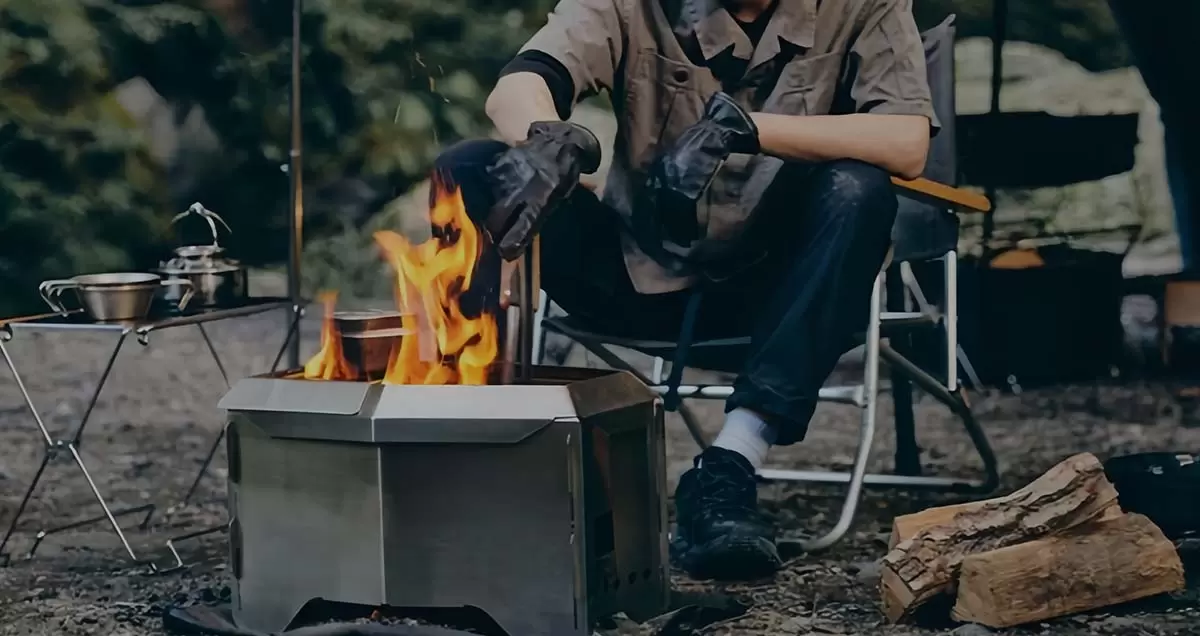

 RELATED MAGAZINE







 Leave a Message