Positioning Durable Outdoor Tent Wood Stove OEM Manufacturer in Global Camping Markets
The demand for high-performance heating systems in outdoor environments has shifted significantly in recent years. Modern camping users are no longer satisfied with basic fire pits or simple portable heaters. Instead, they expect controlled combustion, efficient heat transfer, safe tent integration, and multifunctional cooking capability within one integrated structure. Against this background, a tent wood stove manufacturer plays a critical role in shaping product competitiveness for global outdoor brands.
Manufacturers like INBESTCAMP operate at the intersection of engineering development and commercial product strategy. Rather than simply producing metal stove bodies, the focus has moved toward system-level design: airflow optimization, modular chimney routing, thermal safety structure, and accessory-based functional expansion. These factors determine whether a product can succeed in both retail channels and professional camping environments. In this blog post, INBESTCAMP, as high quality camping tent stove OEM manufacturer, will share the advantages of durable outdoor tent wood stove for hot tent systems.
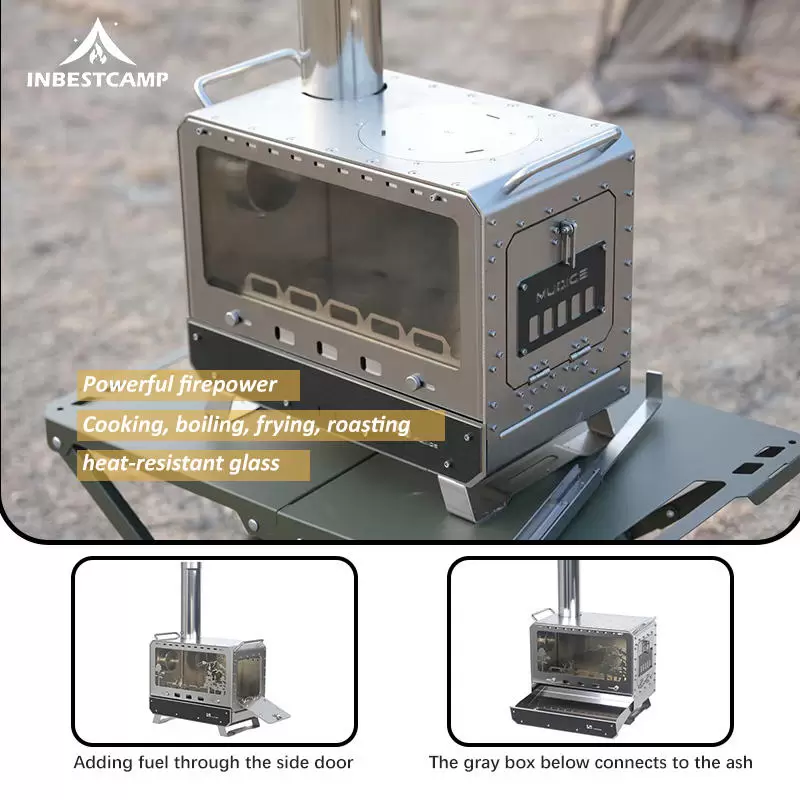
Engineering Foundations of Hot Tent Stove Systems
A hot tent stove must balance combustion efficiency with environmental adaptability. Unlike stationary heating appliances, outdoor stoves operate under unpredictable conditions such as wind exposure, humidity variation, and altitude changes.
Key engineering principles include:
• Controlled air intake architecture to stabilize combustion under variable oxygen supply
• Heat-resistant material structuring to maintain deformation resistance during long burns
• Multi-directional flue gas routing for flexible installation inside tents or shelters
• Thermal separation between combustion chamber and external contact surfaces
The development philosophy of INBESTCAMP focuses on structural efficiency rather than surface complexity. Stainless steel and titanium alloy configurations are selected based on weight-to-durability ratios, ensuring that the stove remains functional across backpacking, base camping, and semi-permanent outdoor setups.
In OEM and ODM cooperation, engineering customization is often required at the early design stage rather than post-production adjustment. This ensures that product architecture aligns with target market expectations from Amazon sellers, outdoor retailers, and camping equipment distributors.
Structural Design Logic in Camping Tent Stove Manufacturing
A well-designed camping stove is not defined only by its heating output but by its system integration capability. In modern product development, a camping tent stove china manufacturer must consider spatial constraints, airflow stability, and user interaction behavior simultaneously.
Structural design typically focuses on:
• Firebox volume optimization for balanced burn duration and portability
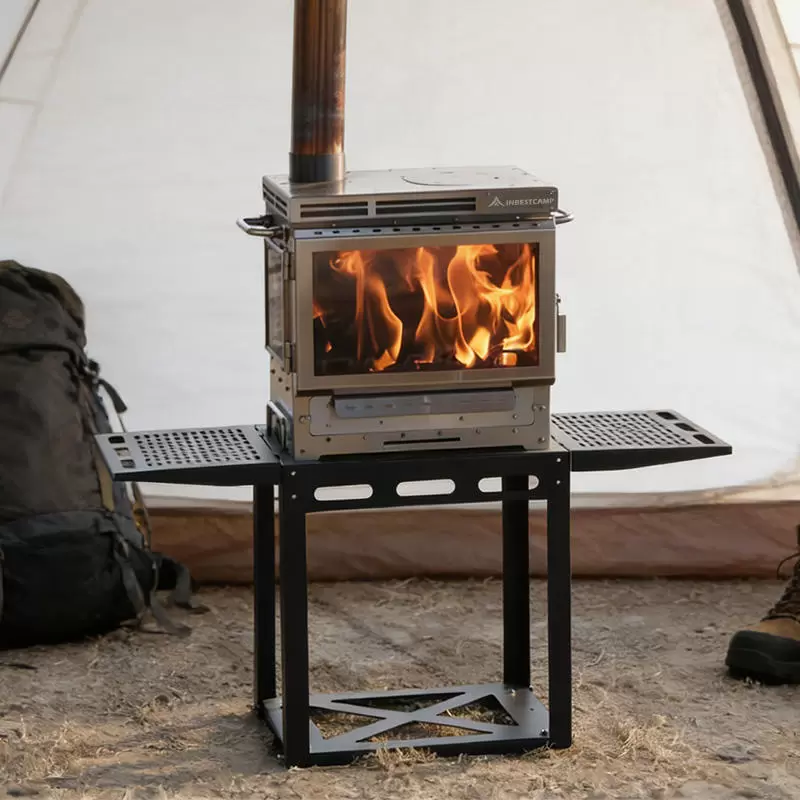
• Reinforced viewing window integration for combustion monitoring
• Modular chimney segmentation for transport efficiency
• Multi-point sealing systems to prevent smoke leakage in enclosed tents
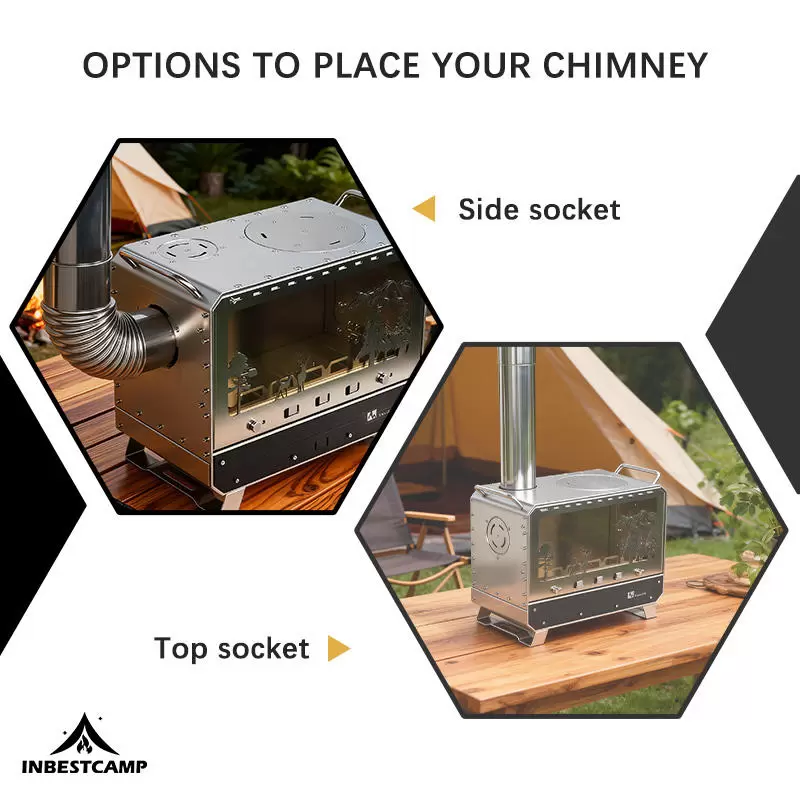
The integration of dual chimney routing systems has become a notable innovation direction. By allowing both top and side exhaust configurations, the stove can adapt to multiple real-world setups such as low-height shelters, vehicle-adjacent camping spaces, and traditional hot tents with roof vents.
Manufacturers like INBESTCAMP prioritize adaptability as a core design metric. Instead of producing fixed-configuration products, the structure is engineered to support scenario switching without requiring full system replacement.
Material Selection Strategy in Outdoor Wood Burning Stove China Factory Production
Material selection directly determines product lifespan, thermal efficiency, and safety performance. A modern outdoor wood burning stove china factory must balance cost efficiency with mechanical reliability.
Common material engineering considerations include:
• High-grade stainless steel for corrosion resistance and structural stability
• Heat-treated alloy reinforcement for combustion chamber durability
• Transparent heat-resistant glass for flame visibility and safety monitoring
• Optional titanium alloy upgrades for ultra-lightweight configurations
Material thickness is calibrated based on burn temperature distribution models. Excessively thin materials reduce weight but compromise safety, while overly thick structures increase thermal inertia and transportation cost. The optimal balance is achieved through controlled sheet metal forming and precision welding processes.
INBESTCAMP integrates full-cycle quality control from raw material inspection to final assembly validation, ensuring consistency across large-scale OEM production batches.
Functional Integration and Multi-Mode Outdoor Cooking Systems
Modern outdoor users increasingly expect multifunctionality rather than single-purpose heating devices. As a result, stove systems have evolved into integrated cooking platforms.
Functional integration typically includes:
• Heating mode for tent temperature stabilization
• Direct boiling capability for rapid water preparation
• Cooking surface compatibility for pans and kettles
• Secondary heat utilization zones for baking or slow roasting
The multi-layer thermal distribution design allows energy to be reused instead of dissipated. This improves fuel efficiency and expands usage scenarios without increasing system complexity.
From a product development perspective, functional integration is not achieved by adding accessories alone. It requires redesigning airflow paths, heat chamber geometry, and external insulation balance to ensure stable operation across all modes.
OEM and ODM Collaboration Framework for Brand Expansion
Working with a camping tent stove china manufacturer involves more than manufacturing execution. It is a structured collaboration model that supports product line expansion and market differentiation.
OEM and ODM frameworks typically include:
• Concept engineering and structural feasibility evaluation
• Prototype development and thermal testing validation
• Brand customization including surface treatment and logo integration
• Packaging design aligned with retail and e-commerce logistics requirements
For brands expanding into outdoor heating markets, OEM partnerships reduce entry barriers by eliminating the need for internal manufacturing infrastructure. Instead, companies can focus on marketing, distribution, and brand positioning while relying on established production systems.
INBESTCAMP supports modular customization strategies, allowing clients to develop multiple product variants from a unified structural platform. This approach improves scalability and reduces long-term product development costs.
Supply Chain Efficiency and Global Distribution Considerations
In global outdoor equipment distribution, logistics efficiency is as important as product performance. A well-structured outdoor wood burning stove china factory must optimize packaging density, weight distribution, and container utilization.
Key logistics optimization strategies include:
• Flat-pack structural design to reduce shipping volume
• Modular chimney segmentation for compact storage
• Stackable component packaging to improve warehouse efficiency
• Reinforced carton engineering to prevent transit damage
For cross-border e-commerce sellers, these optimizations directly affect profit margins. Lower volumetric weight reduces shipping costs, while compact packaging improves inventory turnover rates.
Supply chain stability also depends on production predictability. Consistent batch quality ensures fewer returns, lower after-sales costs, and stronger brand reputation across international markets.
Safety Engineering and Compliance in Outdoor Stove Manufacturing
Safety is a critical factor in hot tent stove systems due to enclosed combustion environments. Manufacturing standards must address both structural integrity and operational safety.
Core safety engineering elements include:
• Airtight welding processes to prevent smoke leakage
• Heat dispersion control to avoid surface overheating
• Stable chimney locking systems for wind resistance
• Fire-resistant glass reinforcement for high-temperature exposure
Compliance requirements vary across regions, requiring flexible adaptation during OEM development. Manufacturers must be able to adjust specifications based on target market regulations without redesigning the entire product structure.
INBESTCAMP integrates compliance consultation into its production workflow, ensuring that exported products align with international safety expectations.
Market Expansion Strategy for Outdoor Heating Product Lines
The outdoor heating category is expanding beyond traditional camping enthusiasts into broader lifestyle and emergency preparedness markets. This shift creates opportunities for brands to diversify their product portfolios.
A scalable strategy typically involves:
• Entry-level compact stoves for backpacking users
• Mid-range multifunctional tent stoves for group camping
• Large-capacity heating systems for base camps or cabins
This tiered structure allows brands to capture multiple customer segments without fragmenting manufacturing complexity.
By working with an experienced outdoor wood burning stove china factory, brands can develop cohesive product ecosystems rather than isolated product units. This strengthens long-term brand positioning in global markets.
Building Long-Term Value with INBESTCAMP Manufacturing System
Sustainable product success in the outdoor heating industry depends on continuous engineering refinement and production stability. INBESTCAMP focuses on long-term collaboration rather than one-time manufacturing transactions.
Its value system is built around:
• Engineering-driven product development
• Flexible OEM and ODM scalability
• Precision manufacturing with strict quality control
• Adaptability to evolving outdoor lifestyle trends
By integrating design, production, and customization under one system, INBESTCAMP enables brands to accelerate market entry while maintaining technical reliability.
Conclusion
The evolution of hot tent heating systems reflects a broader transformation in outdoor living expectations. A durable outdoor tent wood stove OEM manufacturer is no longer just a supplier but a strategic development partner.
Through structured engineering, material optimization, functional integration, and scalable OEM frameworks, manufacturers like INBESTCAMP help global brands build competitive product ecosystems. Whether collaborating with an outdoor wood burning stove china factory or a camping tent stove china manufacturer, success ultimately depends on aligning technical precision with market-driven adaptability.
In a rapidly growing outdoor equipment landscape, integrated manufacturing capability has become the defining factor in brand differentiation and long-term expansion.
FAQ
What defines a high-quality outdoor tent wood stove for hot tent systems?
A high-quality hot tent stove is defined by controlled combustion stability, airtight structural welding, efficient airflow management, and safe integration with tent chimney systems. It must maintain consistent heat output under variable outdoor conditions such as wind, humidity, and altitude. Material selection (stainless steel or titanium alloy) and thermal separation design are also critical to ensure safety and durability during long burns.
Why is OEM/ODM manufacturing important for tent wood stove brands?
OEM/ODM manufacturing allows outdoor brands to focus on marketing and distribution while leveraging professional engineering and production systems. It reduces development cost, shortens product launch cycles, and ensures structural reliability through established manufacturing expertise. ODM cooperation also enables brands to co-develop exclusive designs tailored to specific market segments.
What engineering challenges are involved in camping tent stove production?
Key challenges include maintaining combustion efficiency in enclosed spaces, preventing smoke leakage, balancing weight with durability, and ensuring safe heat dispersion. Additionally, modular chimney design and multi-directional exhaust routing must support different tent structures and real-world camping scenarios without compromising stability.
How does material selection affect stove performance and safety?
Material choice directly impacts heat resistance, weight, corrosion protection, and structural stability. High-grade stainless steel provides durability and oxidation resistance, while titanium alloys reduce weight for backpacking applications. Material thickness must be precisely calibrated to avoid deformation under long-term high-temperature exposure.
Can tent wood stoves support multiple cooking functions?
Yes. Modern designs integrate multi-mode functionality including heating, boiling, baking, and slow cooking. This is achieved through optimized airflow systems and thermal distribution chambers rather than simply adding accessories. Proper engineering ensures that heat is efficiently reused across different cooking zones.


 en
en ja
ja ko
ko zh
zh es
es ru
ru fr
fr ar
ar pt
pt tr
tr nl
nl it
it de
de

 RELATED MAGAZINE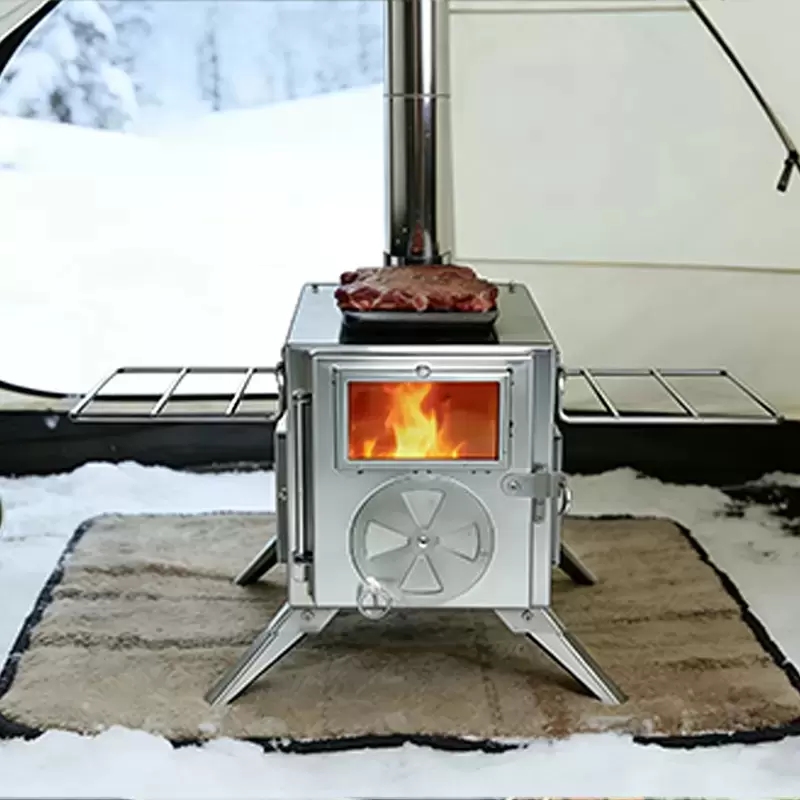








 Leave a Message