The global outdoor cooking equipment market is undergoing a structural shift driven by demand for portability, modular cooking systems, and high-efficiency fuel technologies. Among these categories, the portable foldable gas grill has become a cornerstone product for brands aiming to expand into camping, RV travel, and outdoor catering segments.
For BBQ brands, sourcing directly from an OEM factory is no longer just a cost decision—it is a strategic move that determines product competitiveness, supply chain stability, and long-term brand positioning. In this blog post, INBESTCAMP, as high quality custom BBQ grill OEM china factory, will share the features of portable foldable gas grill for BBQ brand growth. INBESTCAMP operates as a full-chain manufacturing partner, integrating R&D, structural engineering, combustion system design, and mass production to support global BBQ brand growth.
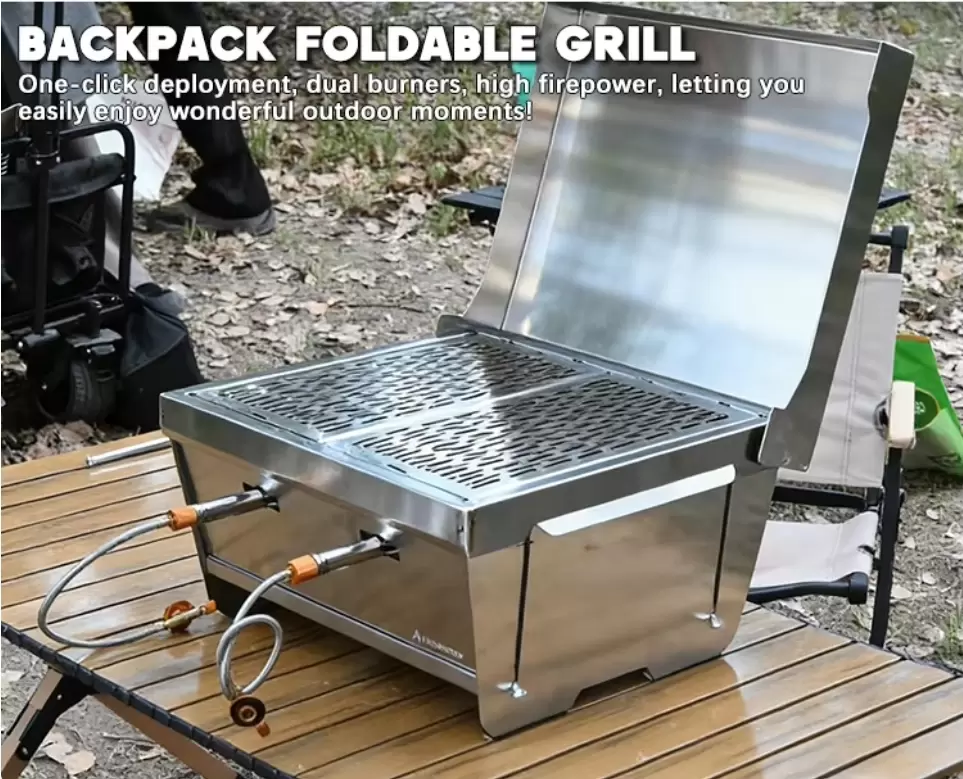
Portable Foldable Gas Grill OEM Factory Direct Development Framework
Factory-direct development for portable foldable gas grills is not simply about production efficiency. It involves a structured engineering system that connects design intent with scalable manufacturing capability.
INBESTCAMP builds its OEM framework around three core engineering pillars:
• Structural folding system integration for rapid deployment and long-term fatigue resistance
• Dual-burner gas distribution architecture for zone-based cooking control
• Thermal field uniformity simulation to ensure consistent heat distribution across large grilling surfaces
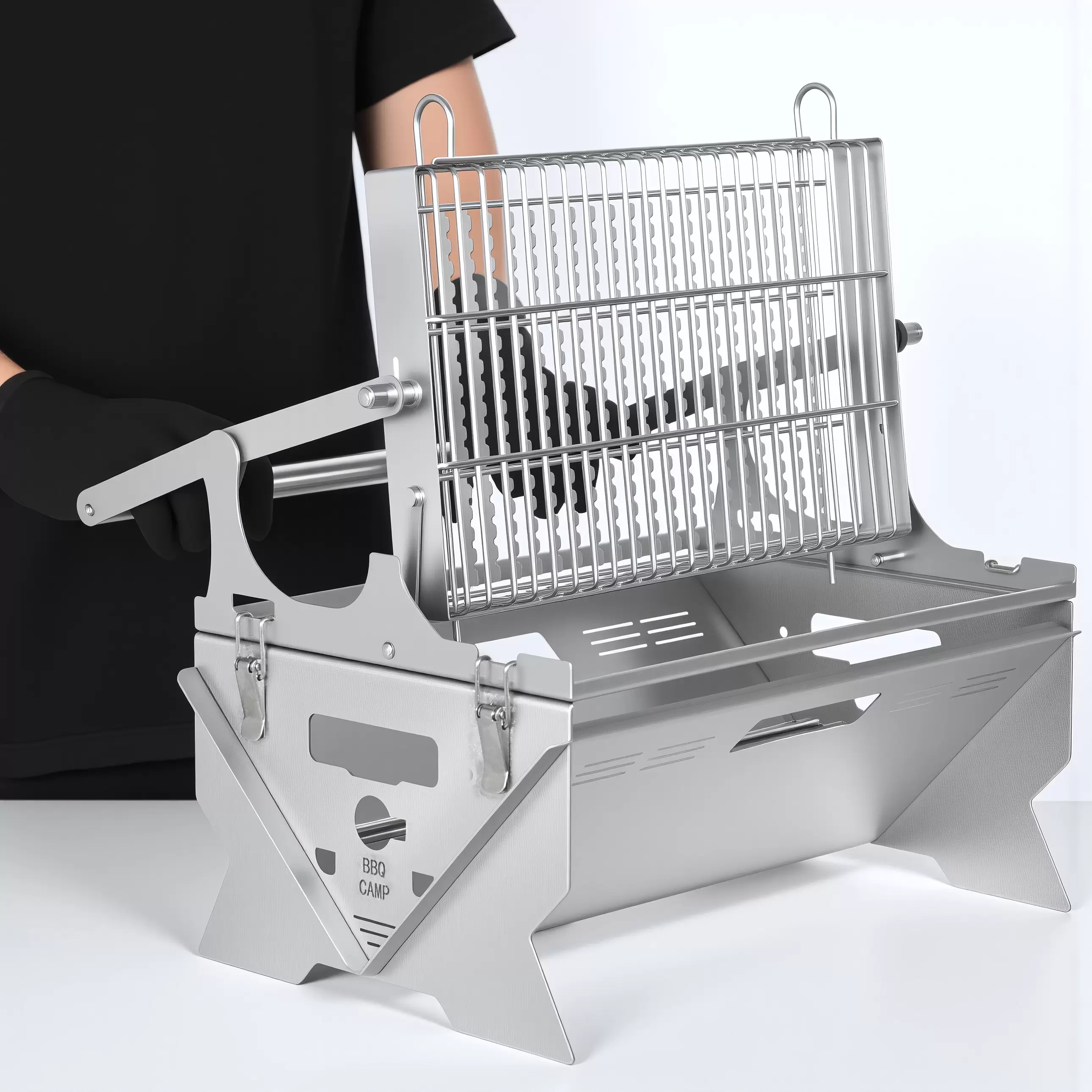
The ICP-TKL-M-Q-A008 model demonstrates this framework in practice, combining a 52cm ultra-wide cooking platform with a reinforced folding chassis and independently controlled dual burners. This allows brands to position their products in the high-performance outdoor cooking segment without compromising portability.
Industry data from Grand View Research shows that portable gas grilling systems are growing at over 6.8% CAGR globally, with demand strongly driven by outdoor leisure consumption in North America and Europe. OEM factory-direct models have become the dominant sourcing method due to faster customization cycles and lower supply chain friction.
Structural Engineering Behind Large-Area Folding Grill Systems
Large-format foldable grills present a complex engineering challenge: maintaining rigidity while enabling compact folding geometry.
INBESTCAMP addresses this through precision mechanical design and robotic welding systems:
• 3D structural load distribution analysis for folding joints
• High-precision bending centers ensuring frame alignment stability
• Reinforced hinge systems tested under repeated thermal expansion cycles
• Load-bearing design supporting up to 20–30kg static pressure without deformation
The 52cm-wide grilling platform is engineered specifically for high-volume cooking scenarios, enabling simultaneous preparation of multiple food types such as skewers, whole poultry, and seafood.
Unlike traditional lightweight portable grills, structural reinforcement ensures that repeated high-temperature cycles do not lead to frame fatigue or warping, a common issue in mass-market products.
Dual-Burner Gas System Integration for Zoned Cooking Control
The defining innovation of this grill platform lies in its dual-burner architecture. Instead of a single heat source, the system divides thermal output into independently controlled zones.
• Left burner optimized for high-intensity searing (steaks, seafood, quick grilling)
• Right burner optimized for low-temperature slow cooking (vegetables, bread, braising)
• Independent valve control system for precise flame adjustment
• Cross-point ignition system ensuring stable startup under wind and low temperatures
Each burner delivers 4–5kW output, with a combined system reaching up to 10kW, enabling rapid heating even in cold outdoor environments.
Thermal simulation testing shows that dual-zone systems can improve cooking efficiency by 35–40% compared to single-burner designs, particularly in multi-dish group cooking scenarios.
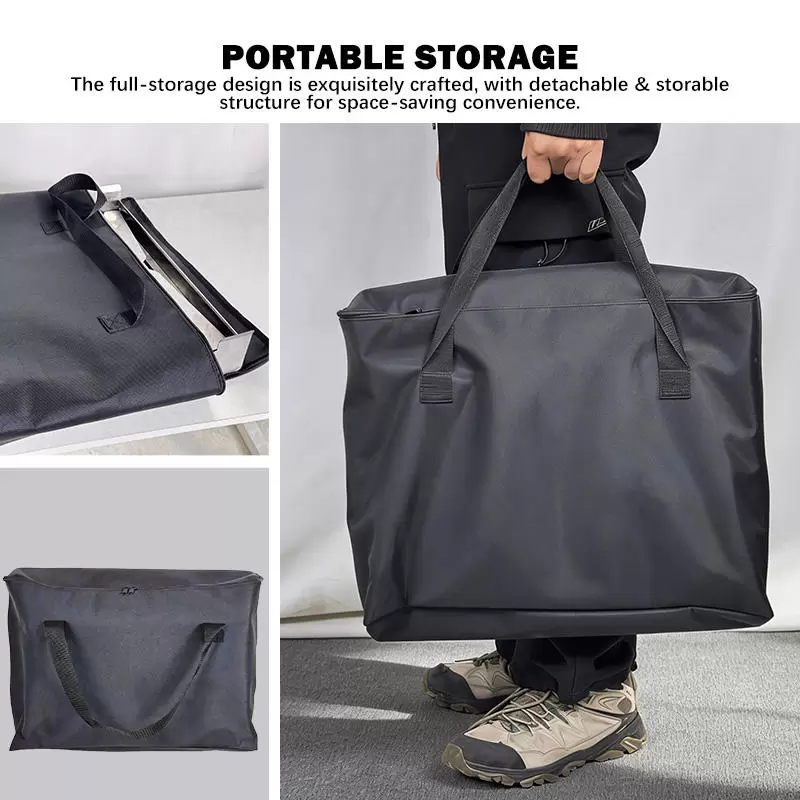
One-Touch Folding Mechanism and Mechanical Reliability Systems
Portability is not defined only by weight but by operational simplicity. The one-touch folding system integrates mechanical precision with user-centric engineering.
• Gear-linked folding architecture for synchronized movement
• Damping pivot system to prevent sudden closure or structural shock
• Snap-lock safety mechanism for stable locking during operation
• Ergonomic dual-handle integration for transport stability
The folding cycle is designed to complete setup and breakdown in under 10 seconds, even under full load conditions.
Fatigue testing includes 10,000+ folding cycles with simulated thermal exposure, ensuring structural integrity under long-term commercial use.
Multi-Functional Cooking System and Thermal Expansion Design
Modern outdoor grills are expected to function beyond simple barbecue tools. This system integrates modular cooking capability through structural adaptability.
• Detachable braising lid transforms grill into enclosed oven system
• Heat circulation chamber enables uniform roasting of large ingredients
• Open-fire configuration supports high-speed grilling mode
• Adjustable air intake for combustion optimization
This dual-mode system allows the product to transition between fast grilling and controlled roasting, expanding its usage across different outdoor scenarios such as camping catering and family gatherings.
Manufacturing Scale and Production Capability Overview
Factory-scale production ensures consistent quality and supply chain reliability for global distributors.
Parameter | Specification |
Monthly Capacity | 10,000 sets |
Minimum Order Quantity | 200 sets |
Sample Lead Time | 7 days |
Mass Production Lead Time | 30 days |
Shipping Ports | Ningbo / Shanghai |
Fuel Type | Gas (expandable multi-fuel systems) |
Material Standard | Stainless steel reinforced structure |
This production model allows brands to scale rapidly during peak outdoor seasons without compromising mechanical quality or delivery timelines.
Material Engineering and Thermal Durability Standards
Material selection directly influences product lifespan, safety, and performance consistency.
• 3.0mm stainless steel structural base for heat resistance
• Anti-deformation reinforcement under prolonged high-temperature exposure
• Corrosion-resistant coating for outdoor and coastal environments
• Heat-reflective internal chamber lining for energy efficiency
Laboratory testing includes salt spray exposure up to 96 hours and thermal cycling simulations under extreme outdoor conditions.
These processes ensure long-term stability even in harsh environments such as coastal campsites or winter expedition zones.
Quality Control System for Commercial-Grade Reliability
A multi-layer quality assurance framework ensures every unit meets industrial-grade standards.
• Gas leak detection under 15kPa pressure stability testing
• Dual ignition reliability test with 100% success benchmark over repeated cycles
• Folding system fatigue testing with 15kg simulated load
• Infrared thermal imaging verification for heat consistency
• Drop and vibration packaging testing for logistics safety
This structured QC system reduces product failure rates and supports global compliance requirements for outdoor cooking appliances.
OEM and ODM Strategy for BBQ Brand Expansion
Factory-direct collaboration enables brands to transition from concept to market-ready product efficiently. INBESTCAMP supports both OEM and ODM models:
• OEM customization for existing grill designs with branding integration
• ODM co-development for fully new structural and thermal systems
• Modular upgrade pathways for evolving product lines
• Engineering optimization for mass production scalability
In practice, this approach allows BBQ brands to reduce R&D cycles while accelerating product launch timelines.
Customization Architecture for Global Brand Positioning
Customization is not limited to aesthetics; it extends into structural and functional engineering.
• Logo engraving on metal surfaces and handles
• Adjustable burner output configurations (6kW–12kW range)
• Material tier selection for weight-performance balance
• Accessory ecosystem expansion (grill racks, lids, drip trays)
Such customization frameworks allow brands to differentiate in competitive outdoor markets without redesigning core mechanical systems.
Market Positioning and Commercial Application Value
Portable foldable gas grills are increasingly used across multiple commercial and consumer channels:
• Family outdoor cooking systems
• RV and caravan travel equipment
• Campground rental cooking solutions
• Outdoor catering and food service setups
• Social media-driven lifestyle cooking content
The ability to support multiple cooking scenarios increases product lifecycle value and strengthens brand positioning in premium outdoor segments.
Supply Chain Optimization and Global Distribution Efficiency
Factory-direct supply models reduce unnecessary intermediaries and improve distribution efficiency:
• Optimized container loading through foldable structural design
• Reduced packaging volume per unit
• Direct export from major logistics hubs (Shanghai/Ningbo)
• Stable production cycles aligned with seasonal demand peaks
This system is particularly beneficial for B2B buyers managing large-scale retail or e-commerce distribution channels.
Integration of Engineering and Brand Strategy
Modern outdoor grill manufacturing is no longer purely mechanical—it is a combination of engineering precision and brand strategy alignment.
Factories that integrate both capabilities provide higher value to clients by ensuring:
• Faster product iteration cycles
• Reduced design-to-production friction
• Improved end-user experience consistency
• Long-term product ecosystem scalability
This dual approach transforms manufacturing partners into strategic growth enablers rather than simple suppliers.
Conclusion
The portable foldable gas grill represents a convergence of mechanical engineering, thermal system design, and commercial product strategy. Factory-direct OEM collaboration enables BBQ brands to access advanced technologies such as dual-burner zoning, one-touch folding mechanisms, and high-efficiency combustion systems while maintaining scalability and cost control.
INBESTCAMP’s integrated approach to design, manufacturing, and customization allows global outdoor brands to build competitive product lines that meet evolving consumer expectations in portability, performance, and reliability.
By combining structural innovation with production efficiency, brands can position themselves strongly in the expanding global outdoor cooking market.
FAQ
What makes a portable foldable gas grill suitable for commercial branding?
A: Its modular structure, customizable components, and scalable production model allow brands to adapt it for different markets and customer segments.
Can the grill support high-output cooking in outdoor environments?
A: Yes, the dual-burner system provides up to 10kW combined output, ensuring stable heating even in windy or cold conditions.
What is the production lead time for OEM orders?
A: Samples are typically completed within 7 days, with full production delivered within 30 days after confirmation.
How is product durability ensured?
A: Through reinforced stainless steel construction, fatigue testing, gas leak testing, and thermal simulation validation.
Can the design be customized for different markets?
A: Yes, including burner configuration, material selection, branding, accessories, and structural modifications.
What logistics advantages does factory-direct supply provide?
A: Reduced costs, optimized container loading, and faster international shipping via major ports like Shanghai and Ningbo.


 en
en ja
ja ko
ko zh
zh es
es ru
ru fr
fr ar
ar pt
pt tr
tr nl
nl it
it de
de

 RELATED MAGAZINE








 Leave a Message