Introduction: The Crucial Role of Thermal Efficiency in Commercial Camping Grills
The outdoor cooking market has evolved beyond basic campfire grates. Modern commercial buyers, outdoor brands, and distributors now seek high-performance portable grills capable of mimicking residential cooking quality. Central to a grill's value proposition is its thermal efficiency—specifically, how effectively it generates, distributes, and retains heat across the cooking surface.
For B2B procurement managers, evaluating heat distribution technology is paramount. A grill that suffers from severe temperature fluctuations or localized flare-ups leads to poor cooking outcomes, wasted fuel, and high product return rates. In contrast, advanced thermal engineering elevates brand reputation, lowers fuel consumption, and delivers consistent culinary performance in challenging outdoor environments.
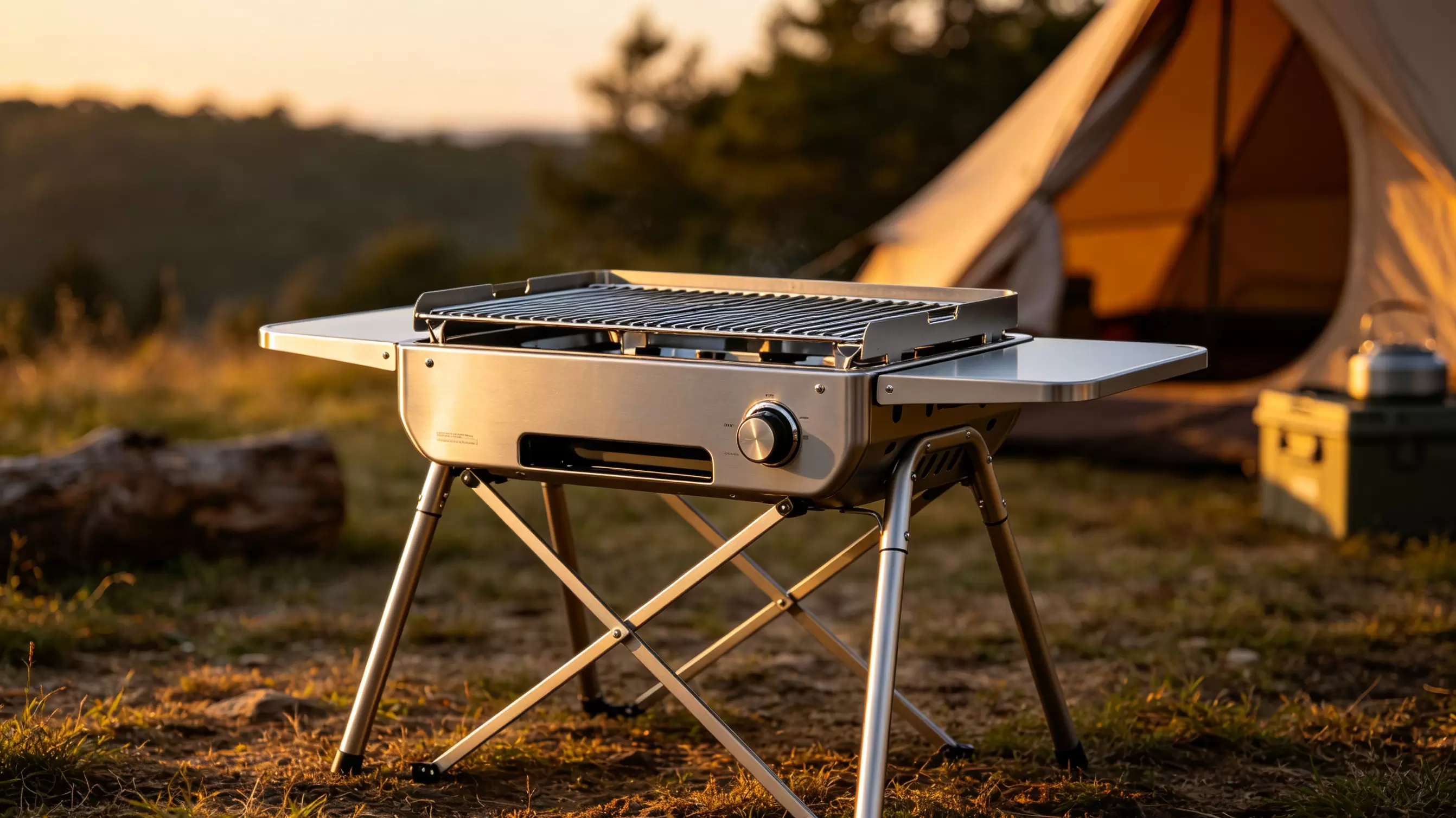
Core Engineering Principles of Heat Distribution in Portable Grills
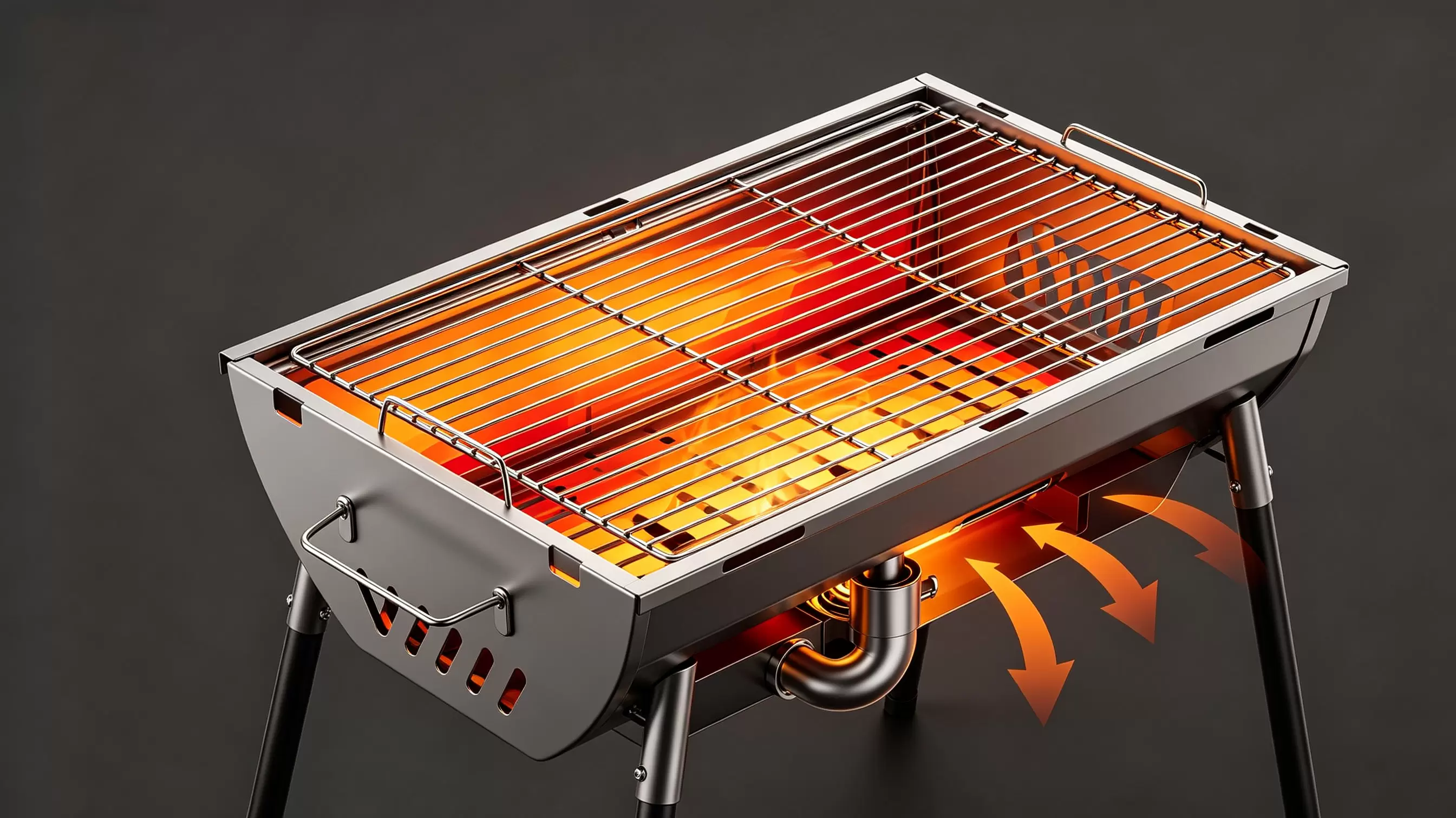
Understanding heat distribution in compact camping grills requires evaluating three thermal transfer mechanisms: conduction, convection, and radiation.
Conduction: Direct heat transfer from the grate to food. High-density materials like cast iron store and transfer heat continuously upon contact.
Convection: Air circulation within the firebox. Proper internal hood geometry allows hot air to swirl around food, creating a convection oven effect that cooks evenly without burning the bottom.
Radiation: Infrared energy radiated from burner flames or radiant plates directly toward the cooking surface.
A high-performing B2B grill balances all three mechanisms. By optimizing internal combustion chamber geometry and airflow dynamics, manufacturers eliminate thermal dead zones and minimize radiant heat escaping through exterior walls.
Burner Architecture: Single vs. Multi-Tube Systems
The burner assembly serves as the engine of any gas-powered camping grill. Its structural design determines initial heat patterns before heat spreaders or grates process the energy.
Single-Straight Tubes: Found in budget models, single tubes create a high-temperature zone directly above the burner, leaving perimeter areas cold.
H-Style and U-Style Burners: Distribute gas flame points across a broader surface area, drastically reducing central hot spots.
Multi-Tube Independent Controls: Premium B2B grills utilize dual or triple independent burner tubes. This enables dual-zone cooking (direct vs. indirect heating) and allows precise thermal management across separate sections of the grate.
Precision gas porting—measuring orifice size and spacing along the burner tube—ensures uniform gas pressure and stable flame height, even under variable propane canister pressures.
Heat Deflectors and Vaporizer Bars: Managing Thermal Spread
Raw burner flames create intense radiant spikes that char food prematurely. High-performing grills incorporate heat deflectors, radiant plates, or vaporizer bars positioned directly above the burners.
These components fulfill two critical roles:
Thermal Dispersion: They intercept direct flame energy, diffusing heat laterally toward the edges of the firebox to ensure edge-to-edge temperature parity across the cooking grate.
Flare-Up Prevention: Dripping fat and oils strike superheated deflector plates, vaporizing into flavor-enhancing smoke rather than falling onto open burner ports where they cause volatile flame flare-ups.
Stamped 304 stainless steel and ceramic radiant tiles are preferred materials for heat deflectors, balancing rapid heat transfer with long-term resistance to thermal degradation.
Material Science: Cast Iron vs. Stainless Steel Grates
The choice of cooking grate material dictates thermal mass, heat transfer rates, and overall product durability during transit and use.
Porcelain-Enameled Cast Iron: Possesses superior thermal mass and heat retention. Cast iron stores immense energy, delivering bold sear marks and maintaining grate temperature when cold meat is applied. However, it increases total unit weight and is prone to chipping if subjected to heavy impact during shipping.
Heavy-Gauge 304 Stainless Steel: Heats up quickly, resists rust and corrosion, and withstands harsh weather conditions. While it holds less thermal mass than cast iron, stainless steel grates are significantly lighter, making them ideal for e-commerce drop-shipping and portable camping designs.
Grate bar profile geometry also matters: V-shaped grates channel drippings away from flames, while thick round bars maximize conduction surface contact.
Airflow Dynamics and Venting Control
Controlled air intake and exhaust vents dictate combustion efficiency and chamber temperature gradient. Oxygen must flow smoothly to feed burner flames, while combustion gases must vent without taking heat with them.
Integrated bottom intake vents supply fresh air to the burner zone, while top dampers regulate internal pressure and hood temperature. A double-walled hood lid captures rising hot air, preventing external wind cooling while reflecting heat back onto the cooking surface. This airflow balance maintains steady internal temperatures without wasting fuel.
Combating Cold Spots: Windproof Enclosures and Thermal Insulation
Outdoor environmental conditions represent the greatest threat to thermal performance. Crosswinds cool exterior firebox panels and disrupt burner flames, shifting heat to one side of the grill.
High-performing commercial grills solve this issue with wind-resistant design features:
Embedded Fireboxes: Lowering burners deeper into the chassis shields flames from gusting winds.
Windshield Baffles: Integrated side baffles block lateral airflow without restricting primary combustion air intake.
Insulated Double-Wall Construction: Creating a dead-air space between inner and outer hood walls keeps heat inside the cooking chamber while keeping outer surfaces cooler to the touch.
Fuel Efficiency and Energy Consumption Optimization
A common misconception in grill procurement is that higher BTU (British Thermal Unit) ratings equal better performance. Excessive BTU output often indicates poor thermal retention, requiring the burner to consume more gas to offset heat loss.
Engineering high thermal efficiency allows grills to operate at lower BTU outputs (e.g., 8,000 to 12,000 BTU) while achieving surface temperatures over 250°C (480°F). Lower fuel consumption extends the life of portable propane canisters, cuts operating costs for campers, and appeals to eco-conscious consumers focused on reduced carbon footprints.
Manufacturing Standards and Quality Control for B2B Suppliers
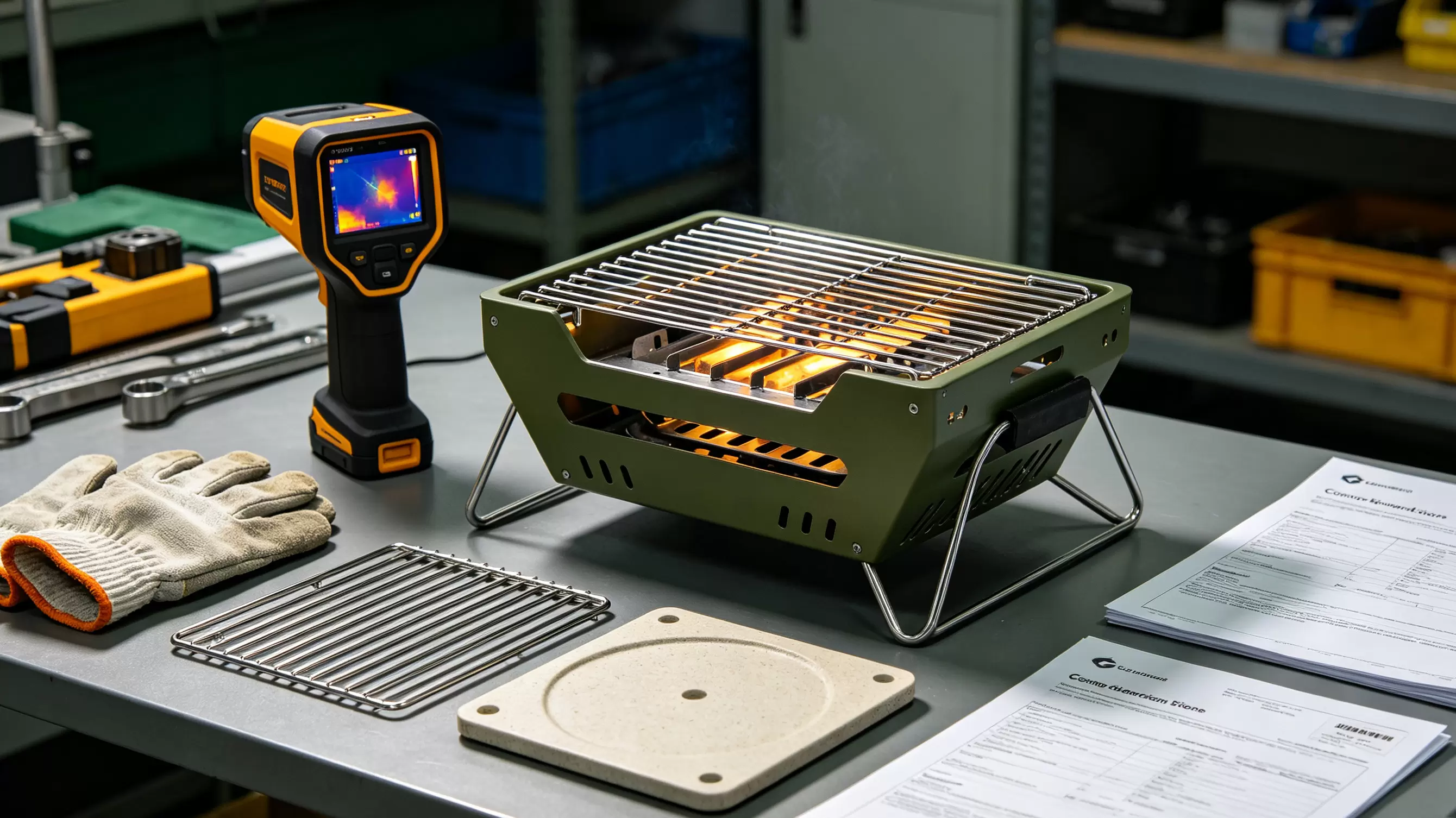
When auditing grill manufacturers, B2B buyers must evaluate factory quality assurance procedures to ensure thermal consistency across mass production runs.
Key factory inspection protocols include:
Infrared Thermal Imaging Audits: Testing prototype and production grates with thermal cameras to verify that surface temperature variations remain under 20°C across the primary cooking area.
Continuous High-Temperature Stress Tests: Running burners at maximum output for extended periods to inspect for frame warping or finish degradation.
International Compliance: Confirming units meet regional safety standards, including CSA/UL standards for North America and CE/EN 1860 regulations for European markets.
Sourcing Strategies: Balancing Thermal Performance, Weight, and Cost
Sourcing managers must tailor thermal technology specifications to match target buyer personas:
Overland & Car Camping: Prioritize thick stainless steel construction, windproof enclosures, and compact footprint.
Luxury Glamping: Focus on large-surface cast iron grates, multi-burner temperature control, and premium aesthetic finishes.
E-Commerce & Drop-Shipping: Opt for modular flat-pack steel designs with optimized packaging (passing ISTA 3A drop tests) to lower shipping weights and dimensional freight fees.
By balancing material selection, burner architecture, and thermal containment, procurement teams can launch high-margin camping grills built for long-term commercial success.


 en
en ja
ja ko
ko zh
zh es
es ru
ru fr
fr ar
ar pt
pt tr
tr nl
nl it
it de
de


 RELATED MAGAZINE







 Leave a Message