Introduction: The Supply Chain Challenges of Heavy-Duty Backyard Fire Pits
The global outdoor living market has experienced rapid growth, with heavy-duty backyard fire pits made of heavy-gauge carbon steel, Corten steel, and cast iron leading consumer demand. These fire pits offer long-lasting durability and high heat retention, but their physical characteristics present significant supply chain hurdles. Classified as oversized and overweight freight, shipping heavy steel fire pits internationally exposes B2B buyers and brands to steep ocean freight fees, dimensional surcharges, and increased transit damage risks. Developing a structured cross-border logistics strategy is essential to protect landed margins, ensure regulatory compliance, and guarantee reliable fulfillment timelines.
Understanding Weight, Dimension, and Freight Classification
Logistics providers calculate freight rates using two main metrics: Actual Weight (Gross Weight) and Volumetric Weight (Dimensional/DIM Weight). Understanding how carriers classify heavy outdoor gear prevents unexpected freight penalties.
Actual vs. Volumetric Weight: Heavy steel fire pits exceed standard dimensional weight thresholds, meaning carriers bill based on actual gross weight rather than volume.
Container Load Factor: High-density materials like Corten steel cause ocean containers to reach their maximum weight capacity (payload) before utilizing the available physical cubic space.
Dimensional Surcharges: Parcel carriers enforce strict "Over-Maximum Limits" and "Oversized Charges" on packages exceeding specific weight or girth thresholds. Tweaking product dimensions during the design phase helps stay below parcel carrier penalty zones.
Flat-Pack Design vs. Pre-Assembled Units: Logistics Cost Comparison
Product engineering directly impacts international transport costs. Sourcing teams must evaluate the operational trade-offs between pre-assembled units and flat-pack (Knocked-Down) architectural designs.
Flat-Pack / Knocked-Down (KD) Packaging: Disassembling fire pits into flat, interlocking steel panels optimizes container cubic space (CBM) by 50% to 70%. This allows up to three times more inventory per 40HQ container, drastically cutting per-unit ocean freight costs while accepting minor consumer assembly requirements.
Pre-Assembled / Fully Welded Units: Pre-welded fire pits offer plug-and-play convenience and structural rigidity, but they ship as hollow objects, forcing brands to pay for transporting empty air.
Nesting Architecture: Tapered or modular footprints allow smaller fire bowls to nest inside larger ones, maximizing space utilization inside ocean containers.
Packaging Protocols: Drop-Testing and Protection for Heavy Steel Goods
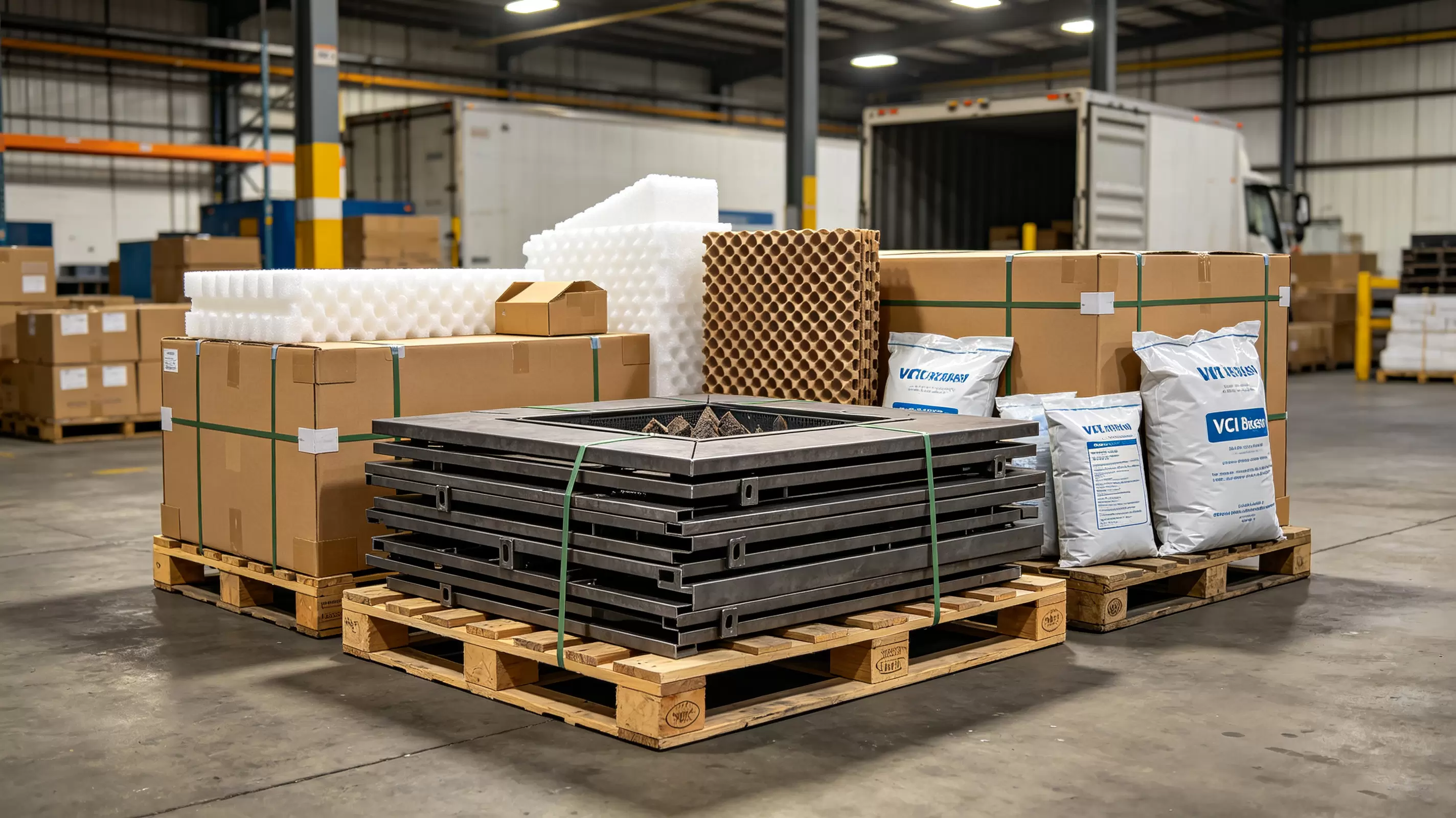
Standard consumer packaging fails when applied to heavy steel goods weighing between 30 kg and 100 kg. Robust protective packaging protocols are necessary to prevent damage during international transport.
Drop-Test Standards: Protective packaging should pass ISTA 3A (for parcel networks) or ISTA 6-AMAZON drop-testing standards, which simulate severe drops, vibration, and clamping forces.
Structural Reinforcement: Heavy fire pits require triple-wall corrugated outer cartons, reinforced corner guards, high-density EPE foam cradles, and honeycomb paperboard underlays to absorb impact.
Corrosion Control: During 30-to-45-day ocean transits, temperature swings create "container rain." Manufacturers must seal steel components in Volatile Corrosion Inhibitor (VCI) poly bags with industrial desiccant packs to prevent surface rust.
Ocean Freight Optimization: FCL vs. LCL for Oversized Products
Selecting the right ocean freight shipping model impacts unit cost, handling safety, and customs clearance speeds at destination ports.
Full Container Load (FCL - 20GP / 40HQ): FCL is the preferred method for heavy outdoor gear. It eliminates intermediate cargo handling, reduces port damage, and offers the lowest freight cost per cubic meter. Cargo managers can place heavy fire pits on the bottom and lighter goods on top to optimize weight and volume.
Less than Container Load (LCL): LCL exposes heavy cargo to multiple handling points, increasing box crushing risks. LCL shipments require mandatory palletization, steel strapping, and "Do Not Stack" cones.
Off-Peak Shipping: Moving inventory during seasonal manufacturing lulls (Q2 through early Q3) locks in lower ocean rates before peak Q4 holiday shipping surcharges take effect.
Navigating Tariffs, Customs Clearance, and Duty Compliance
Accurate customs classification and complete documentation prevent clearance holds and unexpected tariff liabilities at destination ports.
HS Code Classification: Heavy-duty outdoor fire pits are typically classified under HS Code 7321.89 or 7321.19 (Non-electric domestic iron/steel appliances) or HS Code 7326 (Other articles of iron or steel). Correct classification ensures proper duty assessment.
Tariffs and Trade Compliance: Import compliance teams must factor regional trade policies into landed cost calculations, including US Section 301 tariffs on steel products, European VAT, and applicable anti-dumping duties.
Documentation Chain: Suppliers must provide compliant commercial invoices, packing lists with accurate net/gross weights, Bills of Lading (BOL), and Certificates of Origin (COO).
Last-Mile Delivery Challenges and Freight Liftgate Solutions
The final leg of the supply chain often generates the highest relative cost for heavy backyard equipment, particularly when delivering to residential addresses.
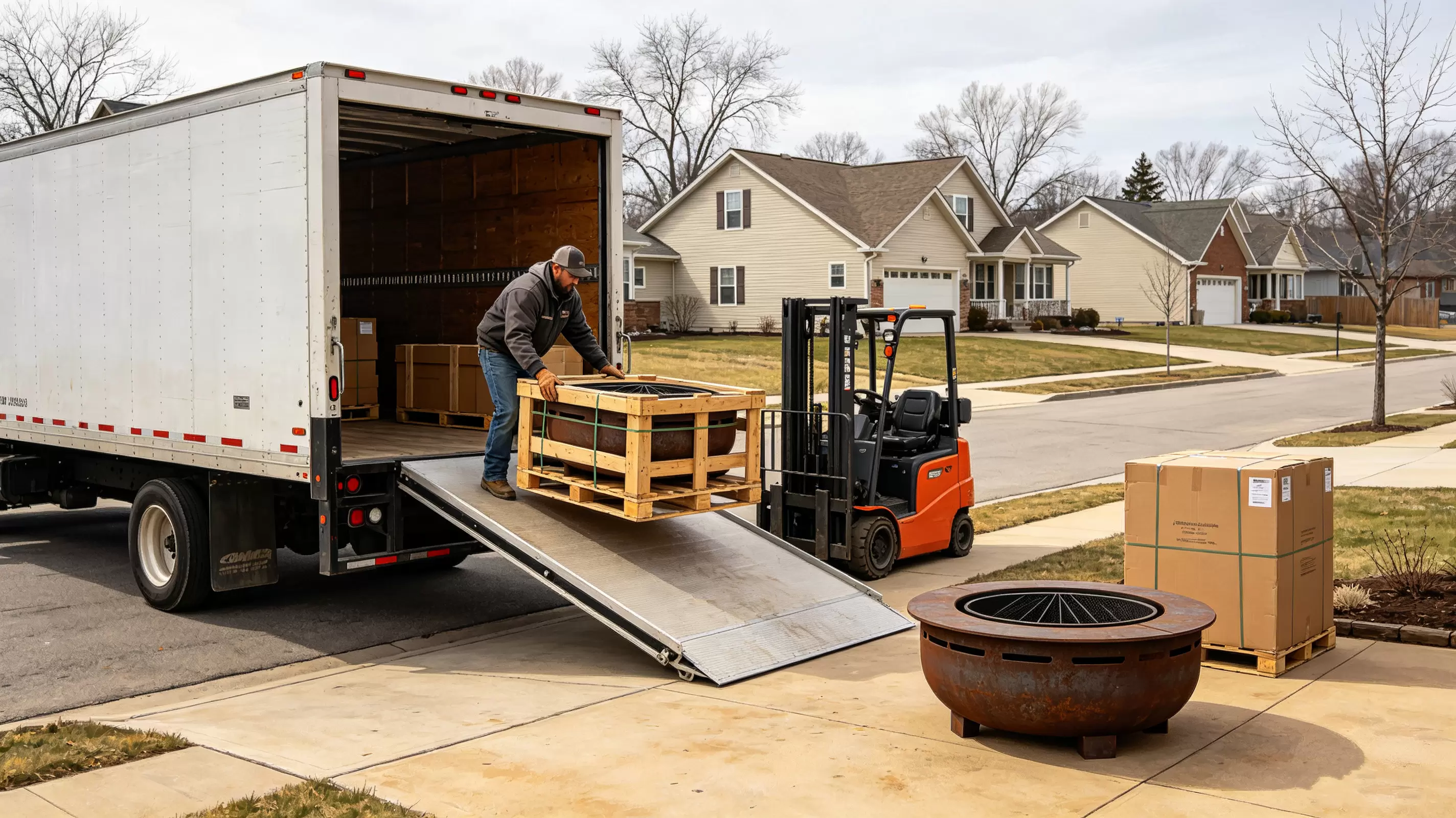
Parcel vs. LTL Freight: Single items exceeding 70 lbs (32 kg) must transition from parcel networks to Less-Than-Truckload (LTL) freight networks to avoid heavy carrier penalties.
Residential Delivery Logistics: Residential LTL deliveries require specialized services, including liftgate trucks to lower heavy pallets to the curb, along with pre-delivery appointment scheduling.
Distributed 3PL Warehouse Networks: Staging inventory across regional Third-Party Logistics (3PL) fulfillment centers positions stock closer to key customer markets, shortening transit zones and reducing final-mile LTL freight expenses.
Managing Risk: Marine Insurance and Cargo Damage Claims
Given the high value and weight of heavy fire pit shipments, comprehensive risk mitigation policies are critical for international transit.
Marine Cargo Insurance: Secure "All Risks" marine cargo insurance (Institute Cargo Clauses A) to protect inventory against physical loss, container loss at sea, rough handling, and vessel damage.
Receiving Inspection SOP: Warehouse receiving teams must conduct immediate inspections upon container arrival. Any outer carton damage, broken pallet bands, or seal discrepancies must be noted on the Proof of Delivery (POD) before the driver leaves.
Claim Documentation: File claims promptly with photographic evidence, official inspection reports, commercial invoices, and bill of lading copies to recover lost value from ocean carriers or insurance underwriters.
Balancing Freight Costs with Retail Pricing and Margins
Accurate pricing models must incorporate the true landed cost of heavy-duty products to maintain net profit margins.
Landed Cost Model: Calculate total costs using the formula: Landed Cost = FOB Unit Cost + Ocean Freight + Customs Duties/Taxes + Port Handling + 3PL Fulfillment Fees.
Margin Protections: Build real-time freight cost buffers into Manufacturer’s Suggested Retail Prices (MSRP) to absorb sudden spikes in ocean freight or fuel surcharges.
Freight Offset Strategies: When offering "Free Shipping" promotions to end consumers, embed the baseline LTL delivery expense directly into the retail purchase price.
Sourcing Logistics Partners: Freight Forwarders vs. 3PL Providers
Navigating cross-border freight requires partnering with logistics specialists equipped to handle heavy industrial consumer goods.
Specialized Freight Forwarders: Choose forwarders with established relationships on high-density shipping lanes, guaranteed vessel space allocations, and expertise in handling heavy-freight customs filings.
3PL Capabilities: Select third-party logistics centers equipped with heavy-duty forklifts, palletization equipment, and negotiated volume discounts with regional LTL truck lines.
Key Performance Indicators (KPIs): Monitor partner performance using clear metrics, including on-time delivery rates, freight damage claim percentages, customs clearance turnaround times, and billing accuracy.
FAQ
Q1: How does flat-pack packaging cut international shipping costs for heavy fire pits?
Answer: Flat-pack packaging reduces total cubic volume (CBM) by 50% to 70% by eliminating empty air space inside the firebox. This allows manufacturers to fit up to three times as many units into a single 40HQ container, lowering per-unit ocean freight costs and avoiding oversized parcel surcharges during last-mile delivery.
Q2: What HS codes are commonly used for importing heavy-duty steel fire pits?
Answer: Heavy-duty steel fire pits are generally classified under HS Code 7321.89 or 7321.19 (non-electric domestic iron/steel appliances) or HS Code 7326 (other articles of iron or steel). Because duty rates vary depending on whether the fire pit uses solid fuel or gas, importers should verify classification with a licensed customs broker.
Q3: How do you prevent rust and moisture damage during month-long ocean transit?
Answer: Ocean containers experience high humidity and temperature shifts that cause condensation ("container rain"). To prevent corrosion, manufacturers apply heat-resistant powder coatings or anti-rust oils, seal units inside Volatile Corrosion Inhibitor (VCI) poly bags, and include industrial desiccant packs within the primary packaging.
Q4: What last-mile shipping options are required for residential deliveries of heavy fire pits?
Answer: Shipments weighing over 70 lbs (32 kg) typically require Less-Than-Truckload (LTL) freight service rather than standard parcel delivery. Residential LTL deliveries require a truck with a liftgate to lower the pallet to ground level, alongside appointment scheduling to ensure the recipient is available to receive the shipment.


 en
en ja
ja ko
ko zh
zh es
es ru
ru fr
fr ar
ar pt
pt tr
tr nl
nl it
it de
de


 RELATED MAGAZINE








 Leave a Message