Introduction: The Evolution of Outdoor Cooking and Multi-Fuel Demand
The outdoor recreation market is experiencing a shift in consumer expectations. Modern campers, overlanders, and backcountry adventurers no longer tolerate equipment tied to a single fuel source. Traditional single-fuel stoves—whether reliant exclusively on localized wood gathering or pressurized canister gas—expose users to severe environmental limitations. Standard canister gas struggles in sub-zero alpine conditions, while wet weather renders wilderness wood gathering unreliable.
To overcome these challenges, outdoor gear brands are turning to next-generation multi-fuel stoves. Capable of burning pressurized gas (isobutane/propane), liquid fuels (white gas, kerosene), and solid biomass (wood pellets, twigs) within a unified system, multi-fuel stoves represent the pinnacle of outdoor cooking versatility. For outdoor brands and B2B sourcing managers, expanding into this product category offers a clear path to capture high-margin market share among premium consumer segments.
Understanding Multi-Fuel Engineering: How Next-Gen Stoves Handle Wood, Gas, and Biomass
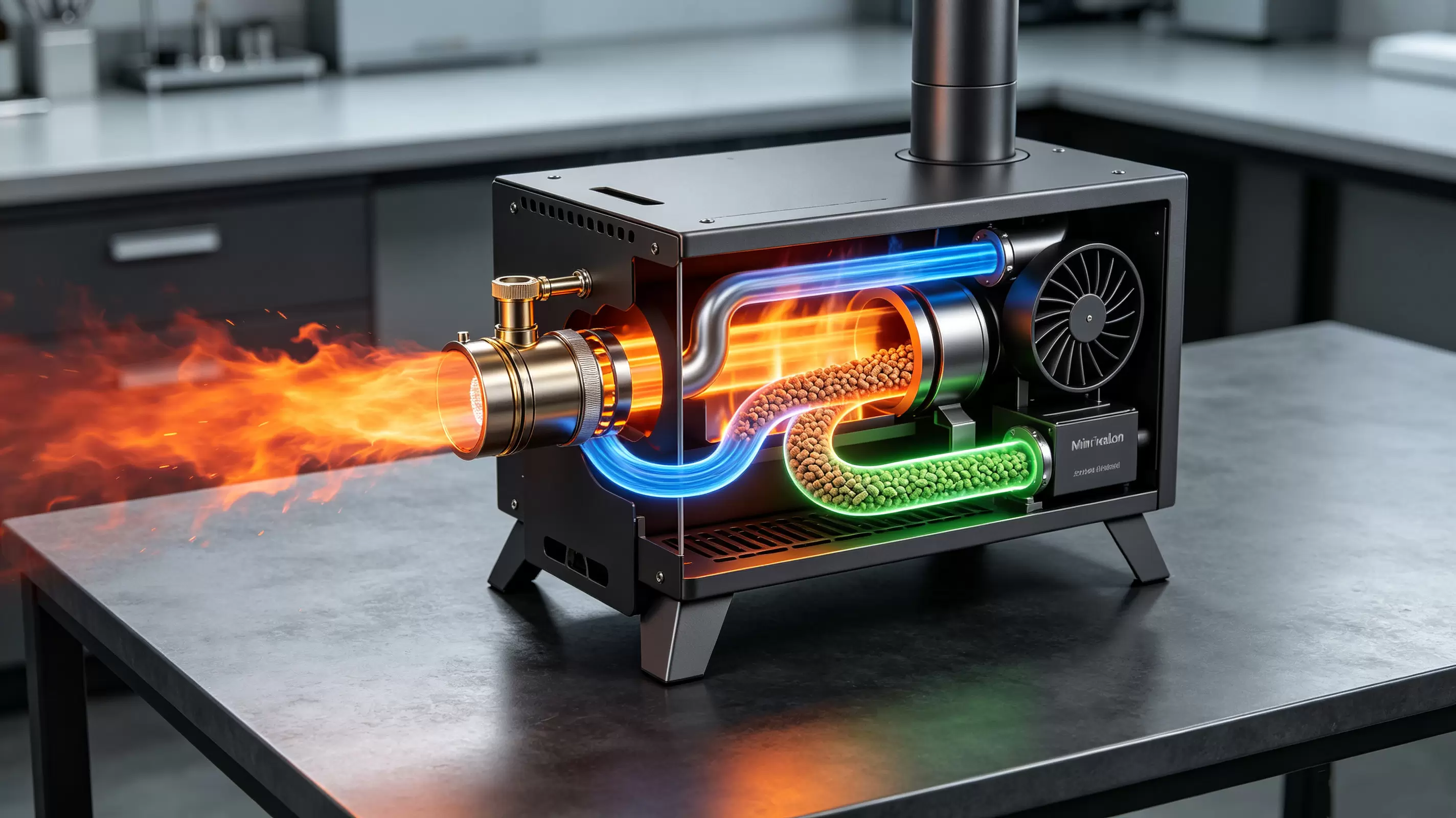
Designing a stove that efficiently burns gaseous, liquid, and solid fuels requires advanced thermal engineering. Liquid fuels require high-pressure atomization through fine jet orifices and thermal pre-heating tubes to convert liquid into gas prior to combustion. In contrast, solid biomass requires a spacious burn chamber with generous primary and secondary airflow channels to maintain gasification.
Next-generation multi-fuel designs incorporate hybrid combustion chambers featuring interchangeable jet nozzles and convertible burner bases. Pre-heating tubes running across the burner head ensure complete vaporization of heavy liquid fuels, while self-cleaning needle mechanisms prevent carbon buildup when burning lower-grade fuels.
Combustion Efficiency and Pressure Control Technologies
Managing fuel delivery under varying ambient temperatures and atmospheric pressures is critical for stove reliability.
Micro-Regulators: Traditional gas stoves experience sudden pressure drops as canister temperatures fall. Integrated micro-regulators maintain a steady gas output regardless of canister volume or sub-zero ambient conditions.
Secondary Combustion: For solid fuel modes, double-walled airflow channels pull cold air through bottom vents, superheat it inside the walls, and inject it above the flame to ignite unburnt wood smoke.
Smart Airflow Assistance: High-end models integrate micro-fan blower modules powered by Thermoelectric Generators (TEG), converting waste combustion heat into electricity to force air into the burn chamber for smoke-free performance.
Material Innovations: Titanium, Stainless Steel, and Heat-Resistant Alloys
Material selection dictates stove weight, structural longevity, and manufacturing cost.
Ti-6Al-4V Titanium Alloy: Offering an exceptional strength-to-weight ratio, titanium reduces pack weight by up to 45% compared to steel. It is highly resistant to corrosion but exhibits lower thermal conductivity, requiring copper or brass inserts around precision gas valves to avoid localized heat distortion.
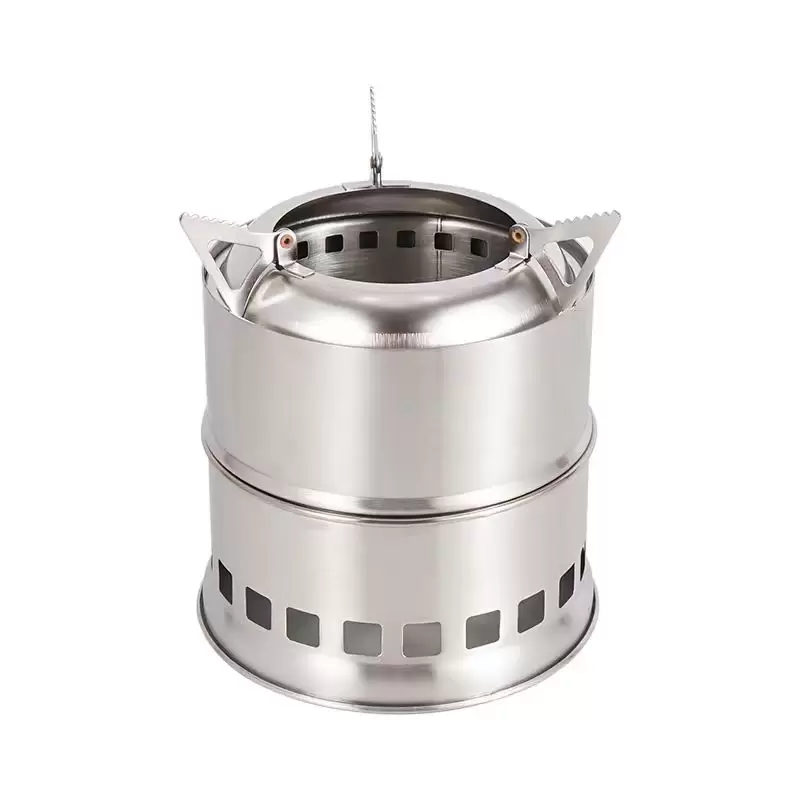
304 and 316 Stainless Steel: Chosen for heavy-duty overlanding stoves due to high thermal mass, structural resistance to warping at high temperatures, and lower material costs.
Specialized Coatings: Ceramic internal coatings prevent soot adhesion from wood smoke, making cleanup faster for consumers.
Modular Design Architecture for Versatile Outdoor Scenarios
Modern outdoor consumers demand adaptable gear setups. Next-gen multi-fuel stoves feature modular architecture allowing users to reconfigure the unit based on trip length and group size.
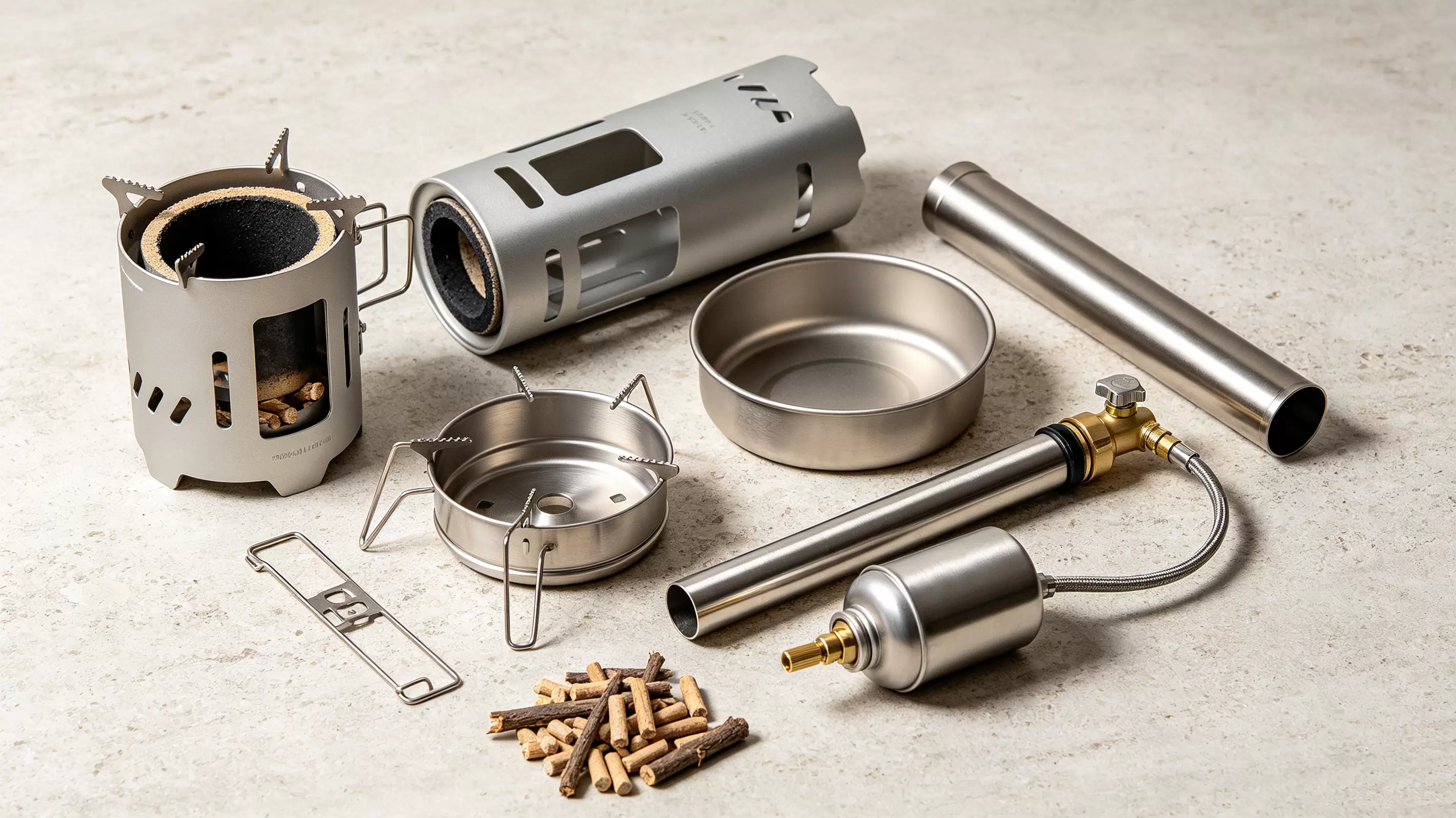
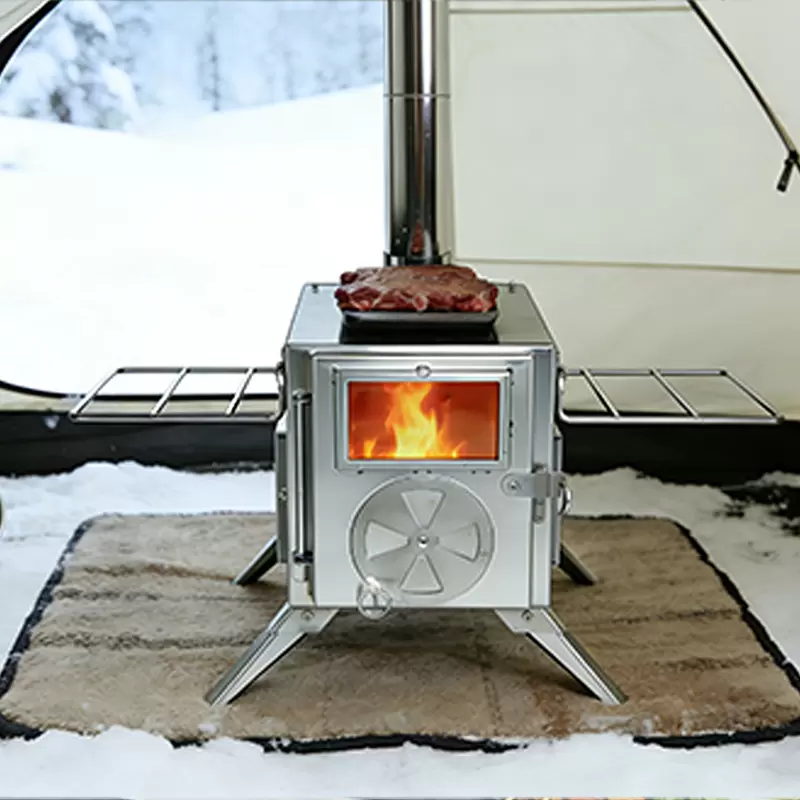
Removable pot-support legs convert a ultralight trail stove into a wide-base cooking platform for group pans. Modular chimney extensions convert open biomass stoves into sealed tent heaters for hot-tent winter camping. Furthermore, precision-engineered nesting structures ensure all valves, hoses, and fuel pumps pack neatly inside the primary combustion chamber to minimize packed volume during transport.
Navigating International Safety Standards and Environmental Regulations
Ensuring compliance with international safety and environmental regulations is non-negotiable when bringing multi-fuel stoves to market.
North American Standards: Gas-burning components must comply with ANSI Z21.72 / CSA 11.2 standards. Pressurized liquid fuel bottles must meet DOT/UN container certifications. Solid-fuel biomass modes must comply with EPA particulate emissions standards where applicable.
European Standards: Products require CE certification under EN 521 (liquefied petroleum gas appliances) or EN 1860 (solid fuel appliances), while complying with Ecodesign environmental directives.
Food Contact Safety: Any integrated grill grates or pot supports must pass FDA or LFGB testing for heavy metal leaching.
Evaluating Factory OEM/ODM Capabilities for Precision Stove Manufacturing
Manufacturing multi-fuel stoves requires specialized factory tooling and strict engineering tolerances. Sourcing teams should audit potential manufacturers against key operational criteria:
Machining Precision: Factories must possess multi-axis CNC machines for producing micro-meter gas orifices and high-precision brass valve stems.
Robotic Welding Capabilities: Look for automated TIG and laser welding setups to ensure leak-free joints on stainless steel and titanium gas lines.
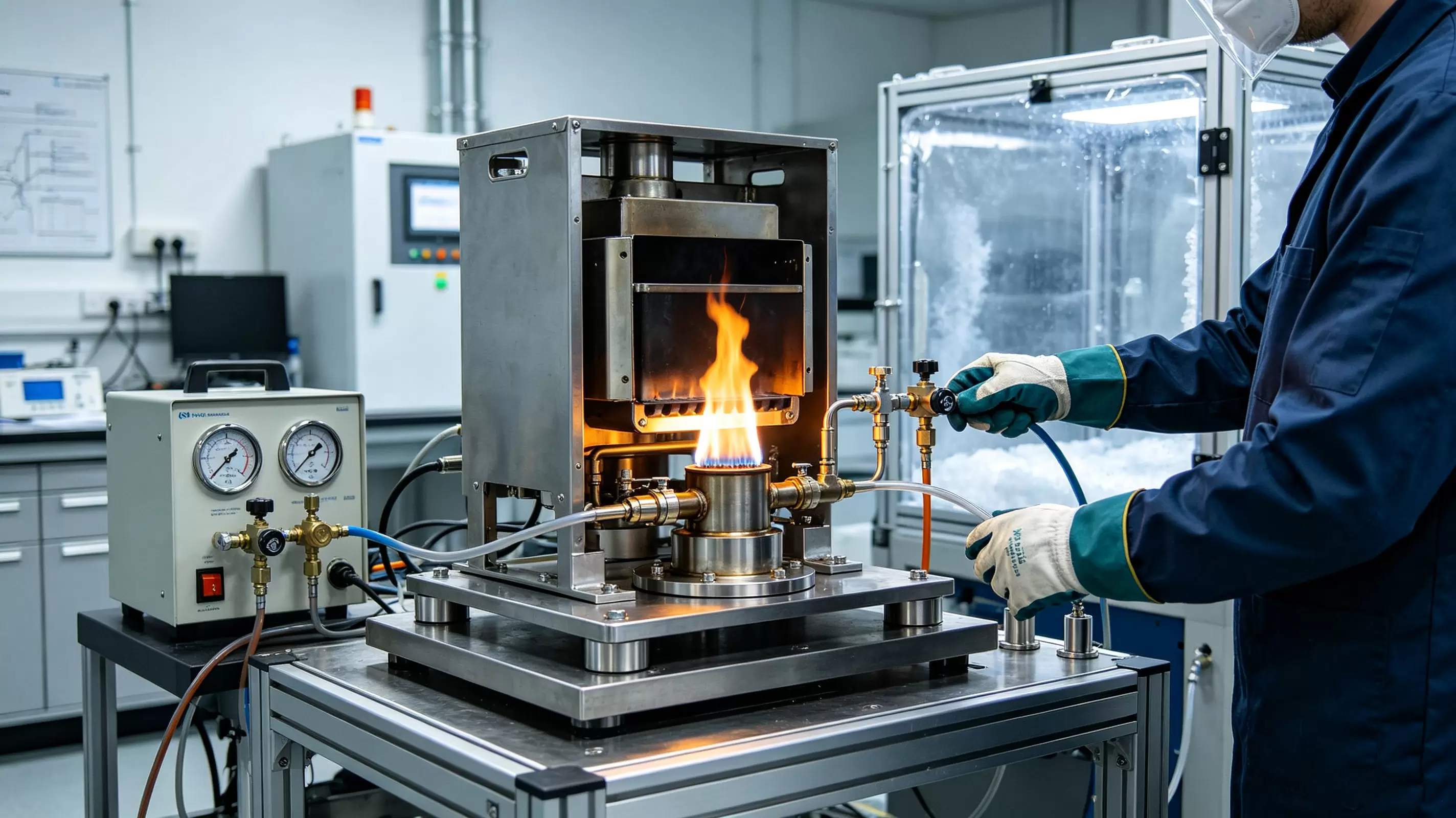
In-House Testing Facilities: Qualified factories operate dedicated pressure labs equipped with automated gas-leakage detection systems and wind-tunnel testing chambers.
Quality Control and Safety Testing Protocols for Multi-Fuel Systems
Given the hazards associated with pressurized liquid fuels and flammable gases, factory QC protocols must be rigorous:
100% Leakage Inspections: Every gas valve and fuel pump assembly must undergo underwater bubble tests or helium mass spectrometer leak detection before packaging.
Stability and Anti-Tipping Tests: Assembled stoves undergo tilt-angle testing with weighted cooksets to ensure stability on uneven outdoor terrain.
Extreme Temperature Ignition Testing: Sample units are cold-chamber tested down to -30°C and heat-tested up to 50°C to verify ignition reliability, flame stability, and seal integrity under thermal shock.
Packaging, Logistics, and Hazardous Goods Transport Considerations
Shipping stove hardware with fuel pumps or lighter accessories requires careful logistics classification:
Stove hardware shipped without fuel is classified as general cargo, but units containing residual testing oil or pre-packaged fuel canisters must adhere to Dangerous Goods (DG) regulations (UN3363 classification). To prevent transit damage to delicate gas hoses and adjustment valves, packaging must pass ISTA 3A drop testing. Optimizing carton layout allows high-density container loading, lowering ocean freight expenses per unit.
Market Positioning, Sourcing Roadmap, and Profit Margin Optimization
To build a profitable product line, brands should tier their product offerings:
Entry-Level (Dual-Fuel): Combination gas/wood biomass models targeting casual weekend campers.
Pro-Series (Full Multi-Fuel): High-altitude liquid fuel, gas, and biomass systems designed for expedition mountaineers and overlanders.
When planning production timelines, allow 4 to 6 months for custom OEM development, tooling fabrication, and international safety certifications. Factory FOB costs typically range from 20% to 30% of MSRP, providing ample margin to cover sea freight, import duties, and digital marketing acquisition costs.
Frequently Asked Questions
Q1: What are the main engineering challenges when designing a stove that burns both liquid fuel and biomass efficiently?
Answer: The main challenge is balancing jet atomization with combustion chamber airflow. Liquid fuels like white gas require micro-jets and pre-heating tubes for pressurized vaporization in a tight flame pattern. Biomass like wood requires a larger combustion chamber with generous primary and secondary airflow channels. Next-gen stoves resolve this using removable vaporization inserts or adjustable intake dampers.
Q2: What mandatory safety certifications are required to sell multi-fuel stoves in North America and Europe?
Answer: In North America, gas components require ANSI Z21.72 / CSA 11.2 certification, and fuel bottles must meet DOT/UN container standards. In Europe, products must carry the CE mark under EN 521 for gas appliances and EN 1860 for solid fuel gear, while meeting REACH and LFGB material safety standards.
Q3: How do titanium alloys compare to stainless steel in multi-fuel stove manufacturing?
Answer: Titanium (Ti-6Al-4V) is 45% lighter than steel and highly corrosion-resistant, making it ideal for ultralight backpacking gear. However, titanium is more expensive and has lower thermal conductivity, requiring brass or copper valve sleeves to prevent localized heat warping. Stainless steel is heavier but less expensive, holds heat longer, and provides superior structural stability for heavy-duty camp cooking.
Q4: What is the typical MOQ and development cycle for custom OEM multi-fuel stoves?
Answer: For ODM projects using existing factory tooling with custom branding, MOQs typically range from 300 to 500 units with a 30 to 45-day lead time. Fully custom OEM developments involving new gas flow molds and safety certifications require MOQs of 1,000 to 2,000 units and a development timeline of 4 to 6 months.


 en
 ja
 ko
 zh
 es
 ru
 fr
 ar
 pt
 tr
 nl
 it
 de



 RELATED MAGAZINE







 Leave a Message