How to Choose a Reliable OEM Manufacturer for Portable Tent Stoves
The global outdoor and camping market has experienced unprecedented growth in recent years. With the rising popularity of glamping, cold-weather camping, and bushcraft, the demand for high-quality portable tent stoves has surged. For outdoor brands looking to capitalize on this trend, partnering with the right Original Equipment Manufacturer (OEM) is one of the most critical decisions you will make.
A reliable OEM manufacturer does more than just assemble parts—they safeguard your brand reputation, lower production costs, and ensure strict product safety. On the flip side, choosing the wrong partner can result in disastrous quality issues, delivery delays, and severe safety hazards for end-users.
Here is a comprehensive 10-step guide to evaluating and selecting the ideal OEM manufacturer for your portable tent stoves, followed by answers to frequently asked questions.
The portable tent stove market requires a unique balance of precision engineering, material durability, and thermal efficiency. Unlike standard camping gear, wood-burning tent stoves operate under extreme conditions, dealing with high heat, open flames, and enclosed tent spaces.
Choosing a capable OEM partner is vital for three main reasons:
User Safety: A poorly built stove can cause carbon monoxide leaks, tent fires, or structural collapse when hot.
Brand Competitiveness: High-quality craftsmanship and innovative designs set your product apart in a crowded marketplace.
Supply Chain Efficiency: A reliable manufacturer keeps your inventory steady during peak buying seasons, helping you avoid stockouts and protect your profit margins.
Define Your Product Specifications and Customization Needs
Before reaching out to prospective factories, you must have a clear vision of what you want to build. Clearly defining your specifications prevents miscommunication and ensures accurate initial quotes.
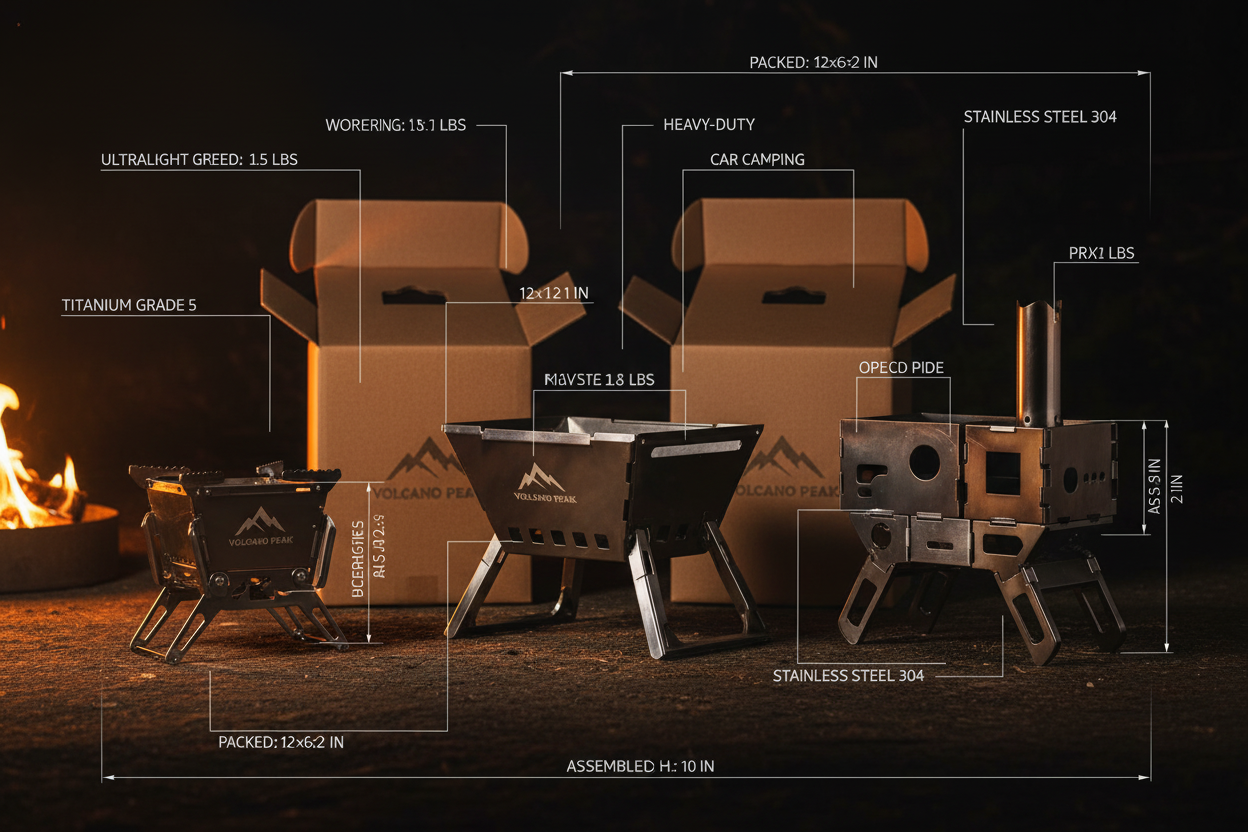
Product Line Positioning: Decide on your core materials and designs. Will you offer ultralight folding titanium stoves for backpackers, heavy-duty stainless steel stoves for car campers, or versatile modular units?
Customization Scope: Specify exact branding requirements, such as laser-etched logos, custom packaging, unique leg geometries, or specialized chimney pipe connection ports.
Create a Product Requirement Document (PRD): Draft a comprehensive PRD containing detailed dimensions, target weights, material grades, and performance requirements. Providing a clear PRD allows factories to give precise cost estimates and feasibility feedback right away.
Evaluate the Manufacturer’s Manufacturing Experience and Expertise
Not all metal fabrication facilities are equipped to manufacture outdoor heating equipment. You need a partner with deep industry-specific expertise.
Industry Tenure: Prioritize manufacturers with at least 5 to 10 years of dedicated experience in outdoor stove and heating gear production.
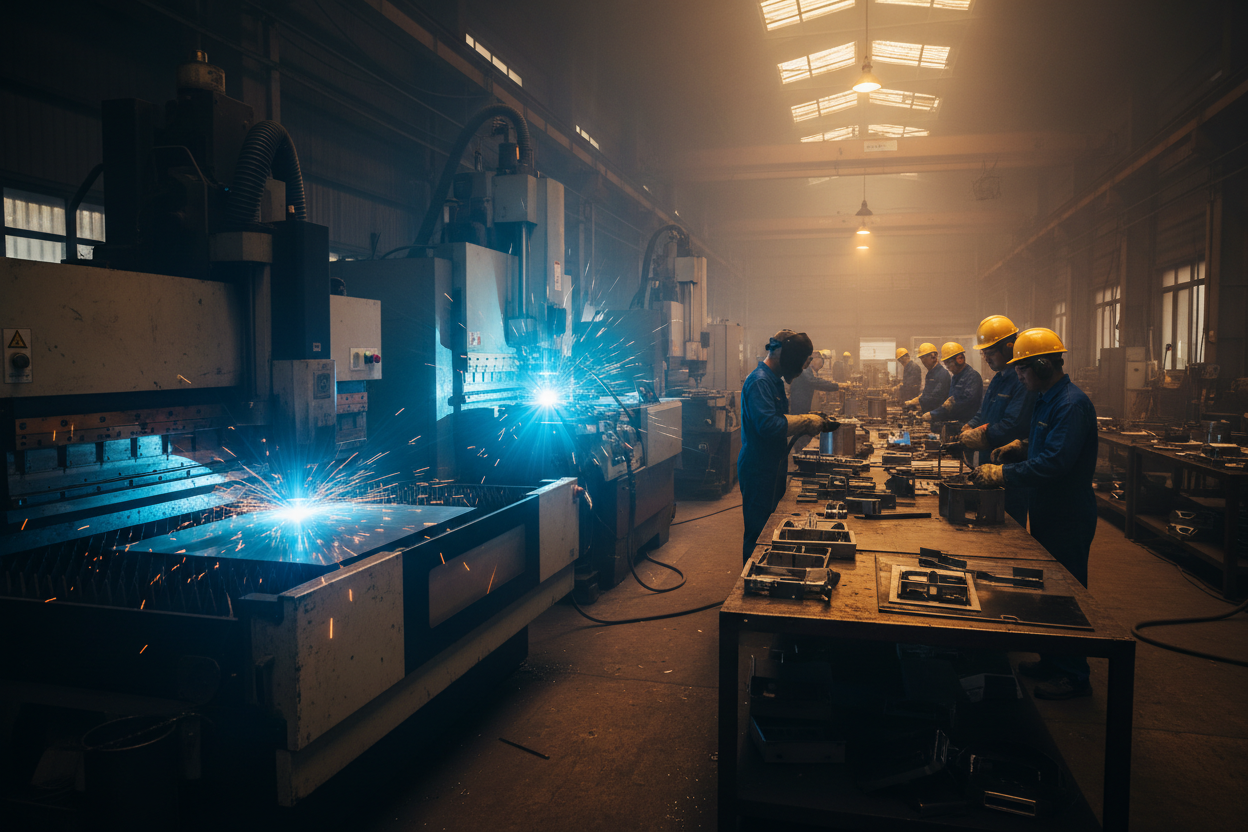
Technical Workmanship: Look for advanced metalworking capabilities, including precision CNC sheet metal cutting, high-accuracy laser welding, robotic TIG welding, and heat-resistant surface treatments.
Proven Track Record: Confirm whether the supplier has successfully manufactured OEM or ODM products for established international outdoor brands. Request client references or portfolio case studies when possible.
Inspect Quality Control Protocols and Material Standards
Material integrity and strict quality assurance are non-negotiable when dealing with high-temperature equipment.
Material Verification: High heat can warp lower-grade metals. Ensure the factory uses verified, high-grade materials, such as certified 304 stainless steel or GR1/GR2 titanium alloys.
Quality Assurance System: Verify if the facility is ISO 9001 certified. Ask for detailed documentation on their Incoming Quality Control (IQC), In-Process Quality Control (IPQC), and Outgoing Quality Control (OQC) procedures.
Real-World Testing: Confirm that the manufacturer conducts physical burn tests, smoke-tightness testing, and high-heat deformation tests on production units, rather than relying solely on computer simulations.
Verify International Safety Certifications and Compliance
Operating a wood stove inside a shelter introduces inherent safety risks. Your OEM partner must comply with the legal and safety standards of your destination markets.
Regional Compliance: Check whether the factory can produce stoves that meet regulations such as CE standards for Europe, CSA standards for North America, or JIA requirements for Japan.
Safety Protocols: Ensure the manufacturer understands fire safety clearances, spark arrestor efficiency, and proper ventilation dynamics to prevent carbon monoxide buildup.
Social Responsibility: Check for international social audits like BSCI or SEDEX. Ethical supply chains matter to modern outdoor consumers and protect your brand from reputational risks.
Assess Production Capacity and Lead Time Reliability
Seasonal demand spikes can strain manufacturing schedules. Your OEM manufacturer must be able to scale up production without compromising quality.
Facility Equipment and Scale: Evaluate monthly production output, factory floor space, and the level of automation (e.g., number of automated fiber laser cutters and welding robots).
Peak Season Management: Portable tent stoves experience peak demand in autumn and winter. Discuss how the factory allocates capacity during peak months to guarantee on-time delivery.
Contingency Planning: Ask about their emergency protocols for managing raw material shortages, power grid restrictions, or sudden order surges.
Analyze Supply Chain Transparency and Sourcing Capability
A tent stove system relies on several specialized accessories that must work seamlessly together.
Component Sourcing: Check the origin and quality of secondary components, including spark arrestors, micro-crystal high-temperature glass panels, stovepipe rings, and heavy-duty canvas carry bags.
One-Stop Solutions: An OEM that offers complete accessory bundling simplifies your logistics, saves shipping costs, and guarantees component compatibility.
Supply Chain Transparency: Demand full transparency across raw material suppliers to ensure the factory does not substitute cheap, non-compliant alloys or low-quality glass during mass production.
Examine Prototype Development and R&D Capabilities
A strong OEM partner does not simply follow blueprints—they help you optimize your designs for better performance and lower manufacturing costs.
Prototyping Speed: Evaluate how quickly the factory can translate CAD designs into physical, functional samples. A standard turnaround time ranges from 7 to 15 days.
Engineering Feedback: Top-tier manufacturers offer valuable insight into chimney draft efficiency, structural packability, weight reduction, and thermal distribution.
Intellectual Property (IP) Protection: Always execute a legally binding Non-Disclosure Agreement (NDA) before sharing CAD files or proprietary concepts to protect your design patents.
Review Pricing Structures, MOQ, and Contract Terms
Cost is always a primary factor, but the lowest price often hides hidden compromises in safety or material thickness.
Transparent Cost Breakdown: Request itemized FOB or EXW quotes to understand the breakdown between raw materials, labor, surface treatments, and packaging. Be cautious of abnormally low quotes, as they frequently lead to material downgrades.
Flexible Minimum Order Quantities (MOQ): Negotiate realistic MOQs, especially for initial product launches. Lower MOQs help you test market demand without tying up excessive working capital.
Payment Terms and Contracts: Standard terms typically require a 30% deposit upon order placement and the remaining 70% balance upon successful pre-shipment inspection. Ensure clear penalty clauses for unexcused delivery delays or defect rates exceeding agreed thresholds.
Evaluate Post-Sales Support, Warranty, and Communication
Your relationship with an OEM manufacturer should be a long-term partnership built on reliable communication and mutual accountability.
Dedicated Project Management: Ensure you are assigned an English-fluent project manager who understands technical engineering specifications and responds promptly.
RMA and Replacement Policies: Establish a clear Return Merchandise Authorization (RMA) process for defective units. The manufacturer should provide replacement units or spare parts (such as replacement glass panels or stovepipe sections) free of charge for defective items.
Strategic Growth: Choose a partner capable of growing alongside your brand, continuously offering engineering improvements and innovative manufacturing solutions over time.
Frequently Asked Questions (FAQ)
What is the typical Minimum Order Quantity (MOQ) for OEM portable tent stoves?
For standard stainless steel folding stoves, the typical MOQ ranges from 100 to 500 units. For premium titanium stoves or complex custom designs requiring new molds, manufacturers may lower the MOQ to 50 to 200 units to offset the higher upfront tooling and prototyping costs.
Should I choose Titanium or Stainless Steel for my tent stove lineup?
It depends on your target market:
Titanium: Extremely lightweight, fast heat transfer, and develops a distinctive blue-purple patina over time. It is best suited for backpackers and backcountry hunters who prioritize weight savings, though it comes at a higher price point.
Stainless Steel: Highly durable, resistant to thermal deformation, and cost-effective. It is ideal for car camping, glamping, and basecamps where weight is less critical than affordability and rugged strength.
How long does the prototype development process take?
Minor modifications to an existing factory design usually take 7 to 10 days. However, full custom designs involving new molds, CAD refinement, thermal testing, and structural revisions typically take 20 to 35 days.
How can I protect my proprietary tent stove designs when working with foreign OEMs?
Protect your designs by signing a legally binding Non-Disclosure Agreement (NDA) before sharing technical files. Additionally, file design and utility patents in your primary sales markets early on, and consider working with factories that have a proven history of respecting client IP rights.


 en
en ja
ja ko
ko zh
zh es
es ru
ru fr
fr ar
ar pt
pt tr
tr nl
nl it
it de
de

 RELATED MAGAZINE







 Leave a Message