Why Quality Control Is Critical for Winter Camping Gear
Winter camping gear operates under some of the most unforgiving environmental conditions on Earth. Unlike standard three-season equipment, cold-weather shelters, sleeping bags, and hardware must endure sub-zero temperatures, heavy snow loads, and fierce gale-force winds. In sub-freezing environments, gear failure is not merely a minor inconvenience—it poses immediate health and safety risks to outdoor enthusiasts, such as hypothermia or frostbite. For international brands and B2B buyers, sourcing from a manufacturer with a zero-compromise quality control (QC) strategy is essential. A robust manufacturing QC system safeguards end-users, protects brand reputation, and minimizes costly returns and product recalls.
Raw Material Inspection: Strict Incoming Quality Control
The integrity of the final product depends directly on the quality of raw materials entering the facility. Incoming Quality Control (IQC) serves as the primary gateway to verify that every component matches technical specifications before entering production:
Waterproof and Breathable Fabrics: Synthetic textiles undergo hydrostatic head testing to confirm water-column resistance alongside moisture vapor transmission rate (MVTR) testing to ensure breathability.
Insulation Verification: Down fill undergoes rigorous sampling to verify fill power, cleanliness, and Responsible Down Standard (RDS) certification. High-grade synthetic insulation is checked for uniform density and thermal consistency.
Hardware and Structural Metals: Anodized aluminum tent poles, steel stakes, and traction gear undergo tensile strength testing and low-temperature flexibility checks to ensure they will not snap under freezing conditions.
First Article Inspection (FAI) and Pre-Production Validation
Before mass production begins on any batch, the engineering team conducts a formal First Article Inspection (FAI). A sample unit is produced on the actual assembly line using standard tooling and materials to validate every specification against the buyer's approved Pre-Production (PP) sample:
Structural Seams and Taping: Stitch density, thread tension, and seam-sealing tape adhesion are tested for immediate structural strength and leak prevention.
Tolerance Verification: Dimensions, weight limits, and accessory placements are measured with precision tools.
Process Fine-Tuning: Any variance observed during FAI prompts immediate recalibration of production line machinery, eliminating potential systemic defects across large order volumes.
In-Process Quality Control (IPQC): Sewing and Assembly Management
Quality assurance continues across every stage of active manufacturing through systematic In-Process Quality Control (IPQC):
Automated Precision Cutting: Automated CNC fabric cutters ensure precise panel dimensions, preventing misalignment during assembly.
100% Seam Tape Waterproof Testing: Technicians inspect all heat-sealed taped seams under pressure to ensure complete waterproof integrity without air bubbles or seam lifting.
Insulation Distribution Audits: Sleeping bags and insulated sleeping pads are regularly inspected along the line using backlight boards and weight checks to verify uniform fill distribution without cold spots.
Extreme Environmental Simulation: In-House Laboratory Testing
Our factory maintains a dedicated testing laboratory equipped to simulate harsh winter environments, verifying performance well beyond standard laboratory settings:
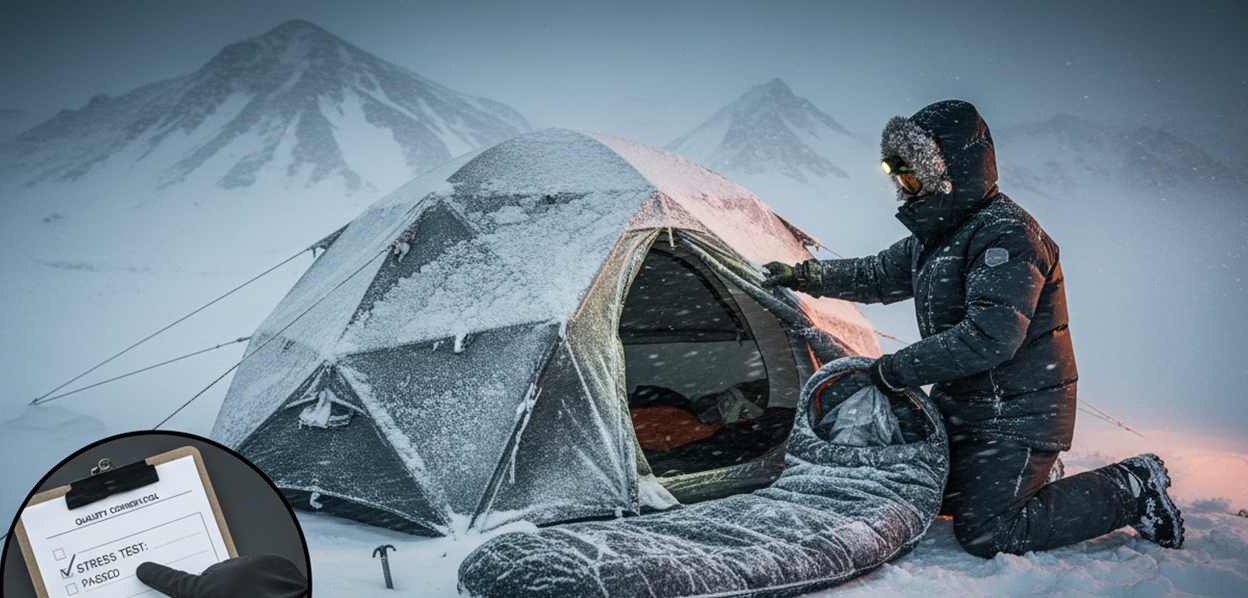
Low-Temperature Freeze Chamber: Fabrics, TPU coatings, waterproof zippers, and plastic buckles are frozen down to negative 30 or 40 degrees Celsius and subjected to impact and flexing tests to ensure zero cracking or embrittlement.
Wind and Rain Simulation Chamber: Assembled winter tents are subjected to high-pressure water jets and wind loads to verify structural stability and seam integrity.
Thermal Resistance (R-Value) Testing: Sleeping pads and insulated mattresses are evaluated using standard heat-flux measurement equipment, such as ASTM F3340-18 protocols, ensuring accurate thermal ratings for buyers.
Final Quality Control (FQC/OQC): Final Pre-Shipment Safeguards
Every batch undergoes strict Final Quality Control (FQC) and Outgoing Quality Control (OQC) before approval for packing:
Full Visual and Mechanical Inspection: Technicians inspect finished goods for cosmetic flaws, loose threads, skipped stitches, and zipper fluidity.
Full Assembly Audits: A portion of every winter tent lot is fully pitched in the inspection hall to verify frame geometry, guy-line tension, zipper performance, and overall stability.
AQL International Sampling Standards: Final shipments are audited using recognized Acceptable Quality Limit (AQL 2.5/4.0) protocols, guaranteeing consistent batch quality.
Environmental Compliance and International Certification
Modern outdoor manufacturing requires full alignment with global safety, environmental, and ethical standards:
Eco-Friendly and Ethical Standards: Raw materials comply with OEKO-TEX Standard 100, and all down insulation is 100% certified under the Responsible Down Standard (RDS).
Chemical and Hazardous Substance Control: Products undergo testing for compliance with REACH, RoHS, and PFAS-free (C0 DWR) environmental regulations required in North American and European markets.
ISO Management Systems: The facility operates under certified ISO 9001 quality management standards, ensuring consistent, repeatable processes across all product runs.
Packaging and Moisture Protection for Ocean Transport
Improper packaging can compromise high-quality products during ocean transit. The factory implements specialized packaging strategies for long-distance sea freight:
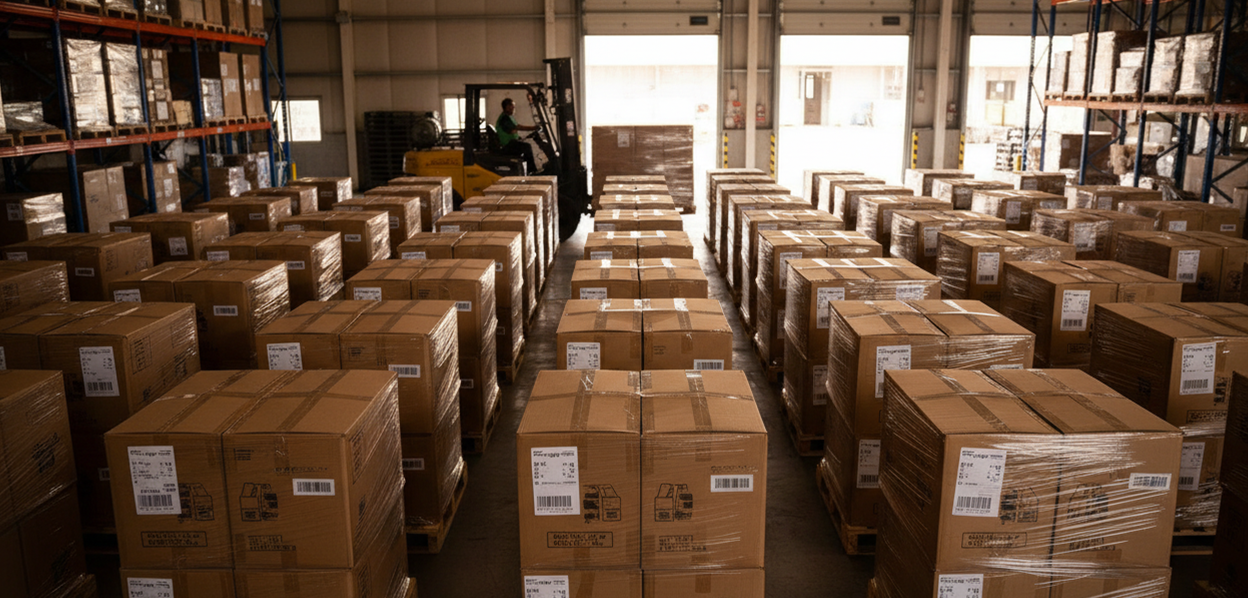
Moisture-Barrier Packaging: Products are sealed inside heavy-duty polyethylene liner bags alongside industrial desiccants to protect against ocean mist, humidity, and condensation.
Box Strength and Drop Resistance: Master cartons are constructed from 5-ply or 7-ply heavy corrugated paperboard and undergo drop testing to resist compression in stacked containers.
Palletized Loading Efficiency: Cartons are stacked systematically on export pallets with corner protectors, stretch wrap, and heavy strapping to prevent shifting during transit.
Supplier Management and Full Supply Chain Traceability
Maintaining high standards requires total transparency across the entire supply chain:
Supplier Auditing: Raw material vendors undergo annual performance evaluations and auditing to ensure material consistency and compliance with environmental standards.
Lot Traceability Systems: Every production run is assigned a unique batch tracking code, linking the finished product back to specific raw material lots, production shifts, and inspection reports.
Continuous Improvement (Kaizen): Feedback from client inspections and field usage is analyzed to drive continuous improvements in pattern design, material selection, and assembly techniques.
Conclusion: Reliable Quality Control for Extreme Conditions
Manufacturing winter camping gear requires precise engineering, rigorous testing, and strict quality control at every stage of production. From raw material IQC to extreme cold laboratory testing and final container loading, a comprehensive QC system ensures every product performs reliably in harsh cold-weather environments. Partnering with a dedicated Chinese manufacturer focused on quality assurance protects your brand, reduces post-sale liabilities, and ensures end-users stay safe in the backcountry. Contact our team today to request testing reports or schedule a factory audit.
Frequently Asked Questions
Q1: How does the factory ensure winter tent fabrics do not crack in extreme cold?
Fabrics, TPU coatings, and plastic buckles undergo low-temperature freeze testing in an environmental chamber, where materials are cooled to negative 30 or 40 degrees Celsius and subjected to impact and flexing tests to verify cold-crack resistance.
Q2: How are sleeping bag and pad thermal ratings (R-value) verified?
Thermal ratings are measured in an in-house laboratory using standardized heat-flux thermal resistance equipment following recognized international standards, such as ASTM F3340-18 for sleeping pads, ensuring accurate and verifiable insulation ratings.
Q3: What tests are performed on production lines for winter gear?
In-line tests include stitch tensile strength checks, 100% waterproof seam-tape pressure testing, zipper cycle testing, and backlight audits to check insulation uniformity in sleeping bags and insulated garments.
Q4: Are third-party quality inspections supported before shipment?
Yes. Third-party inspection agencies, such as SGS, TÜV, BV, or client-appointed inspectors, are welcome to perform pre-production, in-line (DUPRO), or final pre-shipment inspections (FRI) at the factory.
Q5: How are manufacturing defects or quality issues handled post-shipment?
The factory operates under a comprehensive quality warranty agreement. Every order utilizes a lot-traceability system that allows technicians to identify the root cause of an issue and provide solutions, such as replacements, spare parts, or credits for future orders.


 en
en ja
ja ko
ko zh
zh es
es ru
ru fr
fr ar
ar pt
pt tr
tr nl
nl it
it de
de

 RELATED MAGAZINE








 Leave a Message