The market for outdoor heating gear—including patio heaters, portable gas and wood stoves, and camping heaters—is defined by intense seasonality and weather-driven demand surges. When unexpected cold snaps hit or autumn retail seasons begin, demand spikes rapidly. However, outdoor equipment brands, procurement directors, and retail distributors face severe supply chain vulnerabilities.
Recent years have highlighted how geopolitical shifts, tariff changes, container rate spikes, and factory shutdowns can derail inventory plans. Building a resilient, predictable, and agile supply chain is no longer optional. It is a strategic requirement to protect market share, secure profit margins, and satisfy customer demand.
Introduction: The Growing Importance of Supply Chain Resilience in Outdoor Heating
Outdoor heating inventory carries unique commercial risks. Unlike year-round consumer products, heating equipment relies on narrow selling windows during the third and fourth quarters. A delay of four weeks can mean missing an entire selling season, resulting in stranded capital and excess inventory holding costs.
To navigate this volatility, brand managers and procurement executives must move beyond traditional cost-per-unit purchasing. Building supply chain resilience requires proactive risk mitigation, diversified manufacturing networks, and strategic inventory buffers designed specifically for the outdoor heating sector.
Identifying Key Bottlenecks in the Outdoor Heating Supply Chain
Understanding where supply chains break is the first step toward building resilience. Outdoor heating equipment relies on specialized components that present distinct production bottlenecks:
Specialized Component Dependencies: High-precision gas control valves, piezoelectric igniters, flame-failure devices, and heat-resistant stainless steel alloys require specialized manufacturing. Shortages in any single sub-component can halt entire assembly lines.
Single-Sourcing Failures: Relying on a single OEM/ODM supplier creates a single point of failure. If that factory experiences power rationing, labor shortages, or local disruptions, your entire inventory pipeline collapses.
Peak Season Capacity Squeezes: During Q3 and Q4, outdoor heating factories operate at maximum capacity. Buyers without locked-in production slots face extended lead times and missed shipping deadlines.
Multi-Sourcing and Regional Diversification Strategies
Mitigating single-source risk requires a structured multi-sourcing strategy that balances volume pricing with production flexibility.
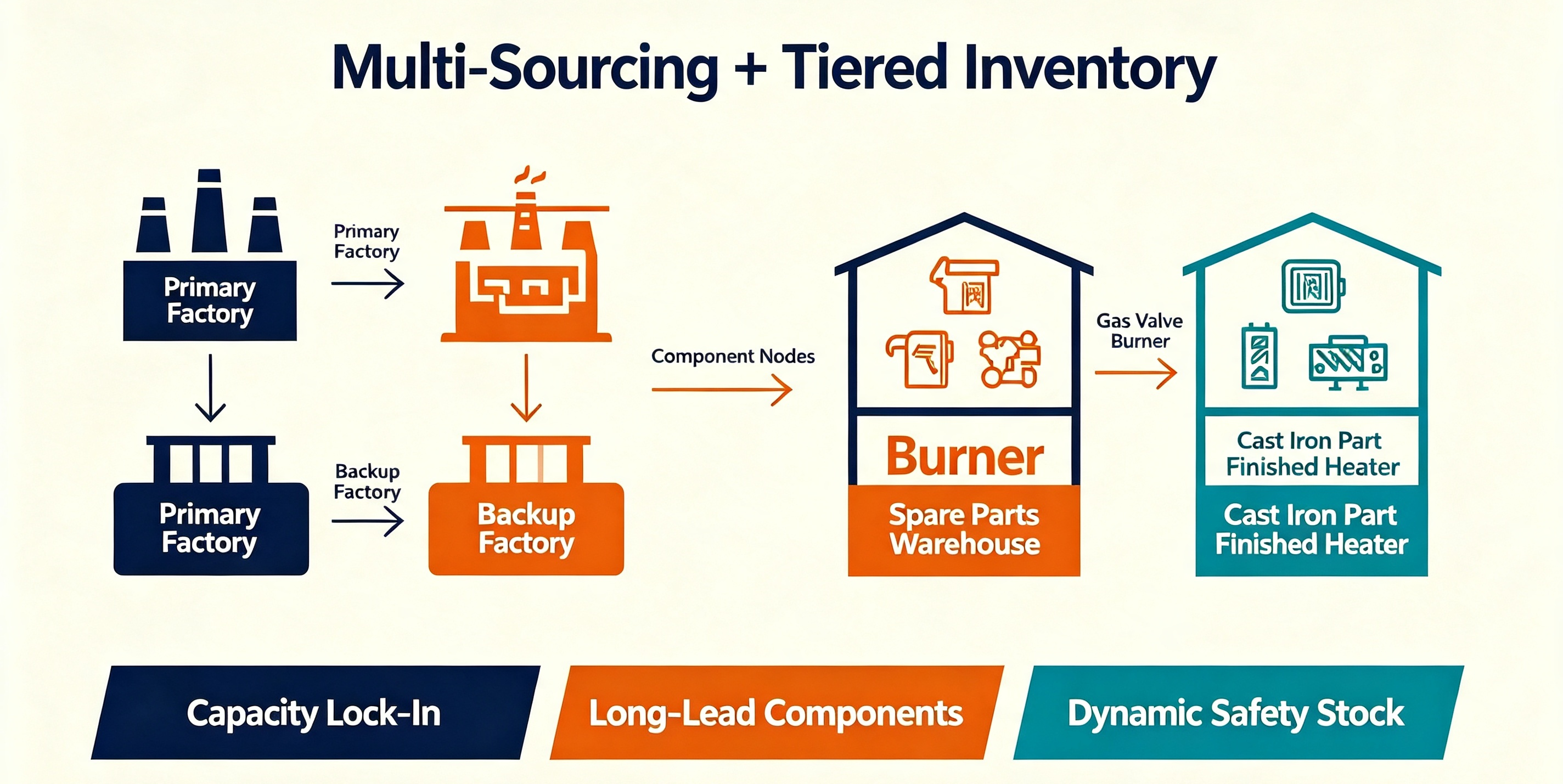
Primary and Secondary Factory Models: Implement a dual-sourcing model (such as China Plus One or multi-region allocation). Allocate 70% of base production to a primary high-volume facility and 30% to a secondary facility that can scale up during demand spikes.
Product Line Segmentation: Manufacture complex, high-volume baseline models at cost-effective offshore facilities while placing high-end or customized units with nearshore or agile regional partners.
Redundant Certification Audits: Ensure backup suppliers hold identical international safety credentials (such as CE, CSA, or UL certifications) to allow seamless production transfers without regulatory delays.
Precision Demand Forecasting and Strategic Buffer Stocking
Static annual forecasts are insufficient for weather-dependent products. Modern supply chains require dynamic forecasting combined with targeted component buffers.
Data-Driven Demand Modeling: Combine historical sales data, early B2B pre-orders, and regional meteorological forecasts to adjust production rolling schedules dynamically.
Tiered Inventory Strategy: Instead of storing massive volumes of bulky finished goods, store long-lead common components—such as gas valves, burners, and cast iron parts. These can be assembled quickly into finished products once demand crystallizes.
Dynamic Safety Stock Baselines: Maintain minimum safety stock thresholds calculated against unexpected demand surges, shipping congestion, and extended port turnaround times.
Balancing Cost and Speed: Offshore, Nearshoring, and Onshoring
Choosing where to manufacture requires evaluating speed-to-market against production costs.
Evaluating the Hybrid Supply Chain: Offshoring offers unmatched volume cost advantages, while nearshoring or onshoring provides rapid replenishment turnaround. Combining both creates a balanced, responsive network.
The 70/30 Allocation Rule: Contract 70% of your seasonal forecast with offshore manufacturers early in the year, and reserve 30% of your inventory budget for nearshore suppliers capable of 3-to-4-week order fulfillment.
Total Cost of Ownership (TCO): Base sourcing decisions on total landed cost—factoring in duties, warehousing, freight insurance, and potential stockout losses—rather than factory Ex-Works (EXW) prices alone.
Mitigating Raw Material and Component Price Volatility
Raw material fluctuations in steel, aluminum, and copper directly impact manufacturing margins for outdoor heaters.
Price-Lock Agreements: Negotiate long-term framework contracts and price-lock agreements with OEM partners for key raw materials prior to peak production cycles.
Component Standardization: Standardize internal hardware across multiple product lines. Using universal gas valves, mounting brackets, and control knobs across different heater models reduces component SKU counts and eliminates dead stock.
Joint Commodity Hedging: Partner with primary suppliers to hedge raw material costs, protecting both parties from sudden commodity price surges.
Logistics, Freight Management, and Warehouse Optimization
Transporting bulky heating equipment requires strategic freight management and localized warehousing.
Diversified Freight Contracting: Avoid relying on a single freight forwarder or shipping line. Secure split contracts across multiple ocean carriers and 3PL providers to guarantee container allocation during peak shipping months.
Overseas Pre-Positioning (3PL / FBA): Move finished goods to regional 3PL fulfillment centers or near-market warehouses well before the Q3/Q4 retail surge begins.
CBM and Container Optimization: Work with ODM engineering teams to design flat-pack or nested stove structures, maximizing container load efficiency (CBM) and drastically reducing per-unit freight costs.
Maintaining Quality Control and Compliance Across Multi-Factory Networks
Distributing production across multiple factories increases operational complexity and quality risks.
Standardized Inspection Frameworks: Enforce identical Incoming Quality Control (IQC), In-Process Quality Control (IPQC), and Outgoing Quality Control (OQC) protocols across all manufacturing facilities.
Third-Party Pre-Shipment Inspection (PSI): Mandate independent third-party inspections for gas tightness, structural integrity, and flame stability prior to container loading.
Material Substitution Prevention: Conduct random material composition tests to ensure suppliers do not substitute lower-grade stainless steel or unrated gas hoses during high-pressure production runs.
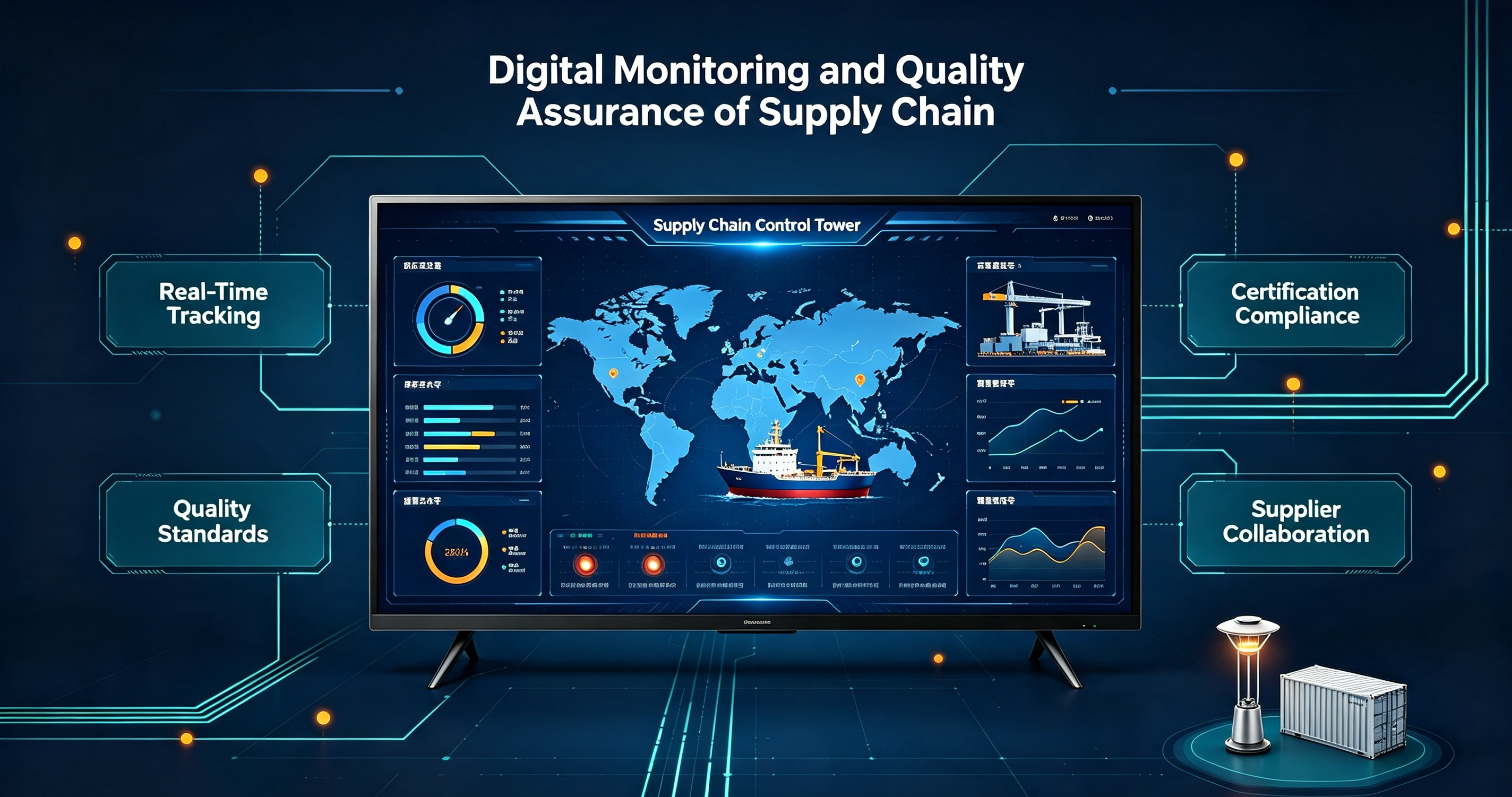
Leveraging Digital Supply Chain Tools and Real-Time Visibility
Modern supply chain resilience relies on real-time data integration across suppliers, logistics partners, and warehouses.
Supply Chain Control Towers: Deploy integrated SCM and ERP platforms to track raw material availability, factory production milestones, and shipment locations in real time.
IoT Shipment Monitoring: Utilize IoT tracking devices on high-value container shipments to monitor real-time location, temperature, and transit shocks.
Automated Early Warning Systems: Set up automated alerts for port delays, factory yield drops, or component shortages, enabling procurement teams to pivot production schedules before disruptions escalate.
Building Strategic, Long-Term OEM/ODM Supplier Partnerships
Transactional relationships fail during global crises. Building resilient supply chains requires long-term collaborative partnerships.
Transparent Capacity Planning: Share rolling 12-month demand forecasts with core manufacturers to help them reserve factory capacity, order raw materials, and manage labor schedules.
Joint Value Analysis / Value Engineering (VAVE): Collaborate with factory engineers to re-engineer heater components for easier assembly, higher structural durability, and lower material costs without compromising safety.
Shared Risk Frameworks: Establish fair risk-sharing agreements regarding order cancellations, raw material holding costs, and seasonal demand adjustments to foster mutual commitment.
Frequently Asked Questions
How far in advance should outdoor heating gear orders be placed to avoid Q3/Q4 shipping delays?
Due to high seasonal demand and peak-season freight congestion, buyers should place production schedules at least 6 to 8 months in advance (ideally completing order commitments between February and April). This timeline ensures completed production and ocean transit for September or October retail arrivals.
What is the most critical supply chain bottleneck for gas outdoor heaters?
The primary bottleneck lies in specialized, safety-critical components—specifically high-precision gas control valves, certified anti-tilt safety switches, and piezoelectric ignition modules. These parts require specialized manufacturing and rigorous international safety certifications (such as CSA or CE), making rapid supplier substitution difficult.
How can a brand maintain safety inventory without overextending working capital?
The most effective strategy is to buffer long-lead common components rather than finished goods. By pre-purchasing universal valves, burners, and cast iron housings with your OEM partner, you keep holding costs low. If market demand spikes, the factory can quickly assemble these pre-stocked components into finished units within weeks.
What role does component standardization play in supply chain resilience?
Component standardization ensures that core sub-assemblies can be interchanged across multiple product models. If sales for a specific heater model fall below expectations, standardized valves and burners can be redirected to produce higher-demand models, minimizing obsolete inventory and simplifying multi-factory procurement.


 en
en ja
ja ko
ko zh
zh es
es ru
ru fr
fr ar
ar pt
pt tr
tr nl
nl it
it de
de

 RELATED MAGAZINE








 Leave a Message