Introduction: The "Life-or-Death" Line for Custom Grill Projects
The global outdoor cooking market is highly competitive. With standard off-the-shelf grills facing severe price competition, outdoor brands, importers, and B2B buyers are increasingly turning to custom OEM (Original Equipment Manufacturer) and ODM (Original Design Manufacturer) projects to build defensible product differentiators.
However, bringing a unique custom camping grill from a 3D design to mass production involves significant financial risk. The two most critical operational thresholds—Minimum Order Quantity (MOQ) and Tooling/Molding Costs—frequently determine whether a hardware project succeeds or fails.
Many first-time buyers fail to accurately evaluate these upfront expenses during early project planning. Unplanned tooling modifications, high packaging printing thresholds, or unabsorbed tooling fees can quickly exhaust working capital and stall product launches.
This guide provides a structured cost-accounting framework to help hardware procurement managers, product developers, and outdoor brands evaluate MOQs, calculate tooling amortization, negotiate effectively with manufacturing partners, and safeguard project profitability.
What is MOQ? The 3 Core Drivers Behind Factory Minimums
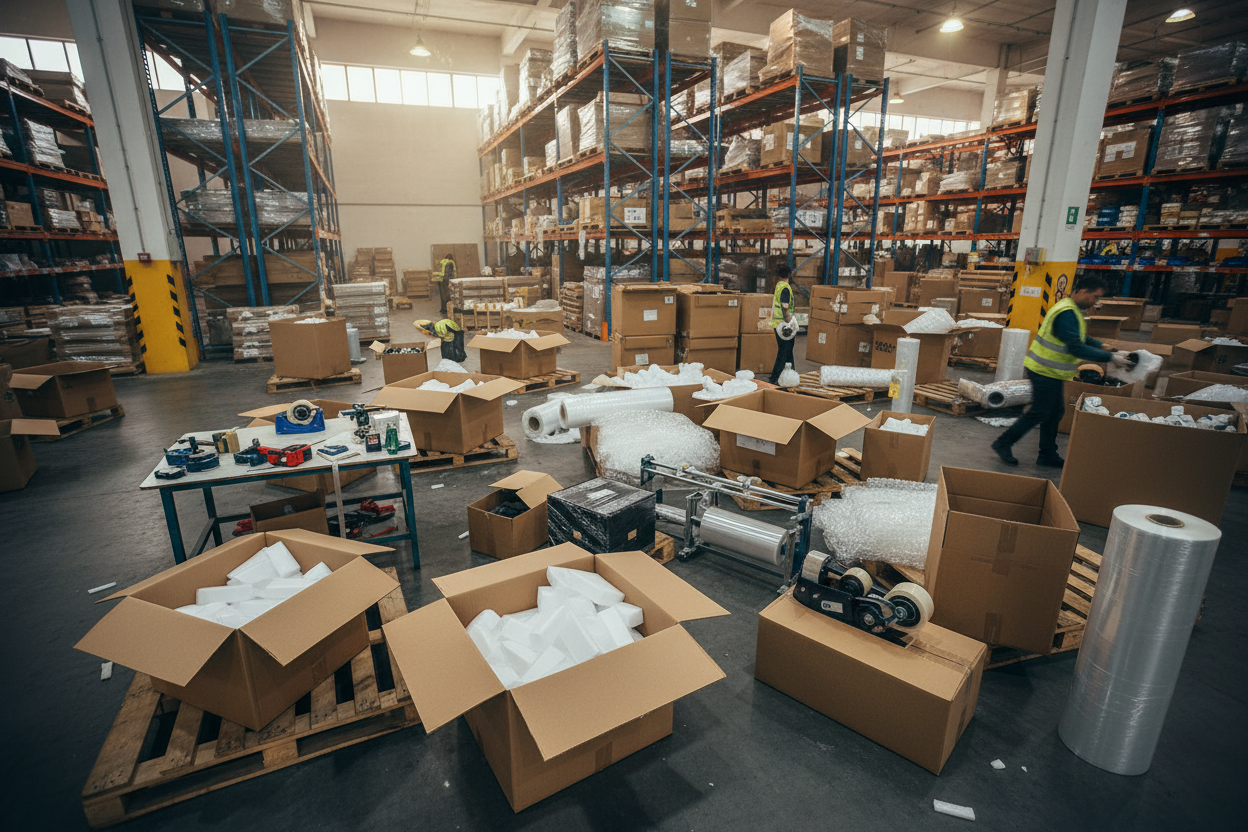
A common misconception among procurement buyers is that factory MOQs are arbitrary numbers created to force higher purchasing volumes. In reality, a factory's minimum order requirement is dictated by three inescapable supply chain cost drivers:
Raw Material Supplier Thresholds: Grill manufacturers rely on external suppliers for specialized raw materials. Steel mills set minimum order quantities for custom grades of stainless steel (such as 304 or 430) or specific sheet thicknesses. Similarly, suppliers of high-temperature powder coatings or food-grade non-stick coatings require minimum batch sizes (e.g., 500 kg per custom color run). If an order falls below these thresholds, the factory must charge a premium to absorb wasted material.
Production Line Setup and Recalibration Costs: Setting up a manufacturing line for a custom grill run requires substantial labor and downtime. Stamping presses must be fitted with custom dies, robotic welding stations reprogrammed, and assembly lines recalibrated. During this setup window, machinery runs idle and technicians incur unbilled labor. The factory must spread these fixed setup costs over a minimum unit volume to maintain margins.
Custom Packaging Printing Minimums: Retail packaging—such as full-color retail boxes with high-definition graphics, inner protective corrugated trays, and branded master cartons—has strict printing press MOQs. Commercial offset packaging printers typically mandate minimum runs of 1,000 to 3,000 units per print job. Ordering fewer packages drives per-unit packaging costs to unsustainable levels.
Demystifying Tooling Costs: Molds and Dies Across Manufacturing Processes
To convert sheet metal and metal alloys into a functional, mass-produced outdoor grill, factories must fabricate custom tooling. Tooling expenses vary significantly depending on the manufacturing process and component materials:
Stamping Dies (Sheet Metal Forming)
Most portable flat-pack grills are crafted from stamped stainless steel or cold-rolled steel. Stamping dies cut, bend, and punch metal sheets into precise 2D panels. A complete stamping tool set often consists of multiple progressive dies (blanking, bending, piercing). While initial costs are moderate to high, high-grade steel stamping dies can produce tens of thousands of units with minimal maintenance.
Casting Molds (Cast Iron & Cast Aluminum)
Cast iron grates or die-cast aluminum fireboxes require specialized casting molds. These molds must withstand extreme thermal stress and molten metal pressures. Casting tools carry longer development lead times, higher physical weight, and substantial upfront tooling investments.
Injection Molds (Plastic Accessories)
Heat-resistant plastic accessories—such as adjustment knobs, side handle grips, and protective feet—are produced via plastic injection molding. While individual injection molds are less expensive than large metal stamping dies, they require precise tolerances to ensure smooth assembly with the grill body.
The "Seesaw Effect": The Art of Cost Amortization
Understanding the relationship between upfront tooling fees and order volume is fundamental to product financial engineering.
The Amortization Formula
When calculating the landed cost of a custom grill, the upfront tooling investment must be amortized across the projected production volume:
Final Unit Cost = Base Factory Price + Total Tooling Cost / Total Order Quantity
The Business Trade-OffA key decision in B2B procurement is balancing upfront capital expenditure against ongoing unit cost:
Pay High Tooling Upfront for a Lower Initial MOQ: Best for startups validating a new market concept. You pay 100% of the tooling costs out-of-pocket, allowing the factory to accept a lower trial order (e.g., 500 units). This preserves inventory liquidity while accepting a higher initial cost per unit.
Commit to a High MOQ to Waive or Amortize Tooling: Best for established brands with proven sales channels. By committing to a large order volume (e.g., 5,000+ units), you can negotiate for the factory to absorb the upfront tooling cost or spread it invisibly across the unit price.
How to Accurately Estimate Custom Tooling Expenses
Requesting a tooling quote without technical documentation leads to inaccurate estimates or "guesstimates" from suppliers. To secure precise binding quotes from manufacturing partners, buyers must provide structured engineering data:
3D CAD Files & Bill of Materials (BOM)
A factory cannot calculate tooling volume, steel tonnage, or machining hours without a finalized 3D CAD model (STEP or IGES format) and a complete Bill of Materials (BOM) detailing material grades (e.g., 1.2 mm 304 Stainless Steel vs. 1.5 mm Cold-Rolled Steel).
Mold Cavity Count ("1-out-X")
The number of cavities in a mold directly impacts its cost and production speed:
Single-Cavity Mold ("1-out-1"): Produces one part per cycle. Lower tooling cost, but slower production time and higher unit labor cost.
Multi-Cavity Mold ("1-out-2" or "1-out-4"): Produces multiple identical parts simultaneously. Higher upfront tooling expense, but significantly faster production runs and lower unit manufacturing costs.
Mold Steel Quality and Lifespan Classifications
The choice of tool steel determines how many cycles the tool can perform before wearing out:
Standard Tool Steel (e.g., P20, NAK80): Rated for 30,000 to 100,000 cycles. Lower cost; ideal for low-to-medium production volumes.
Hardened / Alloy Tool Steel (e.g., H13, S136): Heat-treated steel rated for 300,000 to 1,000,000+ cycles. Expensive upfront; designed for high-volume mass production.
A Practical Framework for Calculating Target MOQ
Rather than accepting a factory's initial MOQ as non-negotiable, procurement managers should calculate their target operational MOQ using three logical benchmarks:
Method 1: Reverse Financial Deduction
Work backward from your target retail market price to calculate the maximum allowable Ex-Factory (FOB) unit price:
Max Allowable FOB = (Target Retail Price * (1 - Margin %) - Landed Freight & Taxes) / Overhead Multiplier
Once you know your maximum allowable FOB, align it with the factory's volume price tiers to identify the minimum order quantity needed to meet your financial target.
Method 2: Container Load Conversion
Shipping partial containers (LCL - Less than Container Load) increases freight costs and handling risk. For hardware and outdoor gear, the most efficient logistics unit is a full container load (FCL).
Calculate your base MOQ using standard container capacities:
If your flat-pack grill master carton measures 0.035 CBM, a single 40HQ container holds approximately:
Total Boxes = Total CBM / Volume per Carton ≈ 1942 Units
Setting your initial MOQ to match full container capacity (e.g., 1,900 units) optimizes sea freight costs and protects your product from handling damage.
Method 3: Factory Capacity Realism
Understand your supplier's facility size. Pitching a 300-unit MOQ to a massive tier-1 factory with 1,000 employees will likely result in rejection or high prices. Conversely, placing a 10,000-unit order with a small workshop may overwhelm their capacity. Match your order volume to the factory's operational scale.
Hidden Costs Beyond Basic MOQ and Tooling
Upfront tooling and unit manufacturing costs are only part of the total investment. A complete project budget must account for several easily overlooked secondary expenses:
Prototyping and CNC Samples: Expect to pay $300 to $1,500 per iteration for 3D printed hand samples, laser-cut sheet metal prototypes, or CNC-machined functional samples before opening steel molds.
Regulatory & Safety Certifications: Outdoor cooking gear used with food contact surfaces and combustible fuels must pass strict safety certifications before entering international markets:
Europe: EN 1860 (Grill Safety), LFGB / EU 1935/2004 (Food Contact Safety), CE marking.
North America: FDA compliance for food-contact grates, CSA / UL safety standards for gas/charcoal devices.
Testing labs (such as SGS, TÜV, or Intertek) charge significant fees that must be budgeted ahead of mass production.
Post-T1 Mold Modifications: After a mold is built, the factory runs a "T1" (Test 1) trial sample. Thermal shrinkage, metal warping, or assembly friction often require tool modifications. If design changes are requested post-T1 that deviate from the approved CAD drawing, the buyer is typically responsible for these engineering revision costs.
Quality Control & Pre-Shipment Audits: Budgeting for third-party inspection agencies ($300 to $500 per day) to inspect incoming raw materials, mid-production runs, and final container loading.
Procurement Negotiation Strategies: Lowering Upfront Costs
If factory MOQs or tooling quotes exceed your initial budget, apply these proven supply chain negotiation strategies:
1. Request Tiered Pricing Quotes
Ask the factory to provide itemized pricing across multiple order tiers (e.g., 500, 1,000, 3,000, and 5,000 units). This exposes the factory's underlying cost structure and reveals where economy-of-scale savings occur.
2. Negotiate a Tooling Rebate Clause
Contractually tie tooling costs to long-term order performance:
"The Buyer agrees to pay $12,000 USD for custom stamping tooling upfront. The Factory agrees to rebate $2.00 USD per unit back to the Buyer on every unit shipped. Once cumulative order volume reaches 6,000 units, the initial $12,000 USD tooling fee will be 100% refunded."
This structure protects the factory's setup costs while providing a clear path for the buyer to recoup capital investment.
3. Utilize "Public Molds" with Custom Components
Instead of building a 100% custom grill from scratch, adopt a hybrid customization model:
Standard Factory Components (Public Molds / Zero Tooling): Use the factory's existing molds for the main firebox body, internal charcoal pan structure, and standard folding legs.
Custom Branded Elements (Low Tooling / Low MOQ): Focus your custom tooling budget exclusively on branded elements, such as a custom laser-cut logo plate, unique handle shapes, custom color coatings, and custom retail packaging.
This hybrid approach reduces tooling fees by 50% to 80% and makes the factory far more open to lower initial MOQs.
OEM vs. ODM: Selecting the Right Development Path
Choosing between pure original engineering (OEM) and platform adaptation (ODM) determines your financial exposure:
The ODM Path (Micro-Innovations): Leverage an existing, factory-tested grill platform and focus on cosmetic customization, unique surface finishes, upgraded accessories, and premium packaging. This path minimizes capital expenditure, lowers upfront tooling costs to near zero, enables fast time-to-market (30–45 days), and offers flexible MOQs (200–500 units).
The OEM Path (Pure Original Design): Invest in ground-up mechanical engineering, unique flat-pack folding mechanisms, and patented features. This approach requires substantial capital ($10,000 to $50,000+ USD in tooling), rigid MOQ commitments (1,000–3,000+ units), and longer development timelines (90–180 days), but creates a unique market position and exclusive IP ownership.
Conclusion: Building Your ROI Decision Model
Financial control in hardware development requires evaluating upfront capital expenditure against long-term product lifecycle returns.
Before placing a purchase order or signing a tooling contract, run a simple Break-Even Analysis:
Break-Even Units = (Tooling+Certifications+Prototyping) / (Target Retail Price - Landed Unit Cost - Marketing Expense per Unit)
If your break-even point requires selling 3,000 units, but your initial market validation plan only targets 500 units, the project carries unacceptable financial risk. You must renegotiate tooling terms, pivot to an ODM platform, or adjust your pricing model.
Successful procurement managers act as financial engineers. By mastering the dynamics of factory MOQs, tooling amortization, and supply chain negotiation, you can mitigate development risk, protect capital reserves, and bring profitable custom outdoor products to global markets.
Frequently Asked Questions (FAQ)
Q1: What is the typical MOQ required by factories for a completely customized camping grill?
A: For a completely custom design requiring all-new tooling (OEM), large hardware factories typically require an MOQ between 1,000 and 3,000 units, depending on the grill's structural complexity. If you are making minor modifications using existing factory public molds (ODM), the MOQ can usually drop to 500 units or fewer, or be based on filling a single 20-foot container (20GP).
Q2: Are tooling fees charged on a one-time basis? Do I need to pay again for reorders?
A: Tooling fees are almost always a one-time buyout expense. As long as the product design remains unchanged for subsequent reorders, you will not pay the tooling fee again. Furthermore, experienced buyers usually specify in their supply contract that if a mold reaches the end of its physical lifespan due to production wear and tear, the factory must rebuild a new mold at its own expense to ensure ongoing production.
Q3: Who owns the tooling/molds for a custom grill?
A: Ownership depends on who paid for the tooling. If you paid 100% of the tooling fee, the ownership belongs entirely to you, and the factory is legally prohibited from using those molds to produce the product for other clients (backed by a signed Non-Disclosure Agreement / NDA). If the factory absorbed part or all of the tooling costs, ownership generally remains with the factory, and the item may be offered as a public mold product on the open market.
Q4: What should I do if my capital is limited and I cannot meet the factory's MOQ?


 en
en ja
ja ko
ko zh
zh es
es ru
ru fr
fr ar
ar pt
pt tr
tr nl
nl it
it de
de

 RELATED MAGAZINE








 Leave a Message