Why Strategic Brand Model Selection Matters for Camping Stoves
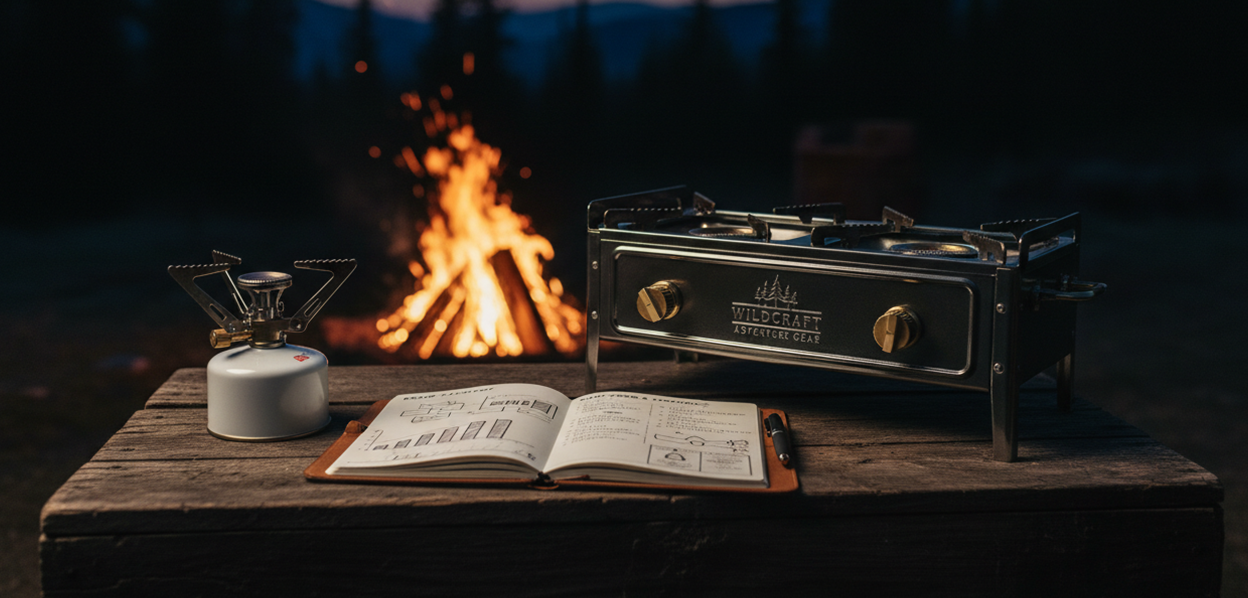
The global outdoor camping market continues to expand rapidly, driven by increased consumer participation in backpacking, overland travel, and recreational camping. Within this growing sector, camping stoves serve as a core gear requirement. However, the market is highly competitive, featuring everything from ultralight canister stoves to heavy-duty multi-burner propane setups. For outdoor gear companies, selecting between a Private Label and a White Label sourcing model is a fundamental business decision. This choice dictates upfront capital requirements, supply chain flexibility, legal compliance obligations, and long-term brand equity. Understanding the operational realities of each model allows emerging startups and established outdoor enterprises to position their product lines for maximum profitability.
What Are White Label Camping Stoves? The Turnkey Route to Market
White label camping stoves are fully developed, standardized products manufactured by an OEM (Original Equipment Manufacturer) that are made available to multiple retailers who apply their own custom branding, logos, and packaging. Under a white label arrangement, the physical product design, internal burner structure, and manufacturing processes remain identical across different buyers.
Turnkey Manufacturing: Factories handle all engineering, material sourcing, and assembly line setup.
Lower Upfront Investment: Brands avoid expensive research, development, and custom tooling costs.
Fast Time-to-Market: Because the stove design is pre-approved and already in production, brands can launch new SKUs within weeks rather than months.
What Are Private Label Camping Stoves? Exclusive Custom Engineering
Private label camping stoves involve custom manufacturing where a brand collaborates with an ODM (Original Design Manufacturer) or OEM to create an exclusive product tailored to specific technical or aesthetic requirements. This process involves custom tooling, proprietary industrial design, functional modifications (such as specialized wind resistance or unique folding mechanisms), and exclusive sales rights.
Custom Tooling and Patents: Brands own or hold exclusive rights to the specific mold, functional designs, and exterior styling.
Extensive Development Lifecycle: The journey from CAD concepts and 3D prototypes to functional air-tightness testing and mass production typically spans three to eight months.
High Defensive Moat: Proprietary features prevent competitors from selling the exact same stove design, protecting profit margins and brand uniqueness.
Comparing Upfront Costs: R&D and Tooling Investments
The financial entry point varies significantly between these two models:
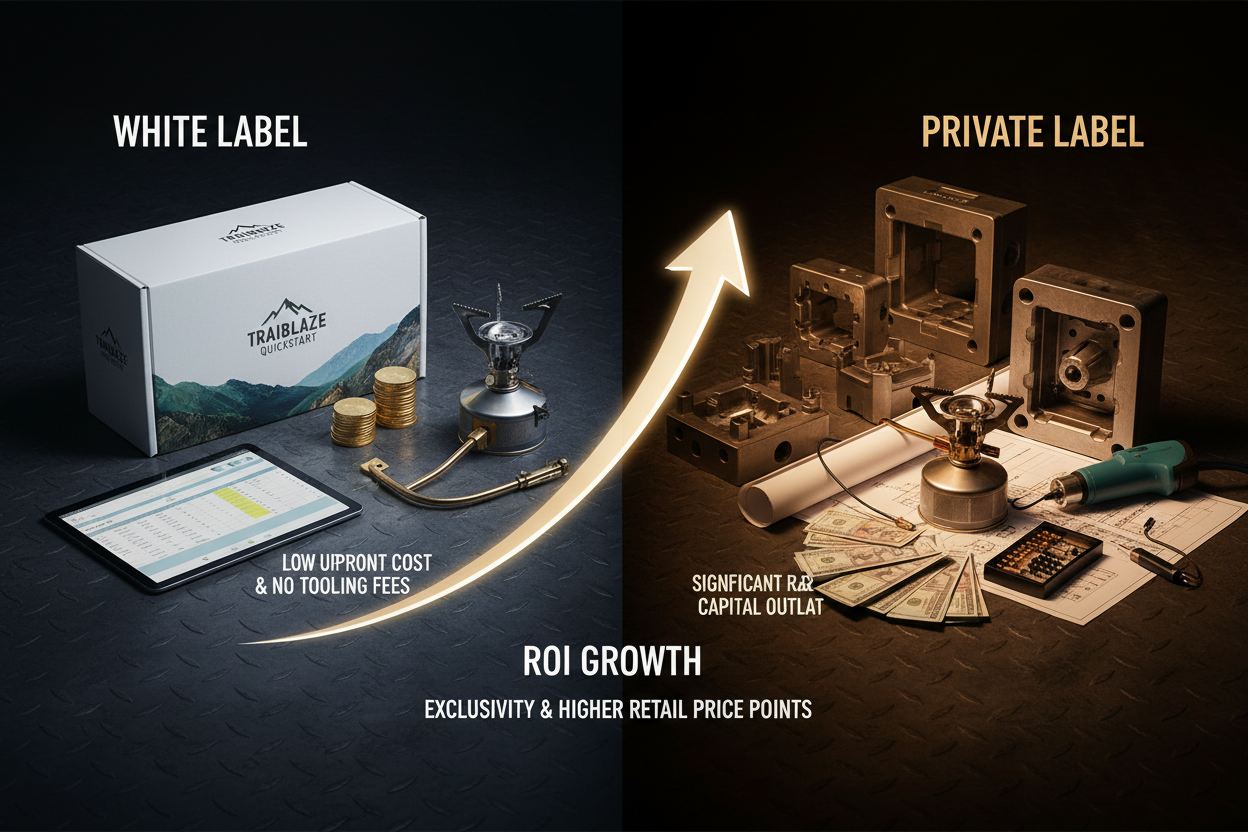
White Label Cost Structure: Requires zero tooling fees and minimal upfront engineering expenses. Brands allocate their capital primarily toward inventory purchasing, custom packaging design, and initial marketing campaigns.
Private Label Cost Structure: Requires significant capital allocation for initial research and development, custom injection or metal stamping molds, functional prototyping, and laboratory testing.
ROI Considerations: While private label requires a much higher initial capital outlay, the resulting product exclusivity allows for higher retail price points and stronger long-term Return on Investment (ROI) once production scales.
Minimum Order Quantities (MOQ) and Supply Chain Agility
Supply chain flexibility often dictates which model fits a brand's operational capacity:
White Label Agility: Suppliers often maintain stock of raw components or unbranded finished units. This allows for lower Minimum Order Quantities (MOQs)—sometimes as low as 100 to 500 units—enabling brands to maintain lean inventory and reorder rapidly based on seasonal demand.
Private Label Commitments: Custom molds, specialized color anodizing, and unique raw material orders require manufacturers to set significantly higher MOQs, often starting at 1,000 to 3,000 units per production run. Brands must balance their cash flow and warehouse capacity before committing to large-volume private label orders.
Market Differentiation and Profit Margins
Product distinction directly impacts pricing power across different retail channels:
The White Label Price Trap: Because white label stoves share identical physical designs with competitor products on platforms like Amazon or regional retail chains, brands often face intense price competition. Success depends heavily on marketing storytelling, brand reputation, and superior customer service.
Private Label Margin Defense: Proprietary innovations—such as ultralight titanium construction, integrated heat exchangers, or advanced micro-regulators for cold-weather performance—justify premium retail pricing. Distinctive features protect the product from direct price comparison, securing higher gross profit margins.
Safety Certifications, Compliance, and Patent Considerations
Gas and liquid fuel stoves are heavily regulated consumer goods subject to strict international safety standards:
Shared White Label Certifications: Professional stove factories maintain existing regional safety certifications (such as CE for Europe, CSA for North America, or AGA for Australia) for their standard white label models. Brands can often leverage these existing test reports to simplify regulatory compliance.
Recertifying Private Label Modifications: Making structural changes, altering gas flow rates, or redesigning burner heads under a private label agreement requires recertification. Brands must factor in the additional time and expense required for third-party laboratory testing (such as ANSI Z21.72 / CSA 11.2) to ensure full market compliance.
Strategic Application: Matching the Model to Your Brand Stage
Outdoor companies often adapt their manufacturing strategy based on their growth phase:
Early-Stage or DTC Startups: Utilizing white label stoves allows new brands to validate customer demand, test price sensitivity, and build initial cash flow without taking on heavy manufacturing debt.
Established Outdoor Brands: Deploying private label engineering allows mature brands to launch flagship products that feature patented technology, strengthening their market presence against competitors.
The Hybrid Strategy: Many successful outdoor businesses use a hybrid approach—offering white label stoves for entry-level, high-volume price points while developing proprietary private label stoves to establish technical credibility at the high end.
Selecting and Managing Quality Chinese Stove Manufacturers
Partnering with a reliable OEM/ODM factory in China is critical for ensuring product safety and manufacturing consistency:
Technical Facility Evaluation: Verify that the factory possesses specialized equipment, including automated air-leak detection systems, precision metal stamping machinery, and environmental testing chambers.
Sourcing Experience: Confirm the factory's track record in managing both white label production speed and private label custom engineering workflows.
Contractual Safeguards: Ensure clear legal agreements are in place, including Non-Disclosure Agreements (NDAs), intellectual property protection clauses for custom tooling, and explicit quality assurance standards (AQL limits).
Conclusion: Aligning Sourcing Strategy with Brand Vision
Choosing between white label and private label camping stoves comes down to your financial resources, supply chain strategy, and brand goals. White label sourcing provides a low-risk, rapid entry point for brands seeking immediate market presence with minimal initial investment. Conversely, private label development offers the customization, intellectual property, and margin protection necessary to build a defensible, long-term outdoor brand. Assessing your current market position allows you to make an informed decision that supports sustainable growth. Contact our team today to explore our catalog of ready-to-ship white label camping stoves or to discuss custom private label manufacturing capabilities.
Frequently Asked Questions (FAQ)
Q1: What is the main difference between white label and private label camping stoves?
The primary difference lies in design exclusivity and customization. A white label camping stove is a pre-manufactured, standard product sold to multiple brands who apply their own logo and packaging. A private label camping stove features custom-engineered designs, functional modifications, or exclusive tooling built specifically for one brand.
Q2: Which sourcing model is best for a new outdoor startup with limited capital?
White label is generally recommended for startups with limited upfront capital. It eliminates the need for expensive mold fabrication fees and offers significantly lower Minimum Order Quantities (MOQs), allowing new businesses to enter the market quickly with reduced financial risk.
Q3: How long does it take to bring a private label camping stove to market?
Developing a private label camping stove typically takes between three to eight months. This timeline includes industrial design refinement, 3D prototyping, custom mold fabrication, gas safety and air-tightness testing, regulatory certification, and mass production.
Q4: Does modifying the color or packaging of a standard stove make it a private label product?
Changing the exterior color scheme, surface finish, or packaging design is generally referred to as customized white label or light customization. Full private label status typically requires physical modifications to the stove's structure, functional components, materials, or proprietary exterior molds.
Q5: Do white label camping stoves come with international safety certifications?
Most established OEM stove manufacturers maintain standard safety certifications (such as CE, CSA, or UKCA) for their off-the-shelf white label designs. Buyers can typically utilize these existing factory certifications to meet regulatory requirements in their destination markets.


 en
en ja
ja ko
ko zh
zh es
es ru
ru fr
fr ar
ar pt
pt tr
tr nl
nl it
it de
de

 RELATED MAGAZINE







 Leave a Message