Introduction: The Rise of Corten Steel in Luxury Outdoor Living
Across North America and Europe, luxury residential landscapes, boutique hotels, and architectural outdoor living projects have embraced Corten steel (weathering steel) as a premier design material. Unlike painted mild steel that flakes and degrades over time, Corten steel develops a dense, self-protecting iron oxide patina when exposed to weather cycles. This earthy, orange-brown patina eliminates maintenance requirements while blending seamlessly with natural stone and timber. For B2B buyers and outdoor living brands, sourcing heavy-duty Corten steel fire pits provides an entry point into high-ticket retail and hospitality specification channels with strong profit margins.
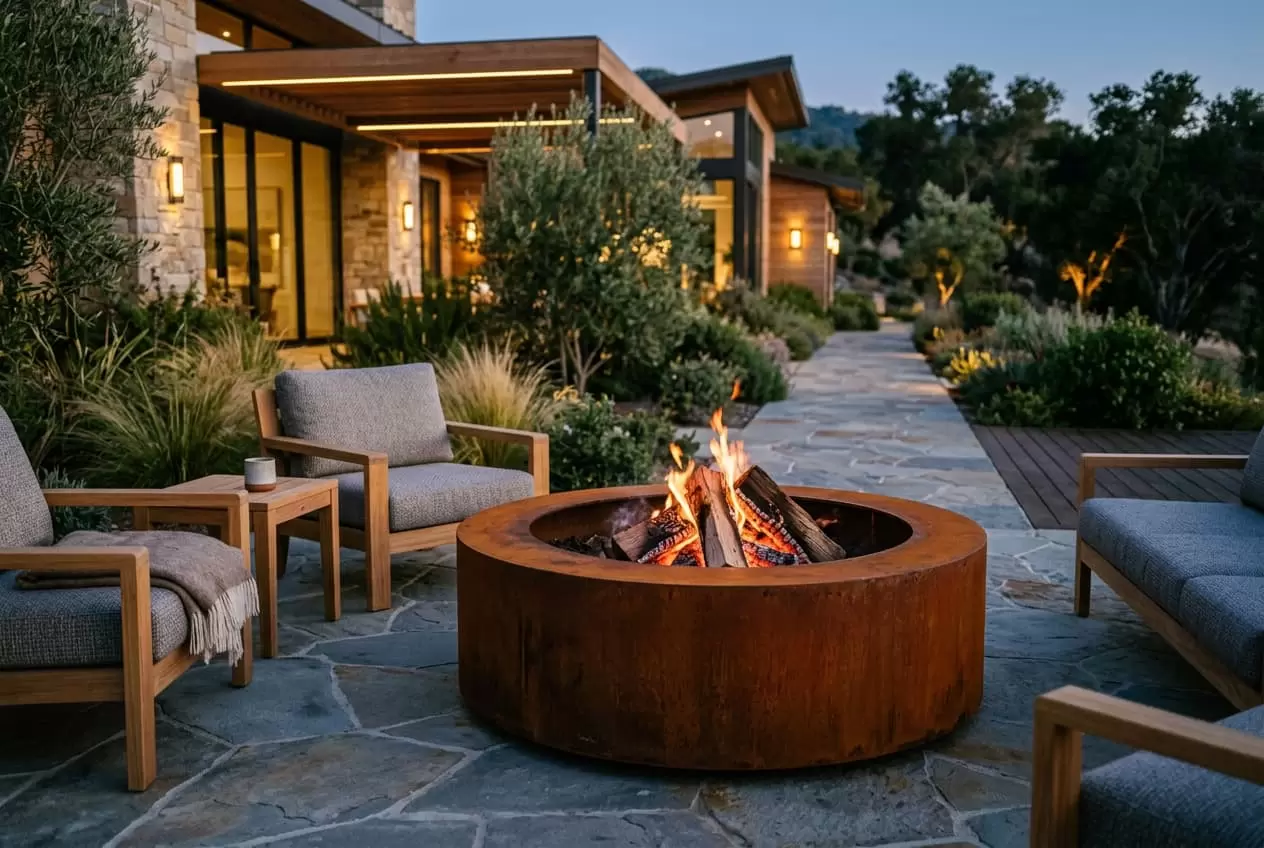
Understanding Corten Steel Metallurgy: Grade A vs. Grade B
Genuine weathering steel relies on specific alloy additions—primarily copper, chromium, nickel, and phosphorus—to slow corrosion rates and form an adherent protective barrier.
Corten A: Formulated with higher phosphorus content, Corten A delivers superior resistance to atmospheric corrosion and produces a rich, uniform aesthetic patina, making it ideal for architectural fire bowls and decorative exteriors.
Corten B: Engineered with lower phosphorus and higher carbon/manganese ratios, Corten B offers enhanced weldability and structural impact strength under thermal stress, making it the preferred choice for large, heavy-load commercial fire pits.
To avoid counterfeit materials—such as standard mild steel coated with faux rust paint—buyers must require an official Mill Test Certificate (MTC) from reputable steel mills confirming exact alloy percentages before authorizing production.
Gauge Thickness Standards: Why Heavy-Duty Means 3mm to 6mm+
Sheet metal thickness separates disposable mass-market fire pits from generational luxury fixtures. Budget e-commerce units often use thin 1.5mm to 2mm sheets that warp, buckle, and burn through within a few seasons.
For premium residential and commercial markets, buyers should specify 3mm (11-gauge) to 4mm steel for standard bowls, and 5mm to 6mm (1/4-inch) plate for oversized architectural fire pits exceeding 100cm in diameter. Thick-gauge steel provides high thermal mass, radiating steady warmth long after flames subside, preventing thermal warping, and justifying high retail price points backed by multi-decade structural longevity.
Pre-Weathering Processes: Shipped Raw vs. Pre-Rusted Finishes
Sourcing managers must decide between shipping raw steel or factory pre-weathered units based on sales channels and customer expectations.
Shipping in a raw mill finish leaves the steel in a dark grey, unoxidized state. This keeps packaging clean without rust residue and lowers factory processing costs, allowing end-users to watch the patina evolve naturally in their backyard. Conversely, factory pre-weathered finishes use controlled chemical activators and water cycles to create a uniform orange-red patina prior to shipment. Pre-weathered units provide immediate visual impact for showroom floors and hospitality installations, though they require oil-barrier paper and protective poly liners to prevent rust dust from staining outer packaging.
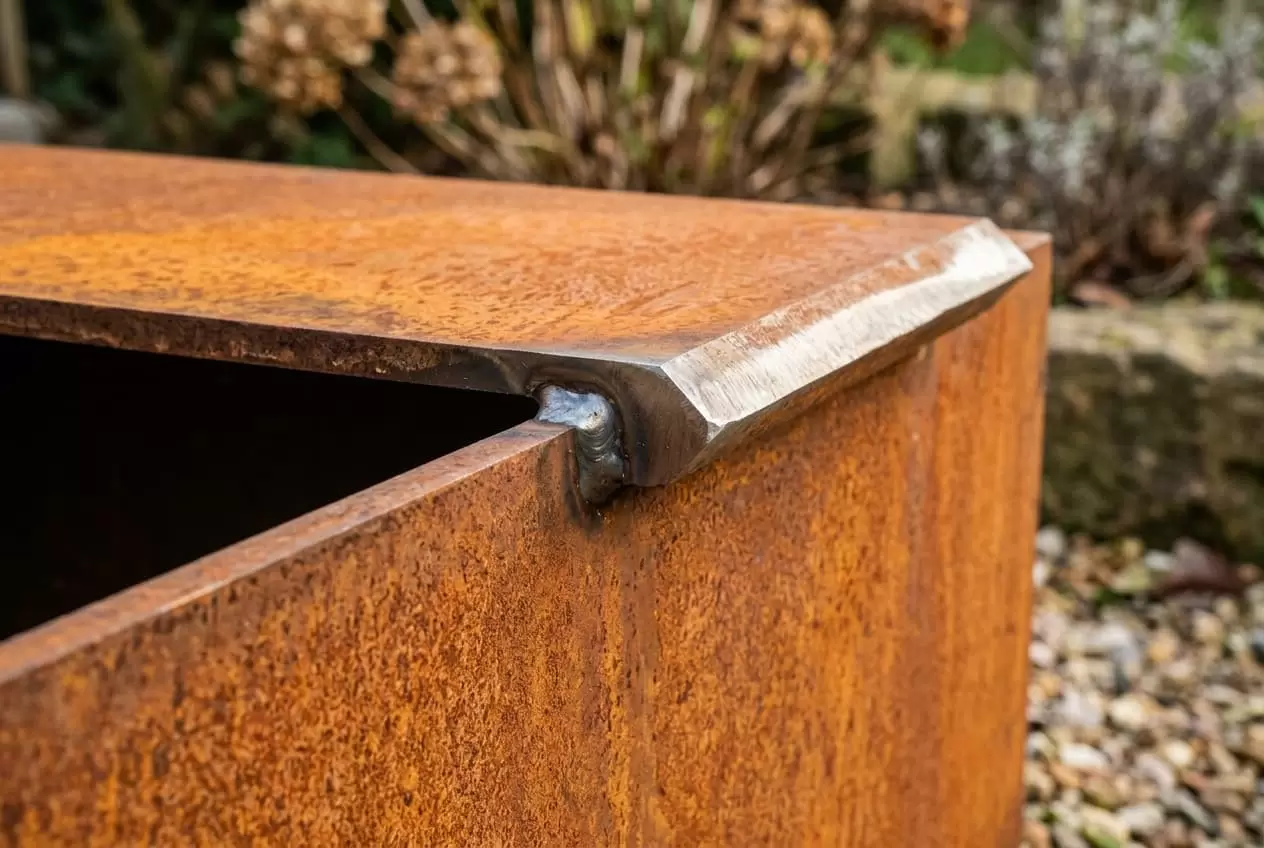
Structural Design and Welding Craftsmanship for High-Heat Durability
Extreme wood-fire temperatures place severe stress on welded joints. Premium fire pits require continuous seam welding using matching weathering-steel filler wire rather than intermittent tack welds that crack or leak ash under thermal expansion.
After welding, skilled fabricators perform seamless grinding and blending so joints disappear into sculptural, minimalist contours. Essential functional details include properly sized bottom drainage holes to prevent standing rainwater, subtle floor slopes toward drains, and structural expansion allowances to accommodate high-heat cycling without distortion.
Value-Added Accessories: Cooking Grates, Spark Screens, and Lids
Bundling proprietary accessories increases Average Order Value (AOV) and positions a fire pit as a complete outdoor culinary and social centerpiece.
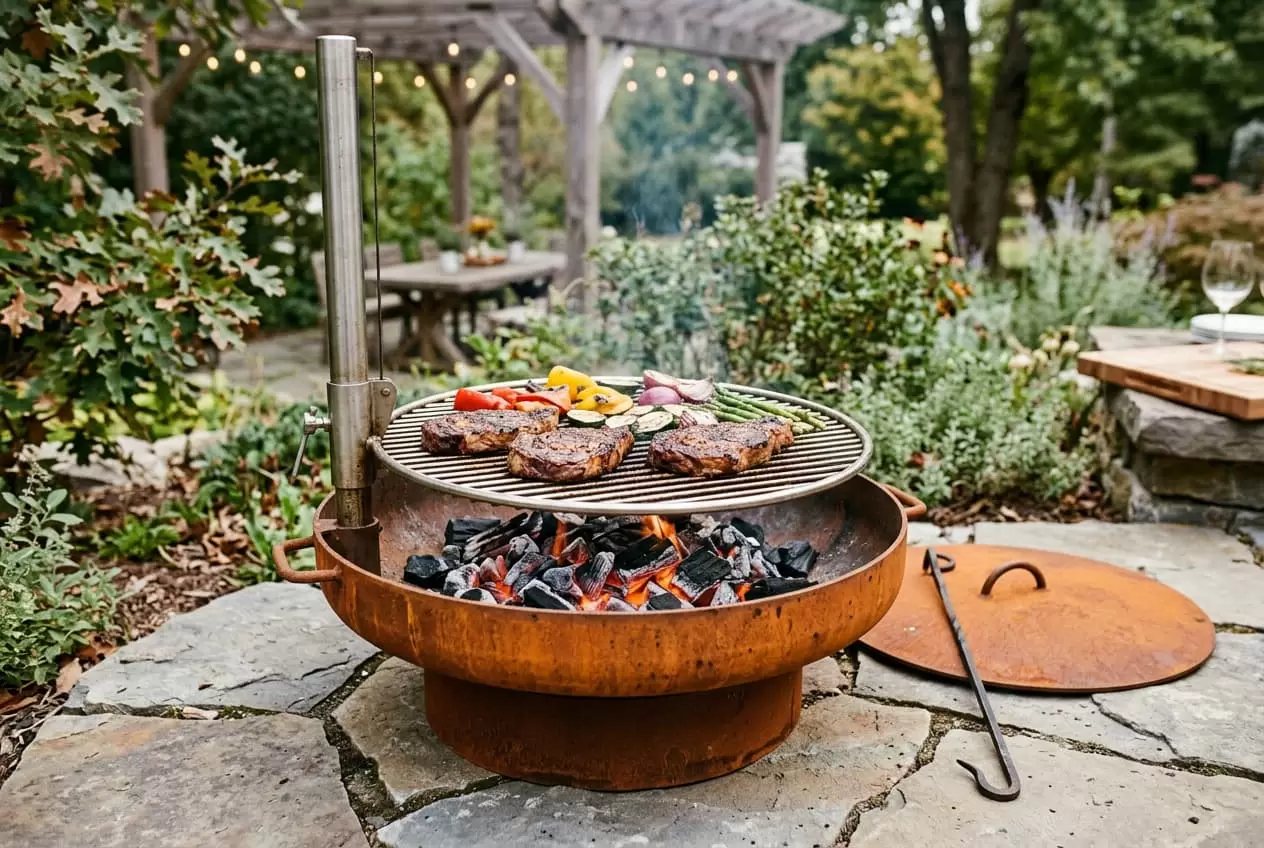
Swivel and Drop-In Cooking Grates: Heavy-duty 304 stainless steel or cast iron grill grates transform a heating bowl into a live-fire cooking station.
Heavy-Duty Spark Screens and Pokers: Mesh spark arrestors are mandatory in many North American municipalities to prevent flying embers, making them essential add-ons.
Snuffer Lids and Base Drip Pans: Custom-fitted Corten steel rain covers protect the firebox from water accumulation, while elevated feet and drip pans protect luxury stone and hardwood decks from rust runoff.
Multi-Fuel Adaptability: Wood-Burning vs. Gas Burner Inserts
Expanding product lines to accommodate both traditional wood fires and gas burner inserts widens commercial market reach. While residential homeowners often prefer the aroma and crackle of natural hardwood, commercial venues like resort patios and restaurants frequently mandate clean-burning propane or natural gas systems due to local fire codes. Sourcing modular fire pit shells designed to accept drop-in CSA- or CE-certified gas burner pans—complete with electronic ignition, thermocouple flame-failure safety valves, and concealed tank bases—allows brands to serve both residential and hospitality sectors from a unified chassis.
Vetting OEM/ODM Factories for Heavy Metal Fabrication
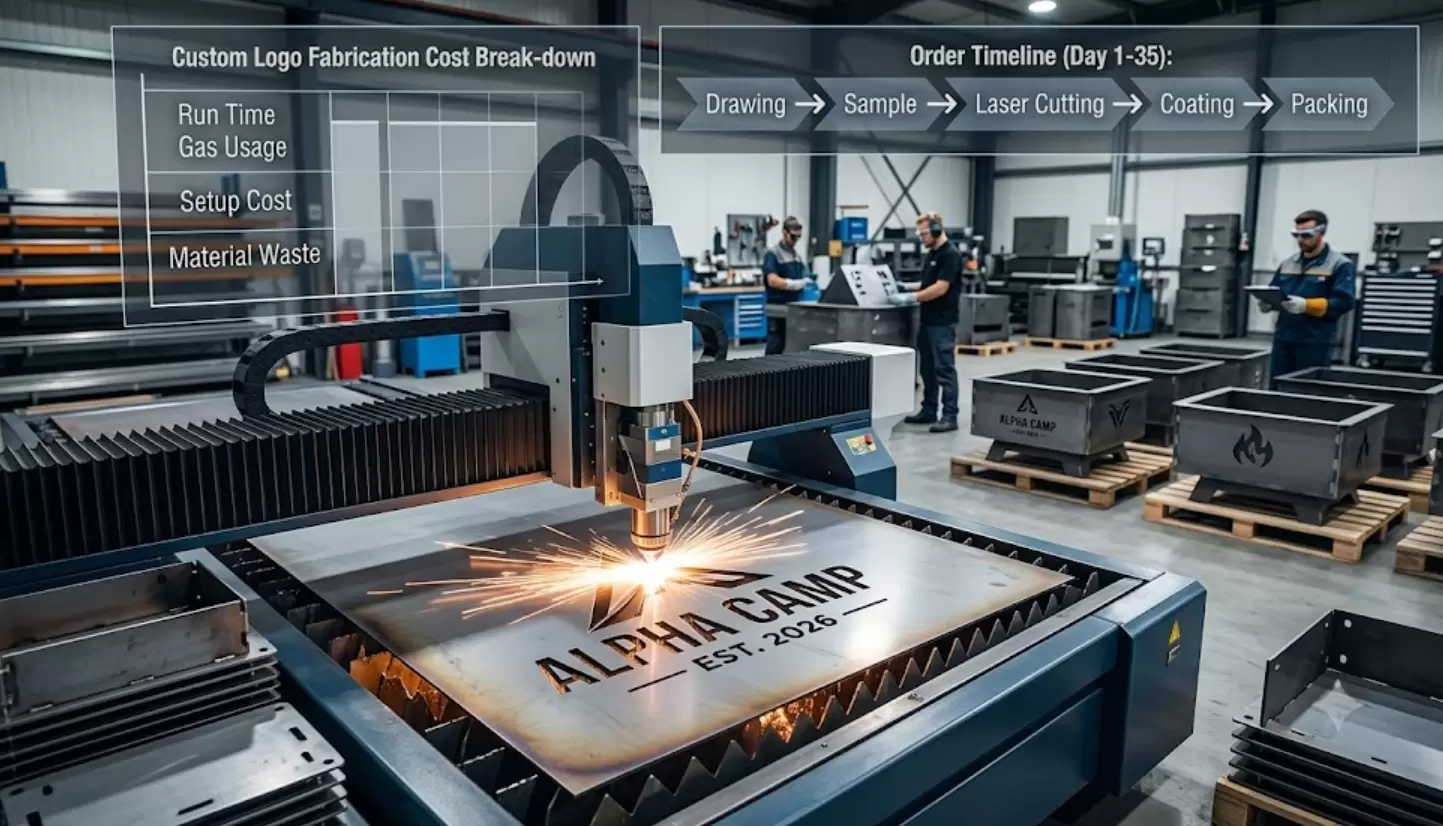
Fabricating heavy-gauge Corten steel requires industrial-grade machinery and experienced metalworkers. When auditing prospective OEM/ODM suppliers, verify in-house capabilities including high-wattage fiber laser cutters, heavy-tonnage CNC press brakes, and large-diameter metal spinning lathes for seamless hemispherical bowls. Inspect the factory's welding jigs to ensure they control heat distortion on thick plates, and verify raw material traceability directly back to major steel producers.
Packaging and Heavy Freight Logistics for High-Ticket Fire Pits
Heavy-duty Corten fire pits typically weigh between 40kg and 120kg, requiring specialized freight packaging to avoid transit damage and rust staining. Units should be wrapped in moisture-resistant VCI or wax-coated barrier paper, cushioned with high-density EPE foam, and secured inside reinforced plywood crates or heavy-duty pallets.
For ocean transport, Full Container Load (FCL) palletized shipping prevents crushing and lowers per-unit freight rates. For domestic last-mile fulfillment, packages exceeding 32kg (70 lbs) must ship via Less-Than-Truckload (LTL) freight carriers equipped with residential liftgate services.
Pricing Strategy, Margin Modeling, and Brand Positioning
To protect profitability on heavy luxury goods, brands must calculate true landed costs—factoring in heavy steel fabrication, pre-weathering labor, crating, ocean freight, import duties, and LTL fulfillment fees. Wholesale and direct-to-consumer retail pricing should maintain gross margins of 55% to 65% to absorb high shipping overhead and trade discounts for landscape architects. Positioning the product with a lifetime structural warranty and curated architectural photography establishes strong brand authority in the premium outdoor living market.
Frequently Asked Questions (FAQ)
Q1: How can B2B buyers verify that a factory is using genuine Corten steel instead of regular mild steel?
Answer: Buyers should require a Mill Test Certificate (MTC) from the steel mill verifying exact alloy content, specifically copper (0.25% to 0.55%), chromium (0.30% to 1.25%), and nickel. During sampling, an accelerated salt-spray oxidation test will confirm genuine Corten steel forms a tight, adherent brown-orange patina rather than loose, flaking rust.
Q2: What is the ideal steel thickness for a premium, heavy-duty Corten steel fire pit?
Answer: For high-end residential and commercial applications, steel thickness should be at least 3mm (11-gauge) to 4mm. For oversized fire bowls exceeding 100cm in diameter or commercial hospitality projects, 5mm to 6mm (1/4-inch) plate is recommended to prevent heat warping and ensure multi-decade durability.
Q3: Should we source Corten steel fire pits shipped raw or pre-weathered from the factory?
Answer: Raw steel ships cleanly without rust residue, making it cost-effective for direct e-commerce parcel or LTL fulfillment where customers enjoy watching the patina develop. Factory pre-weathered units arrive with an immediate designer rust finish ideal for retail showrooms and commercial installations, though they require specialized barrier liners inside the packaging.
Q4: How do you prevent Corten steel rust runoff from staining luxury stone or wood patios?
Answer: During the initial 6 to 12 months of weathering, rainwater can carry light iron oxide runoff. Brands can prevent patio staining by designing fire pits with elevated feet to minimize ground contact, offering matching stainless steel or Corten drip pans, and advising customers to apply a matte high-temperature clear sealer once the desired patina color develops.


 en
 ja
 ko
 zh
 es
 ru
 fr
 ar
 pt
 tr
 nl
 it
 de

 RELATED MAGAZINE








 Leave a Message