Outdoor cooking equipment designed for coastal environments faces extreme atmospheric stress. Coastal regions represent lucrative, high-margin markets for outdoor grills, stoves, and camp kitchens, yet salt spray, high humidity, and airborne ocean particulates create rapid corrosion risks. Standard metal fabrications that perform reliably inland often degrade within months near seawater, leading to surface rusting, structural failure, and high warranty return rates.
Engineering durable outdoor cooking gear for marine and coastal markets requires addressing corrosion during early industrial design, raw material selection, surface treatment, and fastener specification. This guide provides a technical overview of corrosion science, engineering strategies, and quality assurance protocols for manufacturing rust-proof coastal cooking products.
Introduction: The Coastal Environment Challenge for Outdoor Cooking Gear
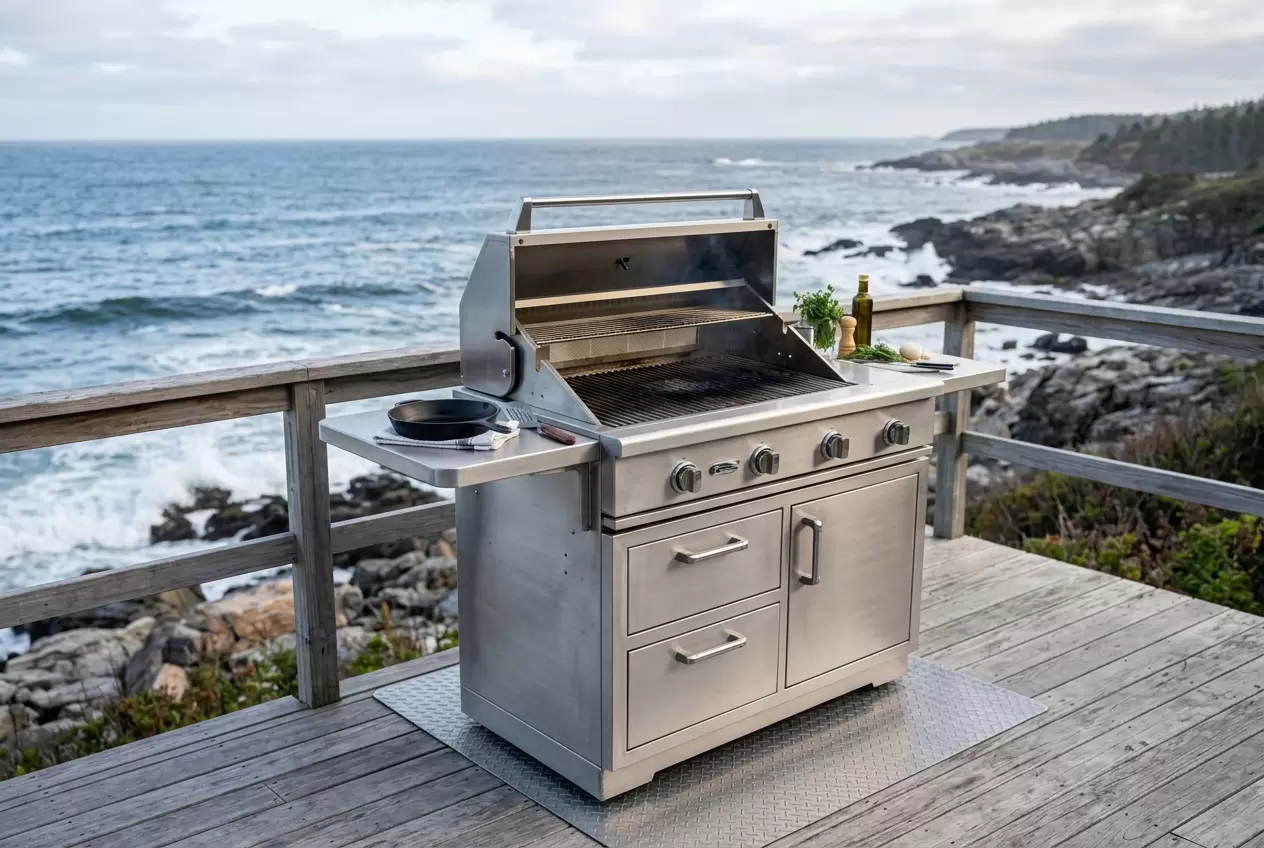
Coastal outdoor living and beach camp cooking represent growing market segments globally. However, coastal environments present severe physical challenges for metal appliances. The combination of salt-laden ocean air, ambient humidity, and thermal cycling from high-temperature cooking creates an aggressive corrosion environment.
When standard outdoor cooking equipment fails due to premature rust, brands face brand damage, negative online reviews, and costly customer support claims. Delivering engineered rust-proofing solutions is essential for brands seeking to establish a premium market presence, build long-term customer trust, and offer extended commercial warranties in coastal zones.
Understanding Coastal Corrosion: The Science Behind Salt Spray & Humidity
Coastal corrosion is primarily driven by airborne chlorine ions found in salt spray. These tiny chloride ions penetrate passive chromium oxide protective layers on metal surfaces, initiating pitting corrosion. Pitting creates microscopic cavities that trap moisture and salt, accelerating local metal degradation below the surface.
High relative humidity combined with diurnal temperature shifts creates thin moisture films on equipment surfaces. This moisture acts as an electrolyte, turning salt deposits into active electrochemical cells. When combined with high cooking temperatures, oxidation rates double or triple, making coastal corrosion significantly more aggressive than inland weathering.
Material Selection: Grade Matters in Marine and Coastal Environments
Selecting appropriate raw materials forms the foundation of coastal rust-proofing:
304 Stainless Steel: Contains 18 percent chromium and 8 percent nickel. Performs well inland, but remains vulnerable to pitting corrosion when exposed to continuous salt spray.
316 Stainless Steel: Contains 2 to 3 percent molybdenum, providing exceptional resistance to chloride pitting. It is the preferred standard for marine-grade outdoor cooking equipment.
Titanium: Virtually immune to salt spray corrosion due to an immediate, self-healing oxide film. It is light and durable, making it ideal for high-end portable marine and coastal gear.
Carbon Steel and Cast Iron: Offer excellent thermal mass and structural stability, but require robust protective coatings or continuous porcelain-enamel sealing to prevent rapid oxidation in high-humidity salt environments.
Advanced Surface Coatings: Beyond Standard Powder Coating
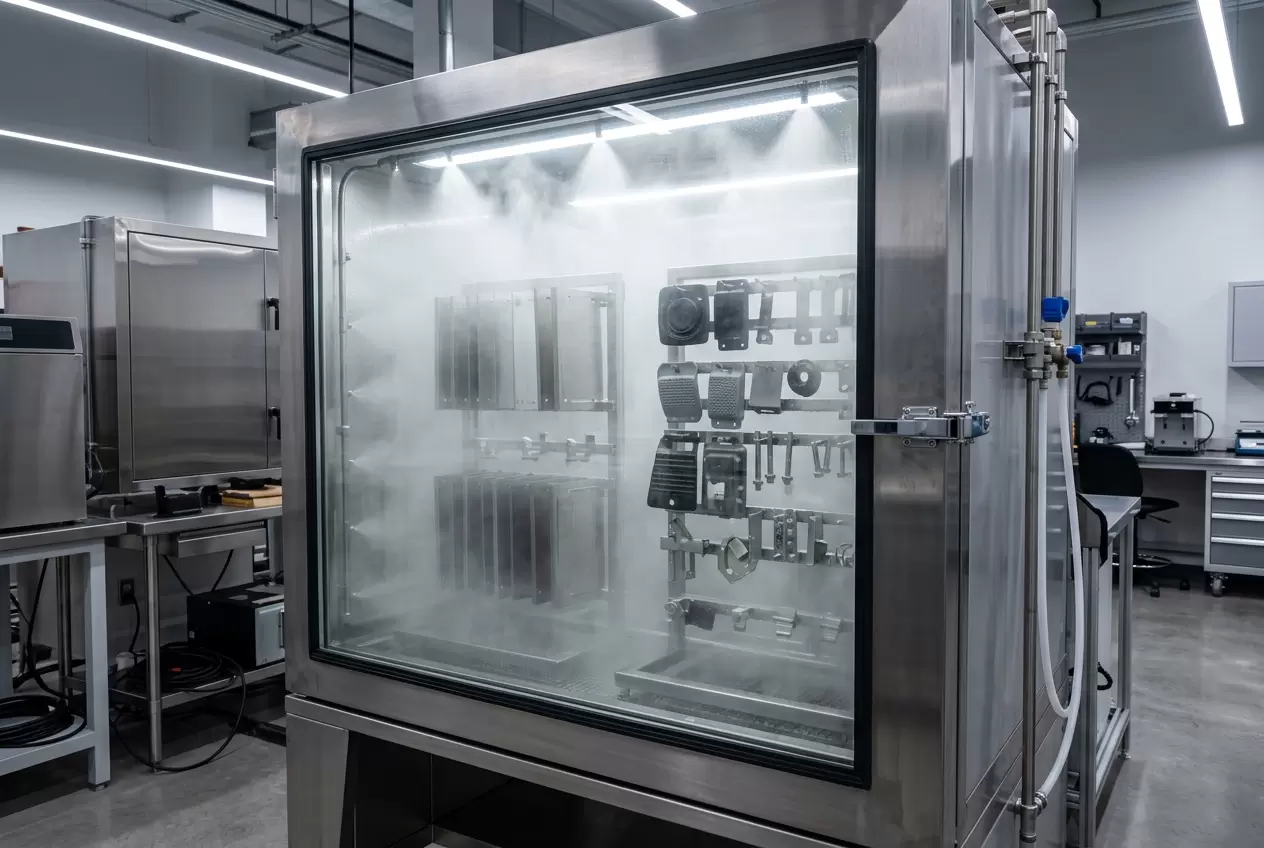
Standard single-coat powder treatments degrade under combined heat and salt exposure. Advanced surface solutions provide multi-layer protection:
High-Temperature Ceramic Coatings: Ceramic finishes withstand temperatures above 500 degrees Celsius while blocking salt vapor penetration.
E-Coating and Dual-Layer Powder Systems: Electrophoretic deposition (E-coating) applies a uniform primer base into deep crevices, followed by a UV-resistant fluorocarbon (PVDF) or polyester topcoat for weather protection.
Porcelain Enamel: Fuses glass particles to underlying steel at extreme heat, creating an impermeable barrier against salt moisture, provided the surface avoids impact cracking.
Structural Engineering & Design Strategies for Corrosion Prevention
Mechanical engineering plays a critical role in preventing corrosion traps:
Eliminating Water Pockets: Design angled surfaces, rounded radii, and strategic drain holes to prevent standing water or salt condensation accumulation.
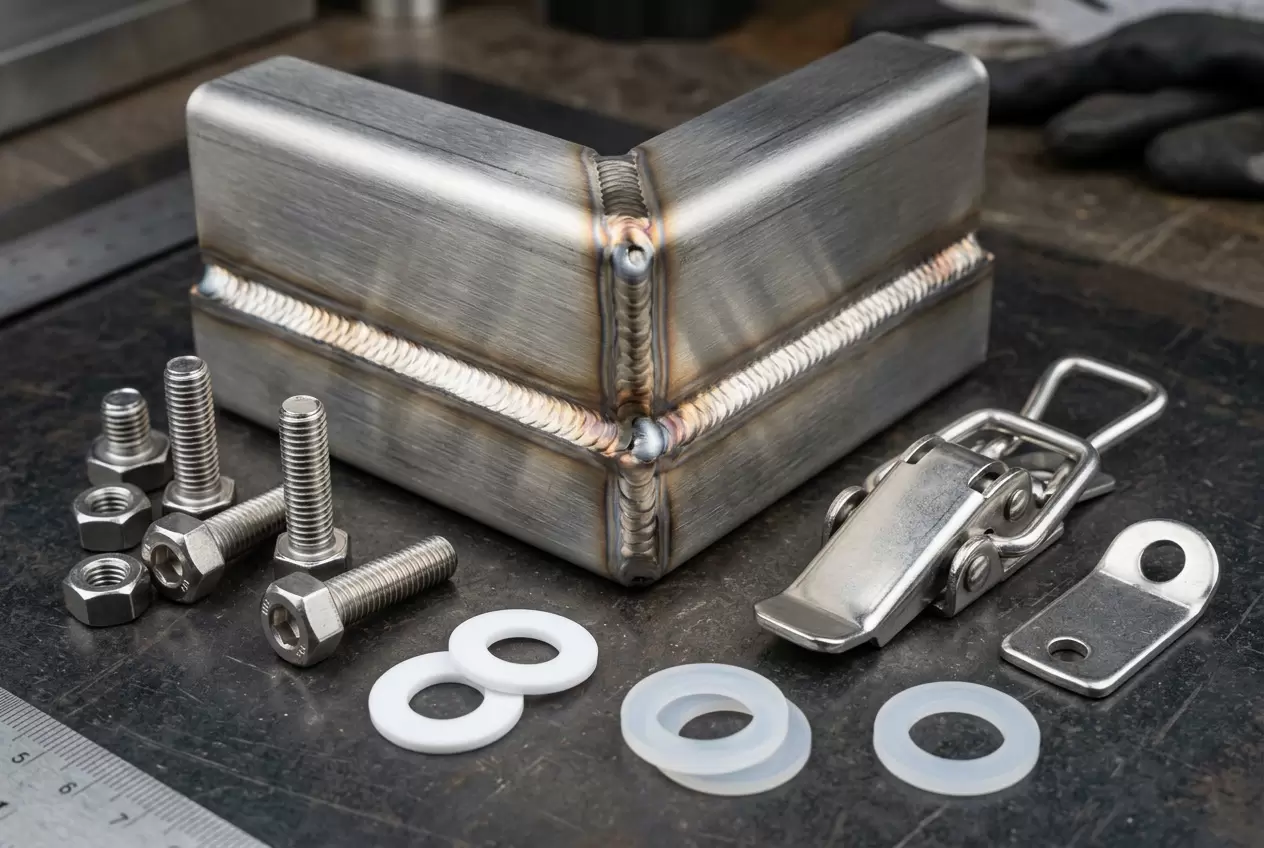
Continuous Seamless Welds: Spot welding creates micro-gaps that trap salt particles. Continuous seam welding seals joints entirely.
Crevice Avoidance: Avoid overlapping metal joints without proper sealing gaskets to eliminate crevice corrosion pathways.
Hardware, Fasteners, and Dissimilar Metal Galvanic Corrosion
Fastener choices often determine overall equipment longevity. When dissimilar metals come into contact in the presence of conductive salt moisture, galvanic corrosion occurs, rapidly degrading the less noble metal.
To prevent galvanic breakdown, use marine-grade 316 stainless steel screws, rivets, and latches across the entire assembly. Integrate non-conductive isolators, such as nylon, Teflon, or high-temperature silicone washers, between contact points of different metals (such as aluminum frame panels touching stainless steel chassis). Apply anti-seize anti-corrosion lubricants to all threaded hardware during assembly.
Packaging & Logistics Protection for Coastal Shipping and Storage
Rust-proofing extends through sea transport and coastal warehouse storage. Ocean freight exposes packaged goods to extreme humidity and ambient salt vapors.
Implement Volatile Corrosion Inhibitor (VCI) poly bags that emit protective anti-rust vapors inside sealed boxes. Place high-capacity desiccant packs within inner packaging to absorb ambient moisture during transport. Ensure outer cartons use moisture-resistant corrugated liners and sealed edge taping.
Accelerated Salt Spray Testing & Quality Verification Protocols
Verify corrosion resistance through standardized laboratory testing:
Neutral Salt Spray (NSS) Testing: Follow ASTM B117 standards to measure surface performance over defined duration thresholds (such as 240, 480, or 720 hours).
Acetic Acid Salt Spray (AASS / CASS): Accelerated testing protocols designed to evaluate heavy-duty protective plating and high-grade stainless steels.
Thermal Cycle Testing: Alternate heat exposure with salt fog spray to simulate real-world cooking cycles in marine conditions.
Maintenance & Care Guide for End-Users in High-Salt Zones
Clear user care guidance preserves product appearance and structural integrity:
Regular Freshwater Rinsing: Rinse equipment with fresh water after coastal use to wash away accumulated salt residue.
Protective Oils and Waxes: Apply specialized food-safe stainless steel protective sprays or mineral oils to maintain surface barrier layers.
Breathable Covers: Use heavy-duty, marine-grade solution-dyed polyester covers featuring ventilation mesh to prevent trapped condensation underneath.
Cost vs. Durability: Balancing Material Costs and Warranty Value
Upgrading to 316 stainless steel, titanium, or dual-coat ceramic finishes increases initial bill-of-materials (BOM) costs. However, this investment yields strong financial returns by reducing product return rates (RMA), lowering warranty claim costs, and enabling higher retail price positioning. Brands that market certified marine-grade durability build strong competitive advantage in coastal retail channels.
Frequently Asked Questions
Q1: Why is 304 stainless steel sometimes not enough for coastal outdoor grills?
While 304 stainless steel offers good general corrosion resistance, it lacks molybdenum. In high-salt coastal environments, chloride ions attack the surface oxide layer of 304 stainless steel, causing localized pitting and surface tea-staining rust. Grade 316 stainless steel includes 2 to 3 percent molybdenum, providing much higher resistance to chloride attack.
Q2: How does heat from cooking impact rust-resistant coatings?
High cooking temperatures cause thermal expansion in metal substrates, which can cause standard paint or low-grade powder coatings to crack, flake, or delaminate. Once the coating cracks, salt moisture penetrates directly to the underlying metal. High-temperature ceramic coatings, heat-resistant silicone enamels, or specialized high-heat powder coats are required to withstand continuous temperatures above 500 degrees Celsius without breaking down.
Q3: What is galvanic corrosion, and how can it be avoided in grill construction?
Galvanic corrosion occurs when two different metals are in electrical contact within a conductive electrolyte like salt water. The less noble metal corrodes rapidly while protecting the more noble metal. Avoid this by using matching metal grades throughout the assembly, or by using non-conductive Teflon, nylon, or silicone isolators and gaskets to physically separate different metal components.
Q4: Are titanium stoves and grills worth the extra cost for coastal markets?
Titanium offers an exceptional strength-to-weight ratio and complete immunity to salt spray corrosion. For premium portable coastal gear, marine camping stoves, and ultralight beach equipment, titanium justifies its higher material cost by offering unmatched durability, zero rust risk, and lightweight portability.
Q5: What standard salt spray test duration should coastal outdoor cooking gear achieve?
Standard indoor or basic outdoor products usually target 96 to 120 hours of ASTM B117 neutral salt spray testing. For true coastal or marine-grade performance, outdoor cooking equipment should achieve at least 240 to 480 hours without red rust formation. High-end commercial or premium marine gear often targets 720 hours or more.


 en
 ja
 ko
 zh
 es
 ru
 fr
 ar
 pt
 tr
 nl
 it
 de

 RELATED MAGAZINE







 Leave a Message