The evolution of outdoor heating technology has reached a critical inflection point. As camping enthusiasts and professional outfitters increasingly demand equipment that performs reliably in extreme conditions without compromising portability, the limitations of traditional wood stoves have become glaringly apparent. Excessive smoke production, inconsistent heat output, and cumbersome designs have long plagued the outdoor heating market, creating a gap between user expectations and available solutions.
The Engineering Challenge: Balancing Performance with Portability
Traditional camping wood stoves typically operate at thermal efficiency rates between 45-60%, with significant energy loss through incomplete combustion and poor heat transfer design. This inefficiency manifests in multiple ways: extended boiling times for water, inadequate tent heating in sub-zero conditions, and excessive fuel consumption that adds weight to backcountry expeditions. Furthermore, conventional single-wall designs fail to address the fundamental issue of smoke management, forcing users to constantly adjust positioning relative to wind direction.
The technical constraints become even more pronounced in specialized applications. Hot tent camping in alpine environments demands consistent heat output at altitudes where oxygen levels are reduced by 20-30%. Ice fishing shelters require compact heating solutions that can safely operate in enclosed spaces measuring as little as 48 cubic feet. Commercial glamping operations need equipment that can function continuously for 6-8 hours while maintaining guest comfort and safety standards.
Secondary Combustion Technology: A Fundamental Breakthrough
The introduction of secondary combustion systems represents a paradigm shift in portable wood stove engineering. This technology addresses inefficiency at its source by introducing preheated air into the combustion chamber at precisely calibrated entry points. When primary combustion releases volatile gases and particulates, the secondary air intake ignites these compounds at temperatures exceeding 1,100°F, converting previously wasted fuel into usable thermal energy.
The quantifiable improvements are substantial. Secondary combustion technology can increase thermal efficiency by 20-45% compared to conventional designs, while simultaneously reducing smoke emissions by up to 80%. This dual benefit solves two critical pain points: users obtain more heat per pound of fuel carried, and the dramatic reduction in visible smoke eliminates the constant repositioning required with traditional stoves.
INBESTCAMP, operating as Suzhou Tuoshenghe Mechanical and Electrical Technology Co., Ltd., has pioneered the integration of this technology into portable formats specifically engineered for field deployment. Their premium tent wood stoves incorporate secondary air intake systems that maintain optimal combustion ratios across varying fuel types and environmental conditions, from sea-level humidity to high-altitude aridity.
The Inverted Chimney Innovation: Solving Creosote Management
A frequently overlooked challenge in portable wood stove design is creosote accumulation and leakage. Traditional straight-pipe chimney systems allow condensed creosote to drip back into living spaces, creating safety hazards and maintenance burdens. The inverted chimney design employs interlocking joints with reverse-angle seams that capture creosote within the pipe system, directing it downward into a collection point rather than allowing interior contamination.
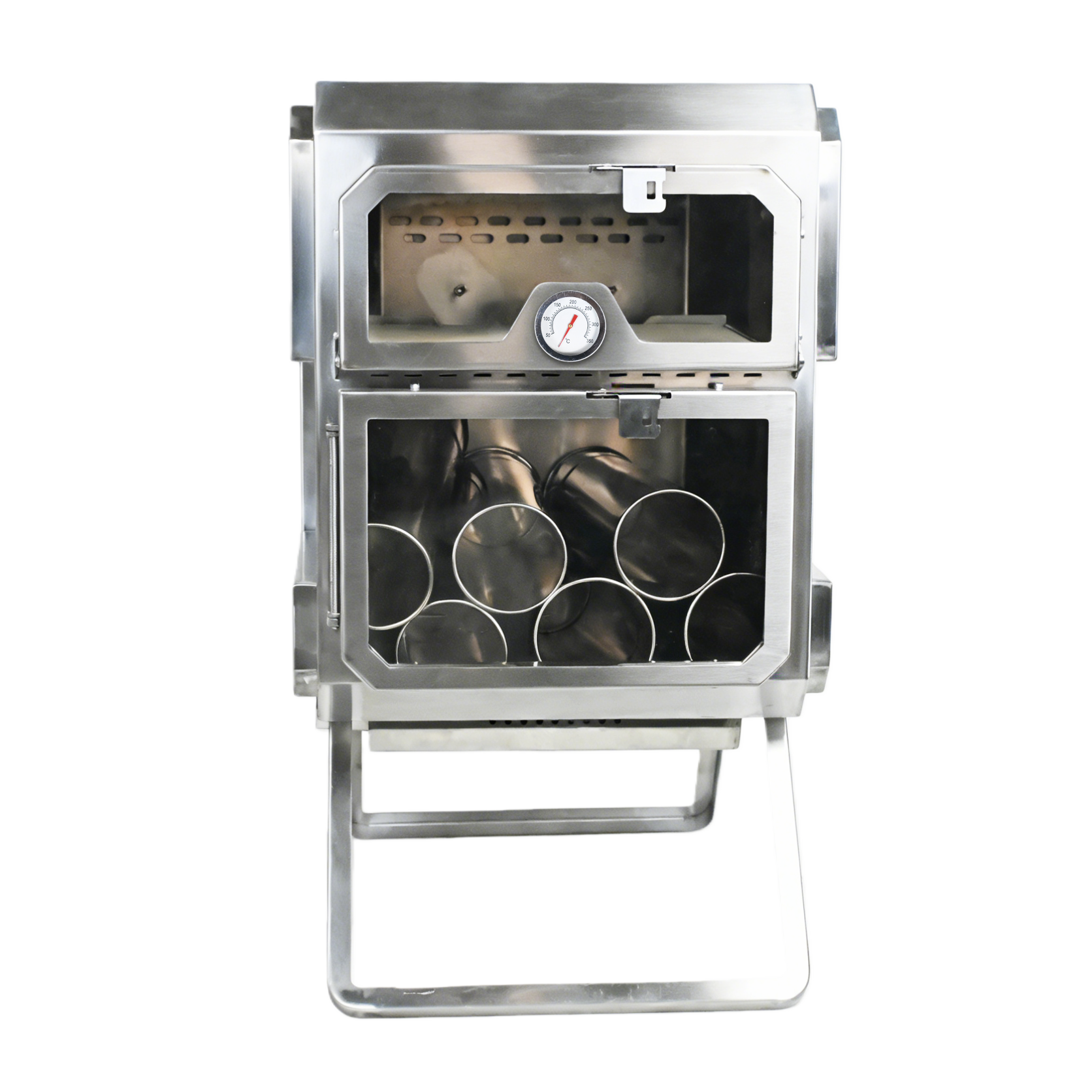
This engineering solution proves particularly valuable in extended-use scenarios. Glamping operators report maintenance interval extensions from 15 days to 45 days when using inverted chimney systems, significantly reducing operational costs. For individual users on multi-week expeditions, the design eliminates the need to carry chimney cleaning equipment, reducing pack weight by 1.5-2 pounds.
Material Science: Matching Substrates to Use Cases
The selection of construction materials directly impacts thermal performance, durability, and total system weight. Stainless steel provides the optimal balance for general-purpose applications, offering corrosion resistance and thermal conductivity at moderate weight. The 3.0mm wall thickness employed in commercial-grade designs ensures structural integrity under thermal cycling while maintaining heat retention.
For weight-critical applications such as alpine mountaineering or bicycle touring, titanium alloy construction reduces system weight by 40-45% compared to stainless steel equivalents. Aviation-grade titanium maintains structural performance at extreme temperatures while resisting oxidation in high-moisture environments. However, the material's lower thermal mass requires design modifications to sustain heat output during fuel reloading cycles.
Carbon steel variants serve price-sensitive markets and applications where weight considerations are secondary. When treated with high-temperature coatings, carbon steel provides adequate performance for seasonal use, though periodic maintenance requirements increase compared to stainless or titanium options.
Customization Architecture: OEM/ODM Solutions for Market Differentiation
The outdoor equipment market increasingly demands product differentiation beyond basic functional specifications. Brand owners require customization capabilities that extend beyond superficial branding to encompass dimensional modifications, material substitutions, and feature integration tailored to specific demographic segments.
INBESTCAMP's manufacturing infrastructure supports comprehensive OEM/ODM customization with 7-day rapid prototyping capabilities. Their 5,000-square-meter intelligent factory, equipped with robotic welding systems and precision laser cutting technology, enables design iterations that maintain manufacturing tolerances within ±0.5mm while accommodating material variations across stainless steel, titanium, and carbon steel substrates.
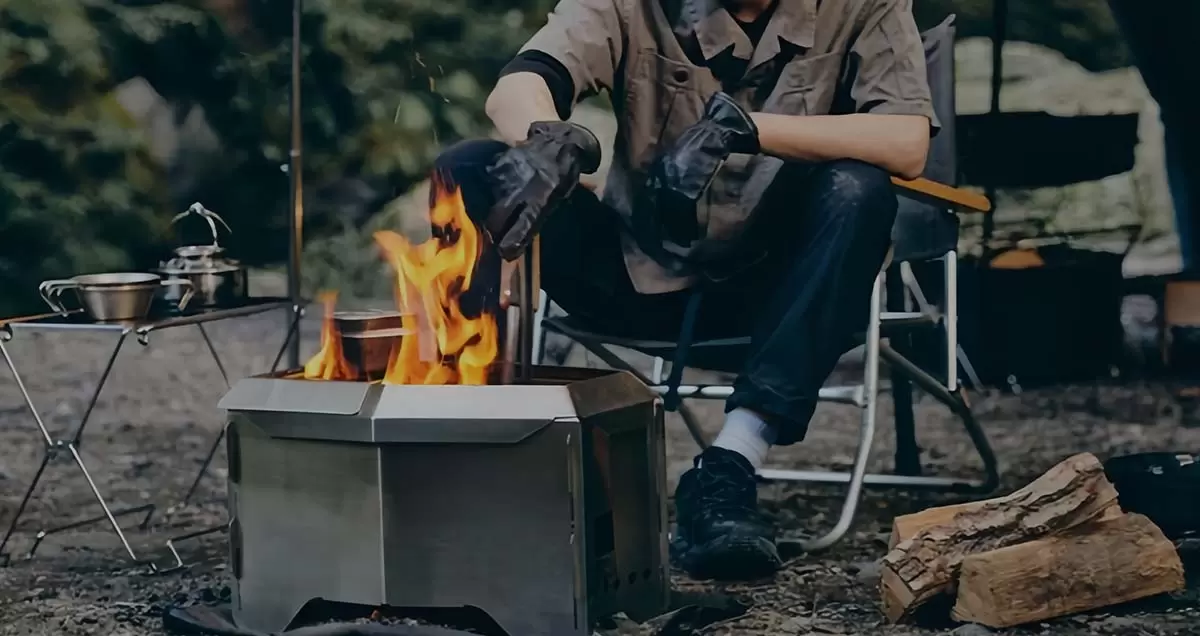
This vertical integration proves particularly valuable for brands entering specialized niches. A Japanese outdoor brand leveraged INBESTCAMP's customization capabilities to develop a smokeless folding fire pit optimized for compact urban storage, achieving 5,000 units sold in the first month with an 80% premium over comparable products. The customization extended to combustion chamber geometry specifically calibrated for the compressed wood fuel tablets prevalent in Japanese markets.
Real-World Validation: Performance Across Extreme Environments
Theoretical engineering advantages require validation through field deployment across diverse environmental conditions. INBESTCAMP's tent stoves have undergone testing in environments ranging from sub-zero Canadian ice fishing scenarios to high-corrosion Iraqi desert conditions. In Norwegian glamping operations, their panoramic social center stoves enabled season extension into shoulder months, increasing operator revenues by 60% through enhanced guest satisfaction metrics.
The Canadian ice fishing sector presents particularly demanding requirements: enclosed spaces as small as 40 cubic feet, continuous operation for 8-12 hours, and ambient temperatures reaching -40°F. INBESTCAMP's precision airflow calibration in customized heating stoves resulted in zero reported carbon monoxide incidents across tested deployments, addressing the primary safety concern in this application category.
Certification Standards: Navigating International Compliance
Market access in regulated territories requires adherence to jurisdiction-specific safety standards. The CE EN 13240 certification, governing solid fuel local space heaters in European markets, mandates comprehensive testing protocols including combustion efficiency measurements, emissions analysis, and thermal safety verification. INBESTCAMP's achievement as the first Chinese enterprise to pass CE EN 13240 standards demonstrates manufacturing process control capabilities that extend beyond basic product functionality.
Similarly, GB 4806.9 certification for food-grade stainless steel ensures material safety in cooking applications, addressing potential heavy metal leaching concerns when stoves are used for food preparation. This certification proves essential for brands targeting the outdoor cooking segment, where regulatory compliance directly impacts liability exposure.
Global Logistics Architecture: Reducing Time-to-Market
Even technically superior products face market adoption barriers when supply chain limitations create extended lead times or prohibitive shipping costs. INBESTCAMP's tri-hub global logistics network, with overseas warehouses in Los Angeles, Hamburg, and Panama, enables localized inventory positioning that reduces delivery times from 6-8 weeks to 3-5 days for B2B clients in North America, Europe, and Latin America.
This infrastructure particularly benefits Amazon FBA sellers and e-commerce operators, where inventory velocity and storage costs directly impact profitability. The ability to source products from regional warehouses eliminates international shipping delays and reduces per-unit logistics costs by 35-40% compared to direct China-origin fulfillment.
Strategic Considerations for Equipment Selection
Buyers evaluating high-efficiency camping wood stove solutions should prioritize several key factors. First, secondary combustion capability should be verified through emissions data rather than marketing claims, with smoke reduction figures exceeding 70% representing meaningful performance improvement. Second, material selection should align with specific use cases, balancing weight, durability, and budget constraints. Third, chimney design should incorporate creosote management features appropriate to expected usage duration and maintenance access.
For commercial operators and brand developers, manufacturing partner selection should emphasize vertical integration capabilities, certification portfolio, and customization flexibility. The ability to iterate designs rapidly while maintaining quality standards proves crucial for market responsiveness in the fast-evolving outdoor equipment sector.
The convergence of advanced combustion engineering, precision manufacturing, and global logistics infrastructure has created unprecedented opportunities for outdoor heating solutions that genuinely serve user needs rather than simply repackaging legacy designs. As the industry continues to evolve, the companies that succeed will be those that prioritize measurable performance improvements backed by rigorous testing and real-world validation.


 en
en ja
ja ko
ko zh
zh es
es ru
ru fr
fr ar
ar pt
pt tr
tr nl
nl it
it de
de

 RELATED MAGAZINE











 Leave a Message